
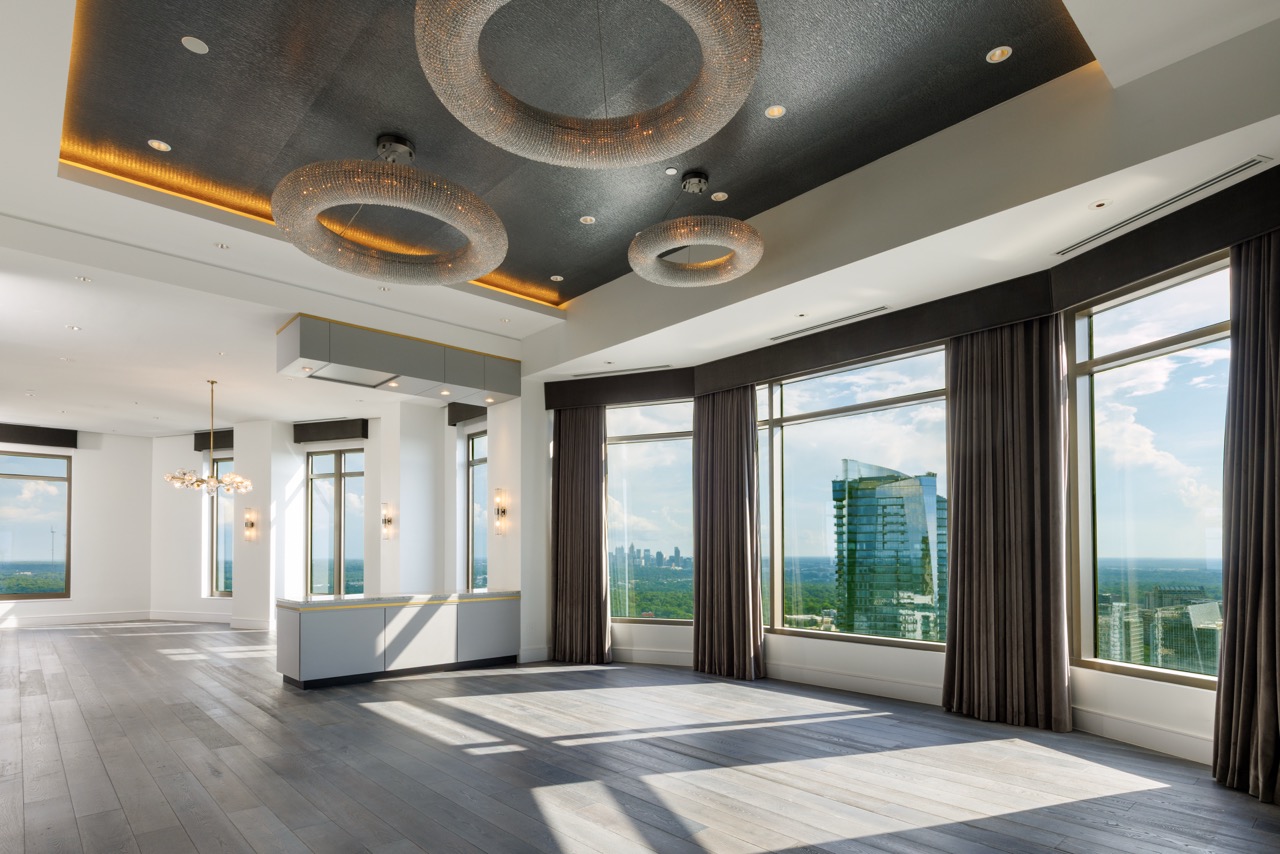
Owning the entire 56th floor in a five-star hotel tower is a dream come true. Residence 56 at the Waldorf Astoria Residences is exactly that: nearly 5,000 square feet on a single level. The entire floor is yours, with three bedrooms, three full baths, two half baths, and a private elevator lobby that opens directly into your home! This doesn’t feel like a condo at all. It feels like a spacious home in the sky, with extremely high ceilings and windows in every direction. You can see every part of the city from this vantage point, taking in the sunrise, the sunset, storms rolling in, and beautiful cloud formations floating by at eye level. It’s an inspirational setting.
Access sets the tone. Two fast elevators open into your private well-appointed elevator lobby and whisk you directly down to the fully secured garage, where four private parking spaces and additional storage wait underground. It is a level of arrival and privacy that a full-floor plan makes possible and that almost nothing else in Buckhead can replicate.
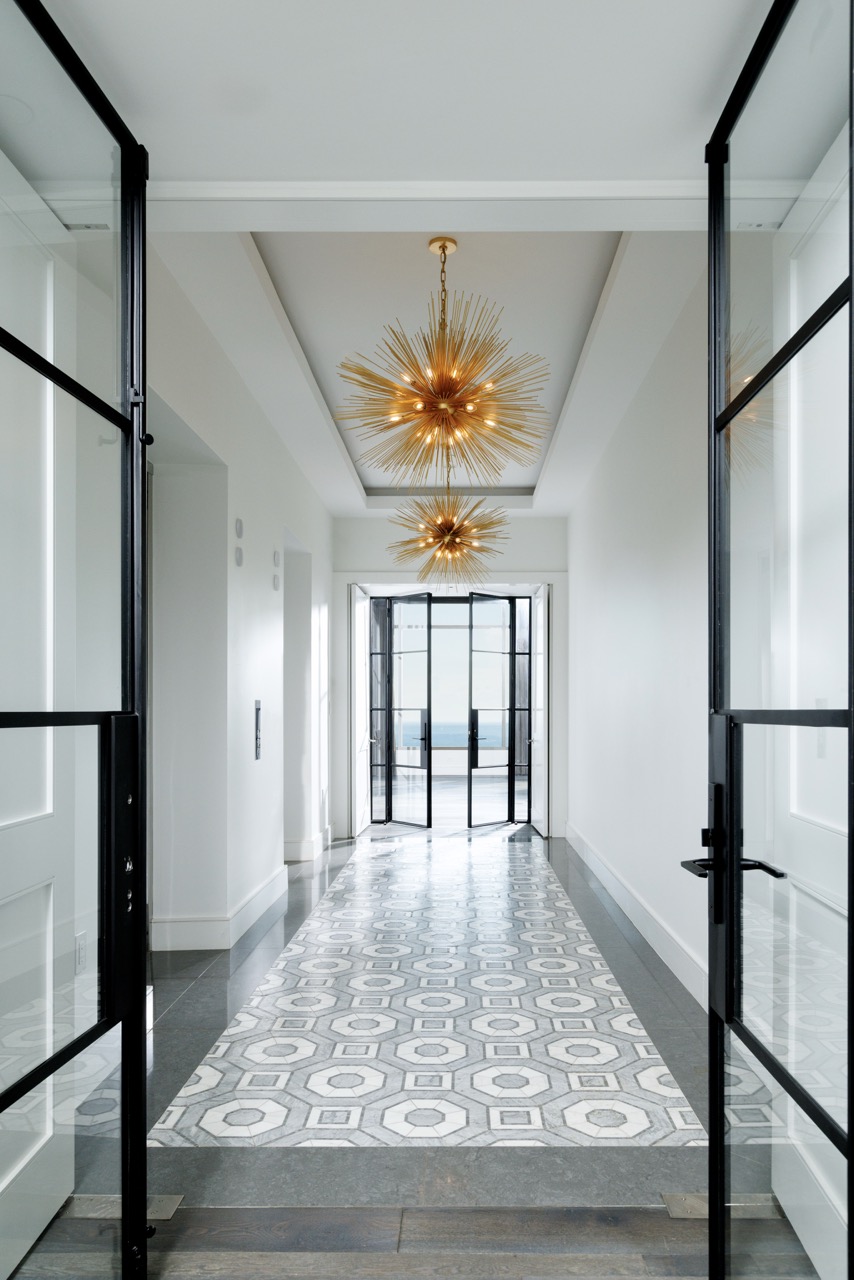
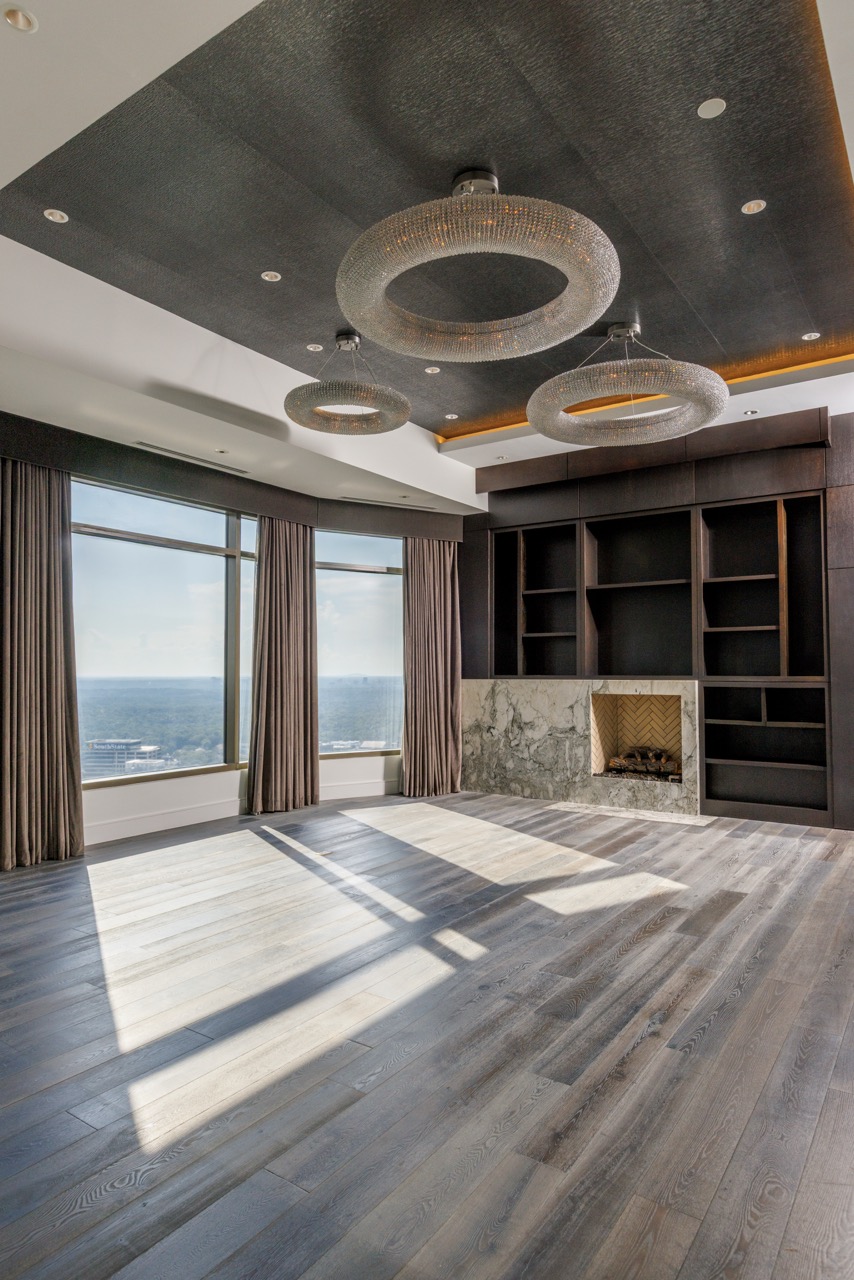
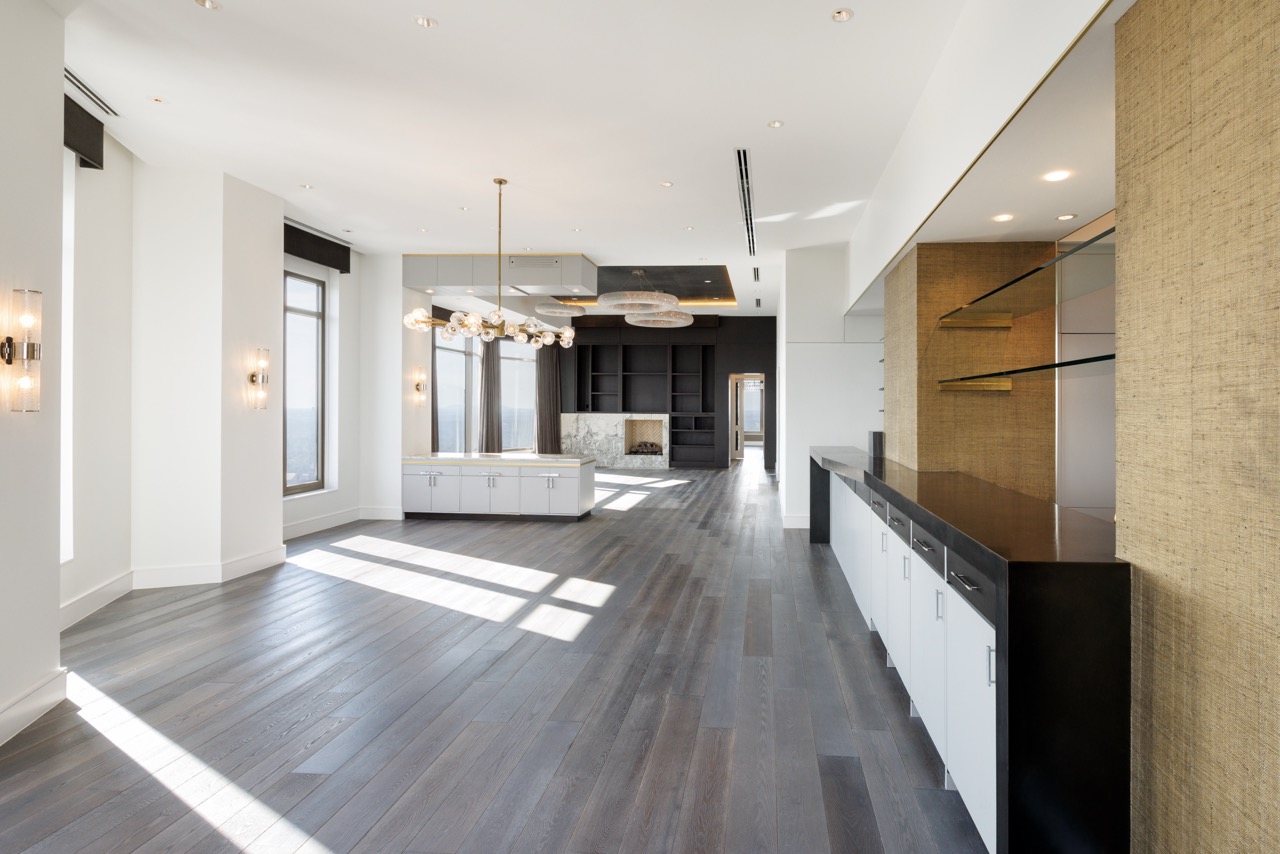
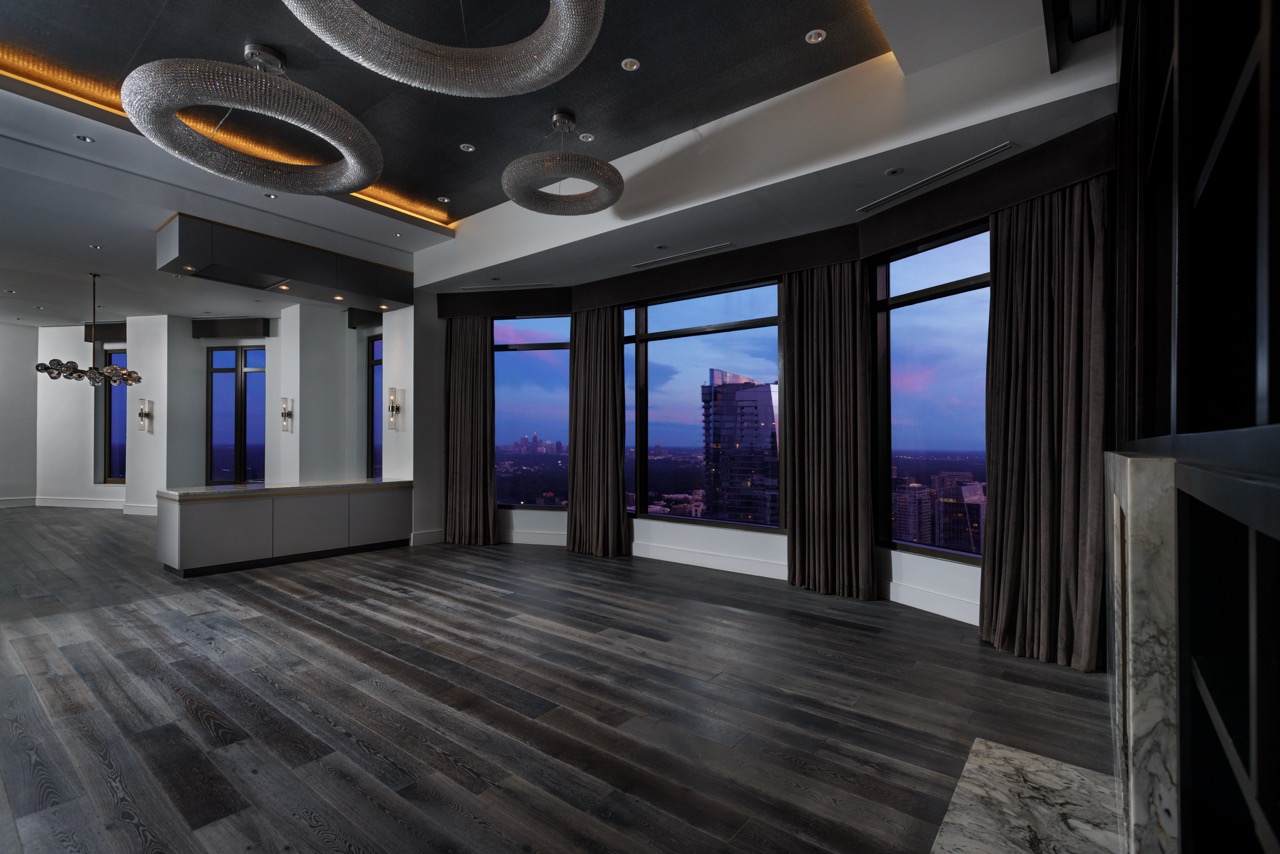
The interior was custom built out by Jim Weinberg, and the work shows in the millwork, the draperies, and the finishes in every room. The great room is oversized under 12-foot ceilings, and at the push of a button a giant screen and projector drop from the ceiling while the motorized shades and drapery draw quietly closed, turning the space into a private theater. The kitchen was built for cooking and for company, with custom cabinetry, quartzite counters, a Sub-Zero refrigerator, Wolf appliances, four wine coolers, a stone fireplace, and a walkout balcony off to one side. The primary suite occupies its own wing: a sitting area and fireplace in the bedroom, custom closets, a bath with dual vanities, a soaking tub and an oversized walk-in shower, and a balcony of its own.

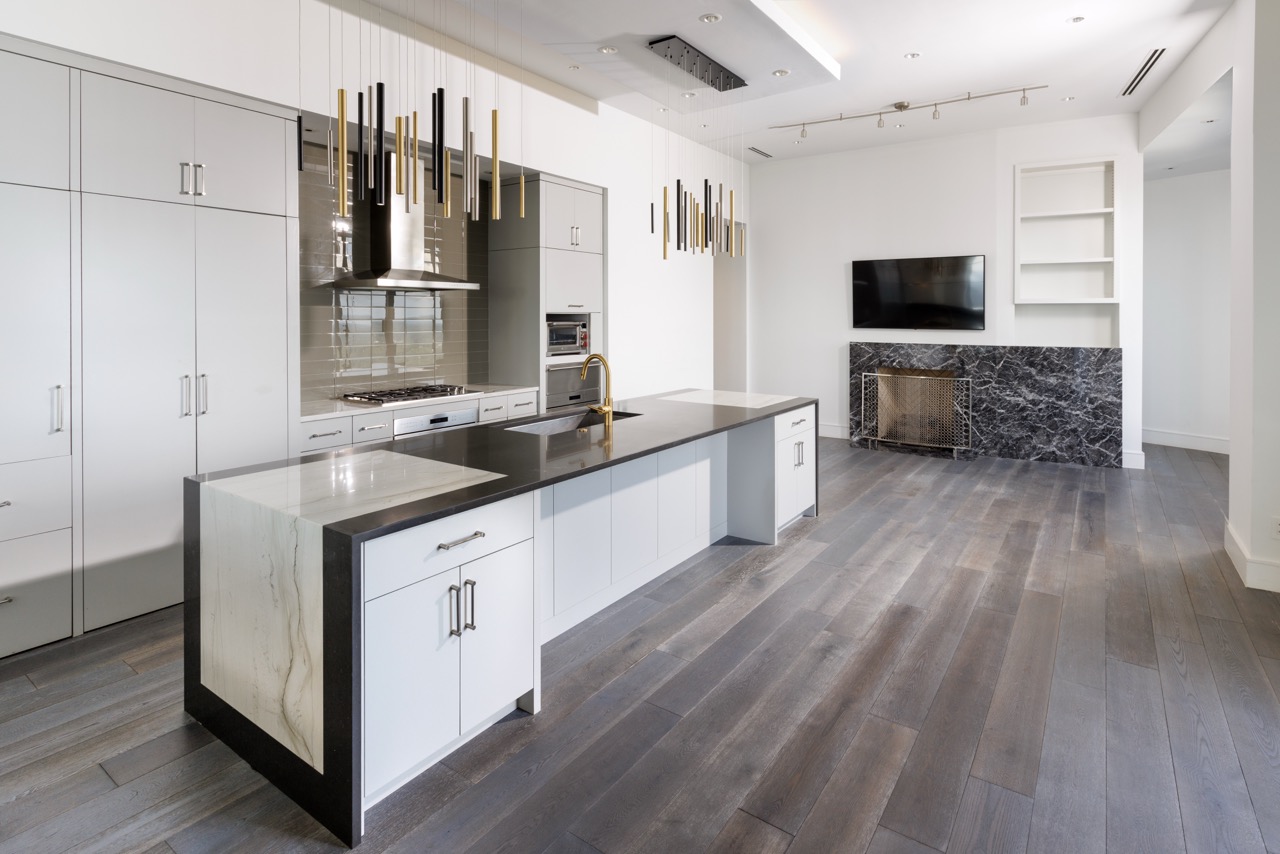

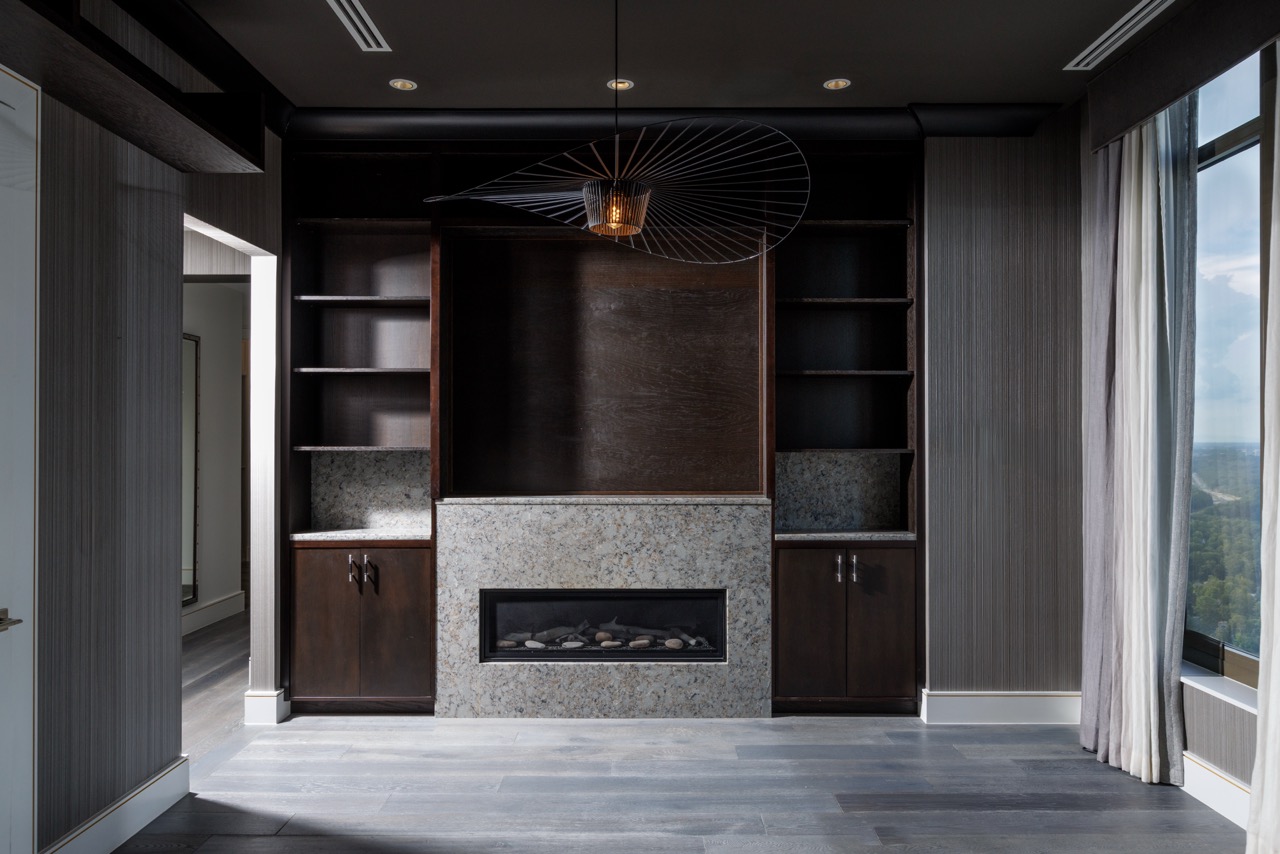
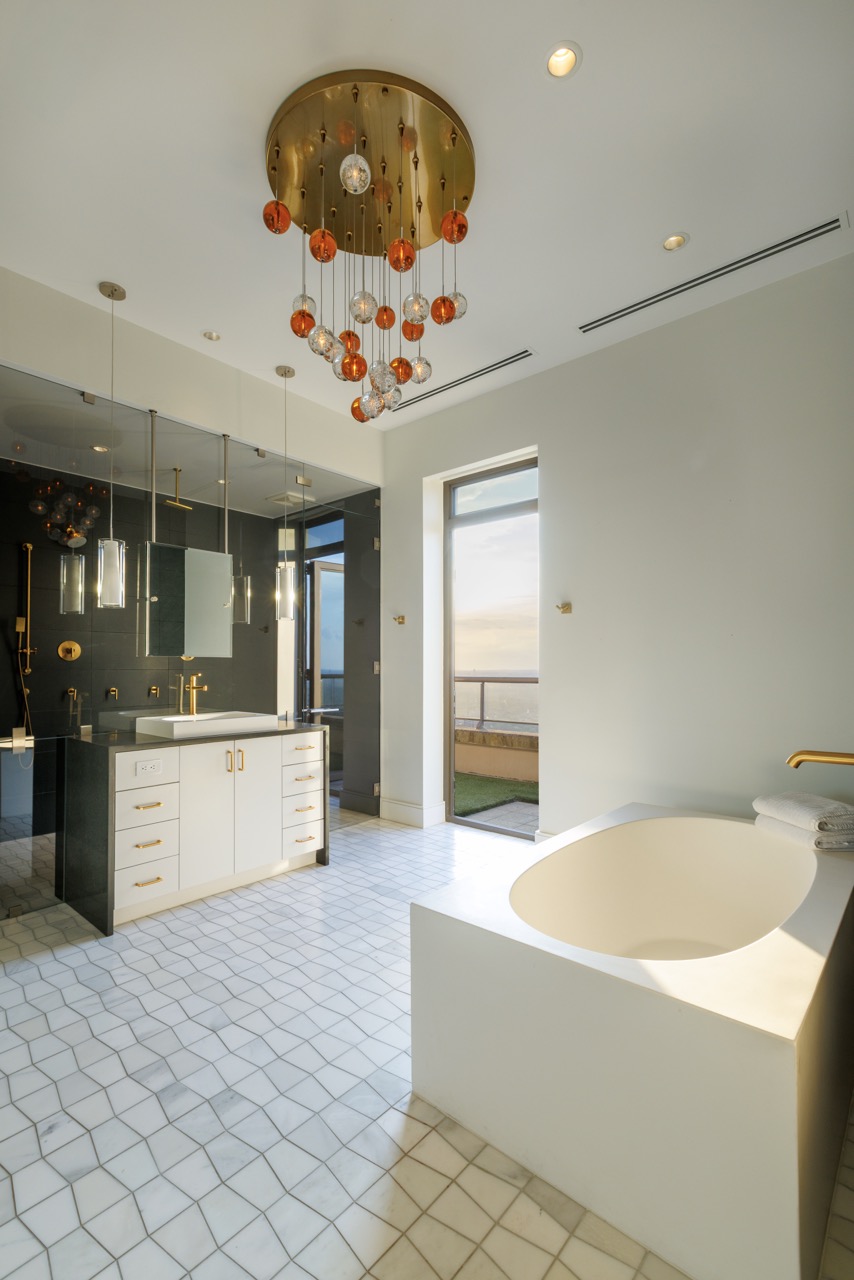


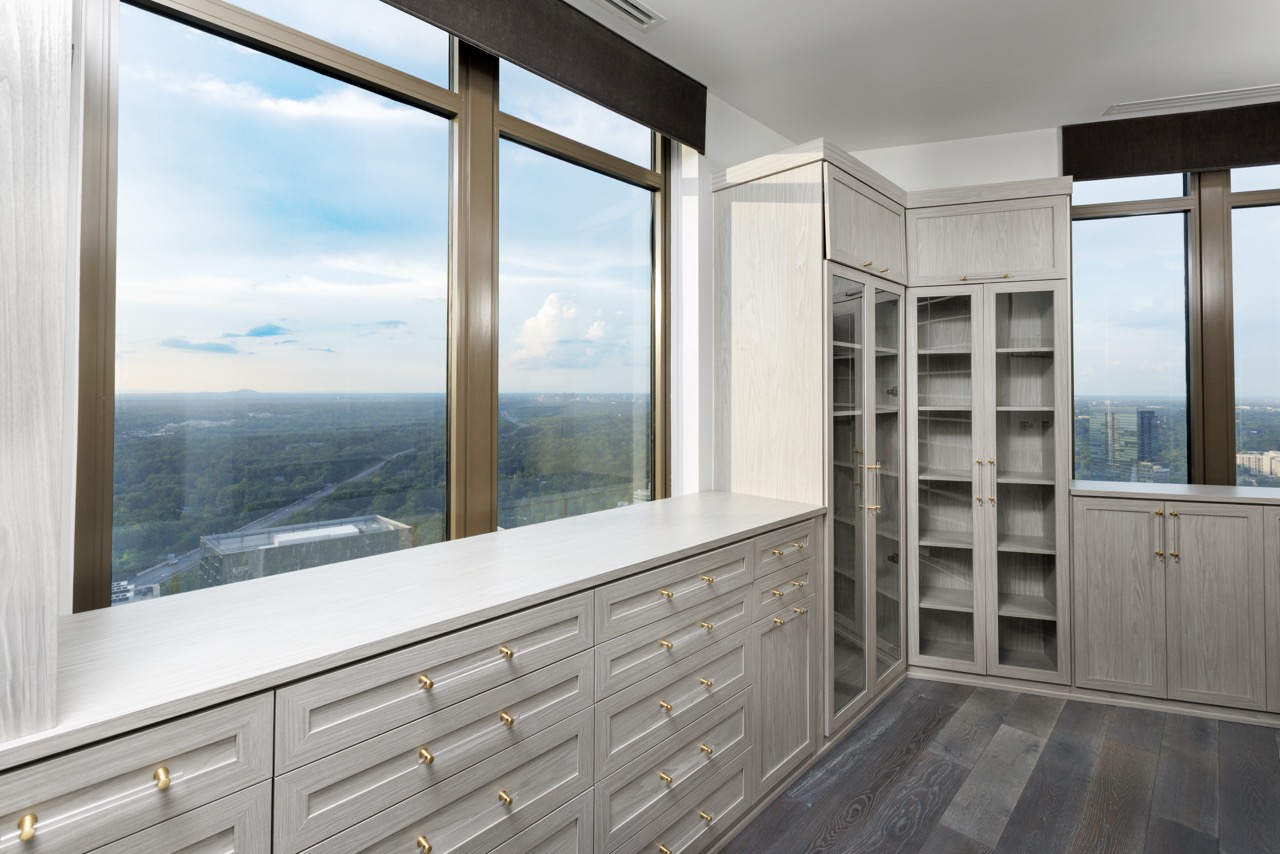
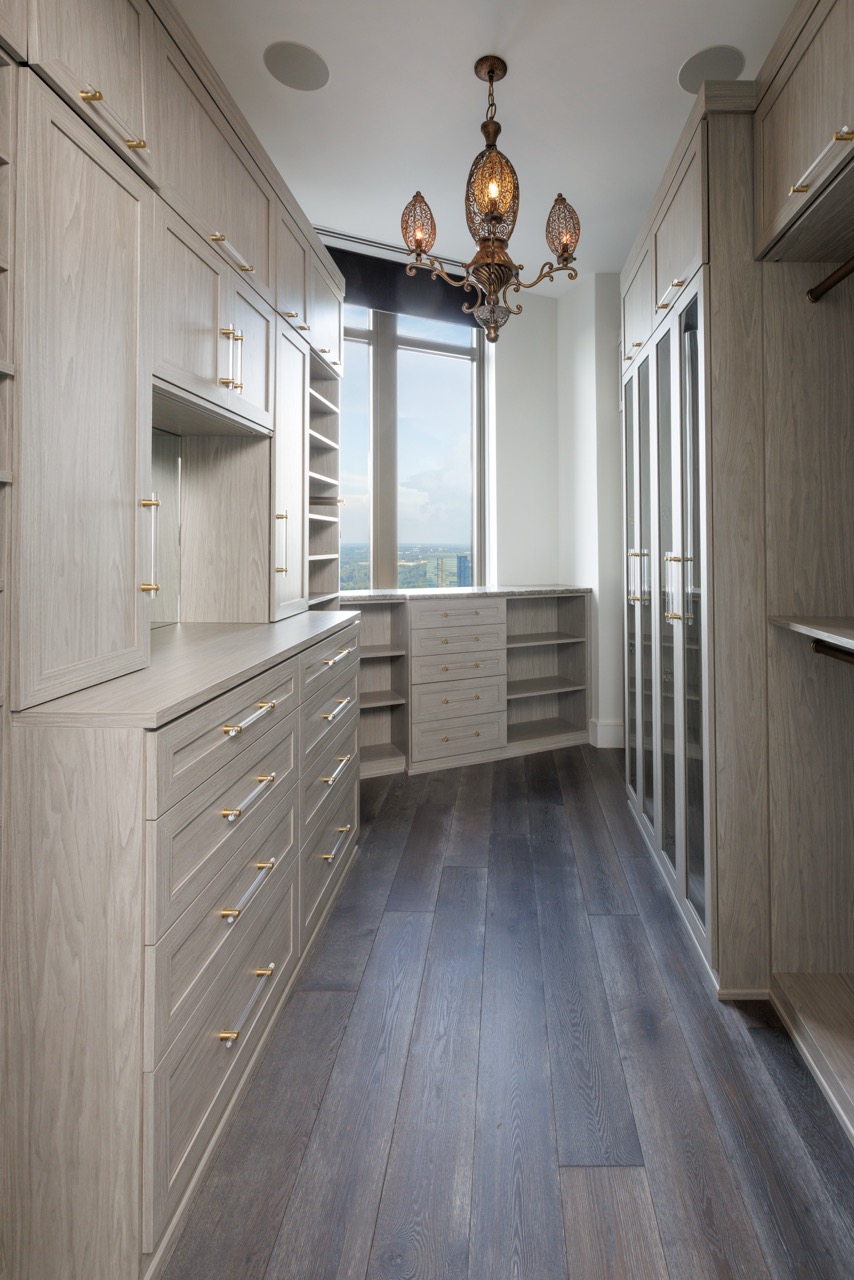
The building, completed in 2008 and designed by Richard Stern, was conceived as a hotel and residential tower from the start, and the residences were laid out with the proportions of a house rather than the compromises of a typical high-rise.
Life here is fully serviced. You will have a 24-hour concierge, valet parking for you and your guests, a fitness center, an indoor lap pool, Spa 29, dining and entertaining rooms, package handling and dry cleaning, all in a building at the center of Buckhead’s business and retail district.
All of this is offered at an exceptional value. Once it’s gone, you may never see another one like it again!
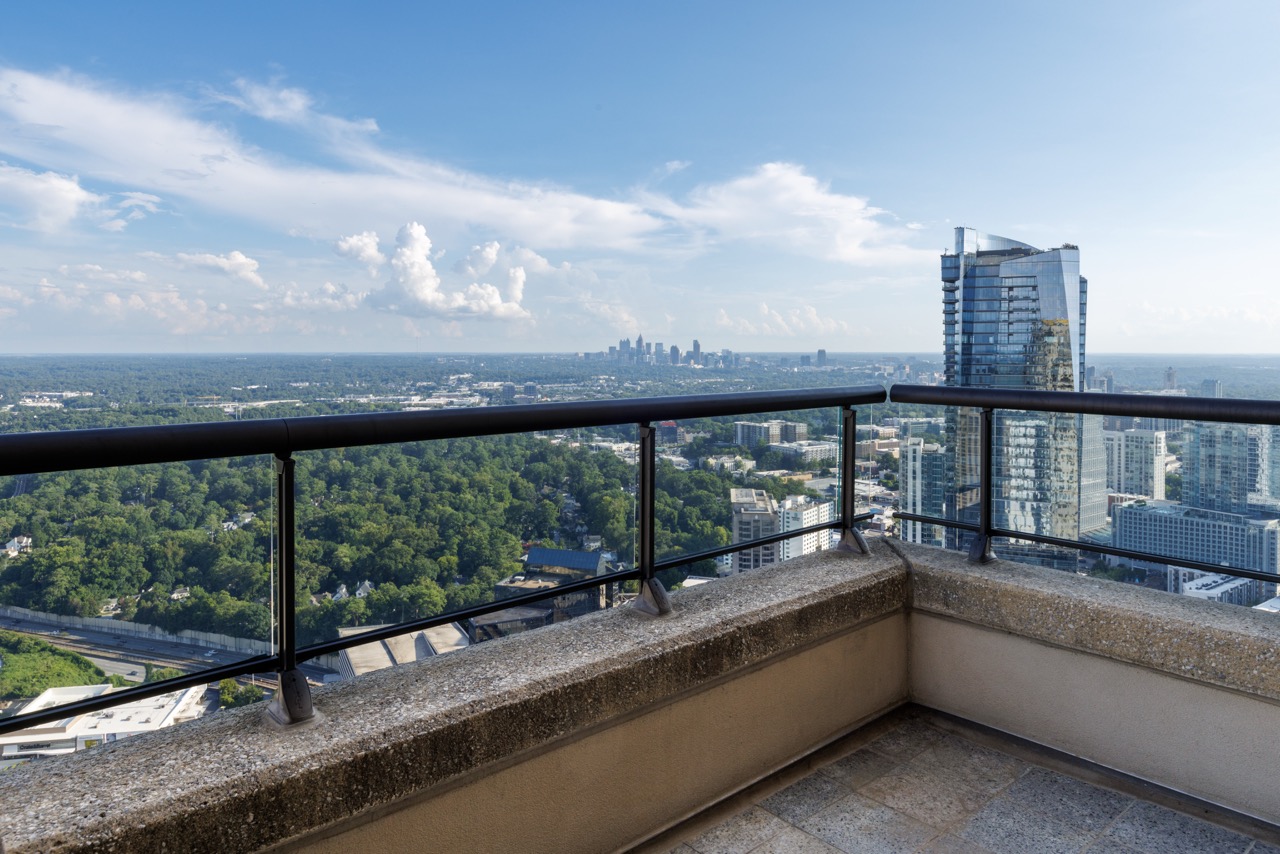

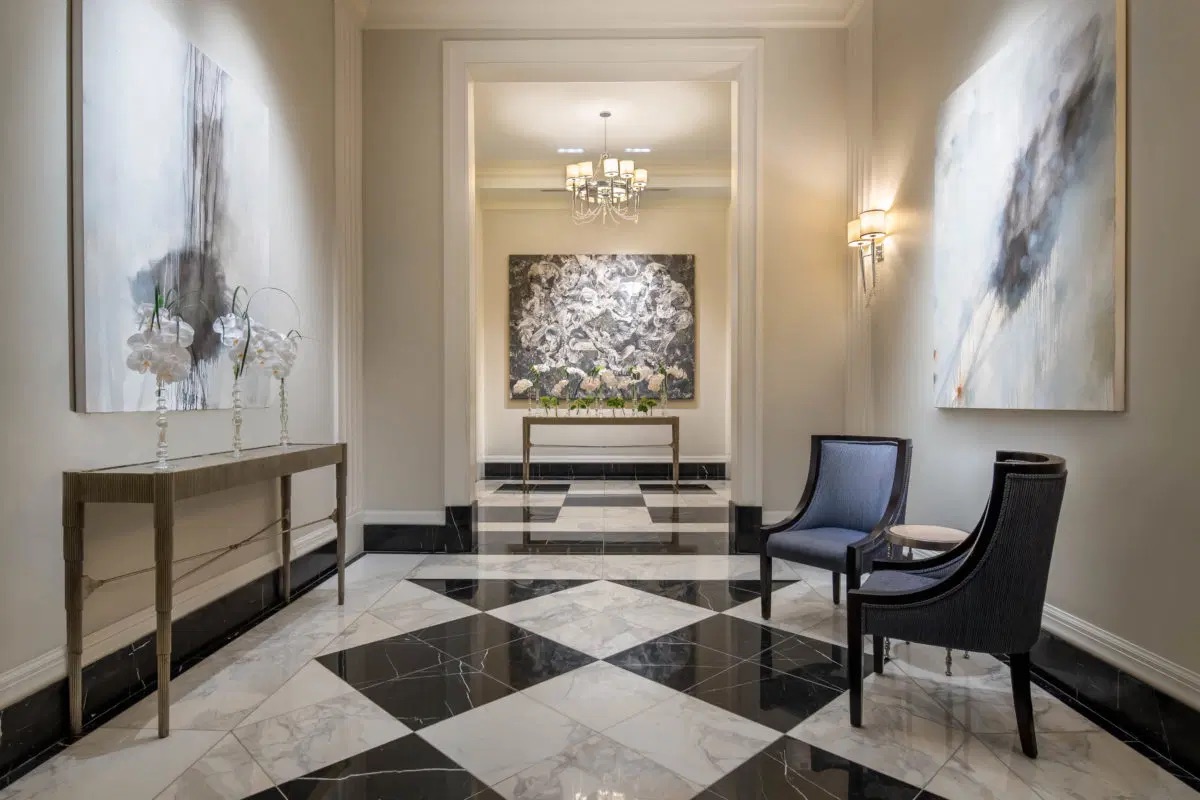

Perched high above the city in the iconic Waldorf Astoria Buckhead, this exceptional half-floor residence is a statement in architectural elegance and refined living. From the moment of arrival, you are enveloped in a world where breathtaking panoramas and sophisticated design are in perfect harmony.
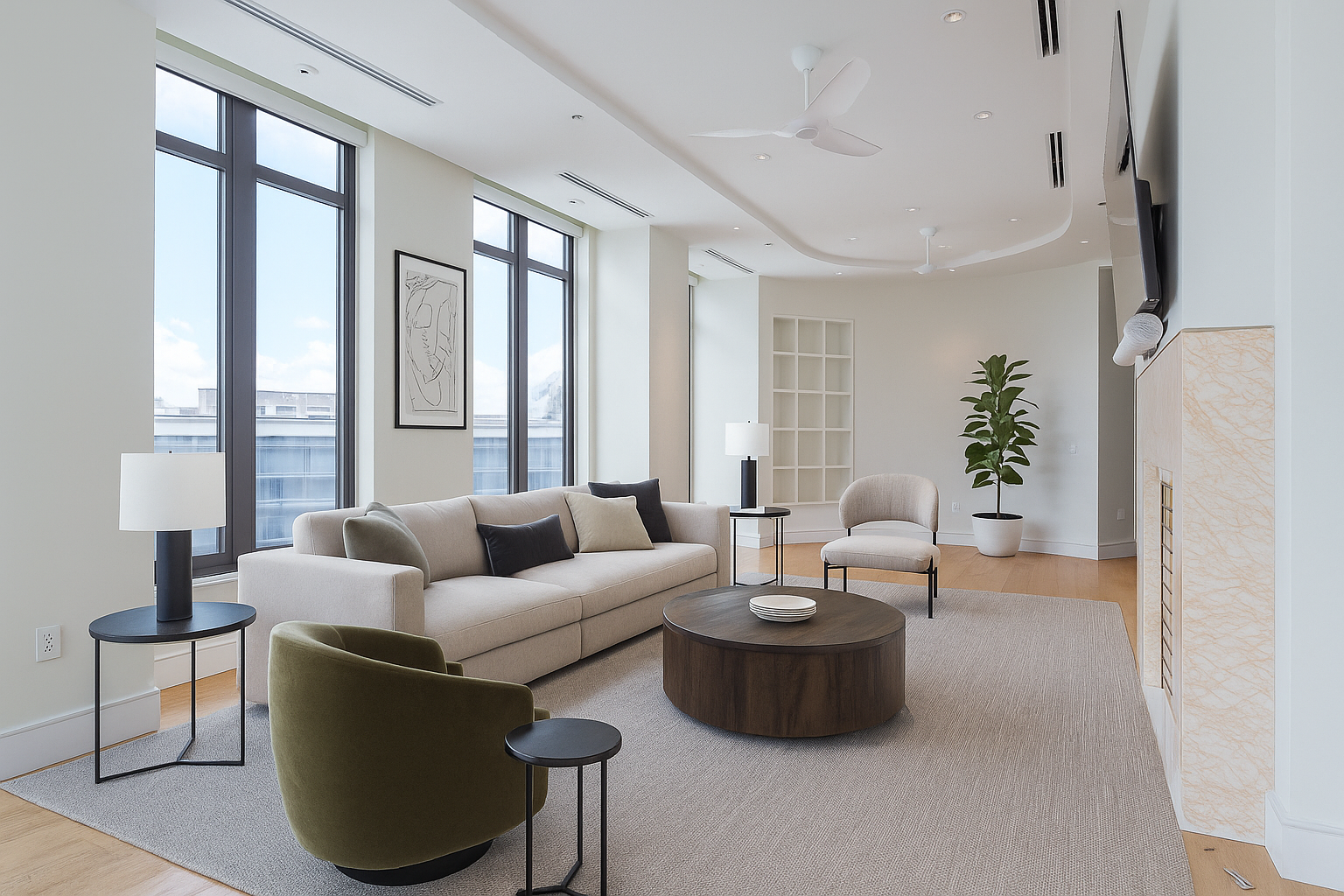
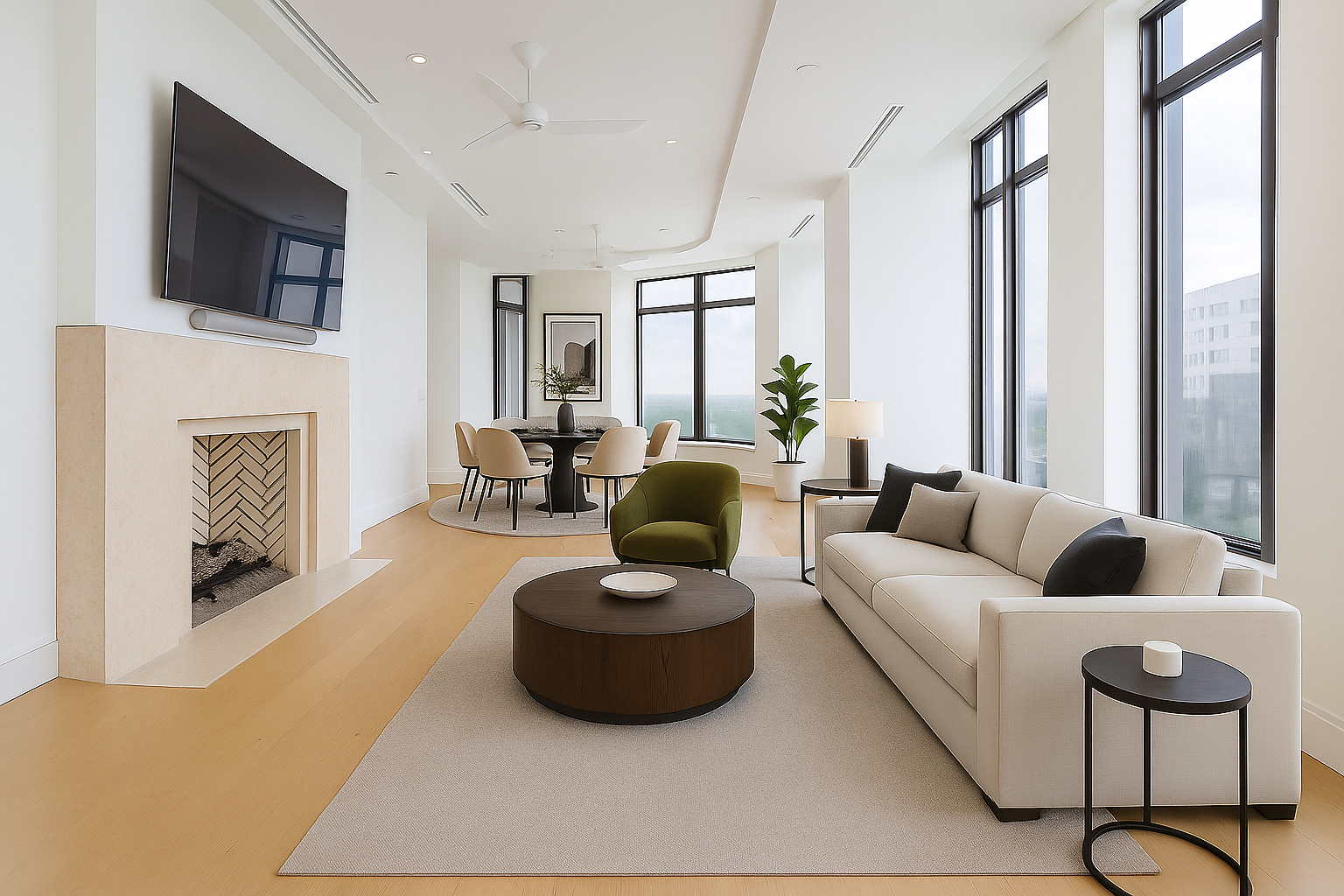
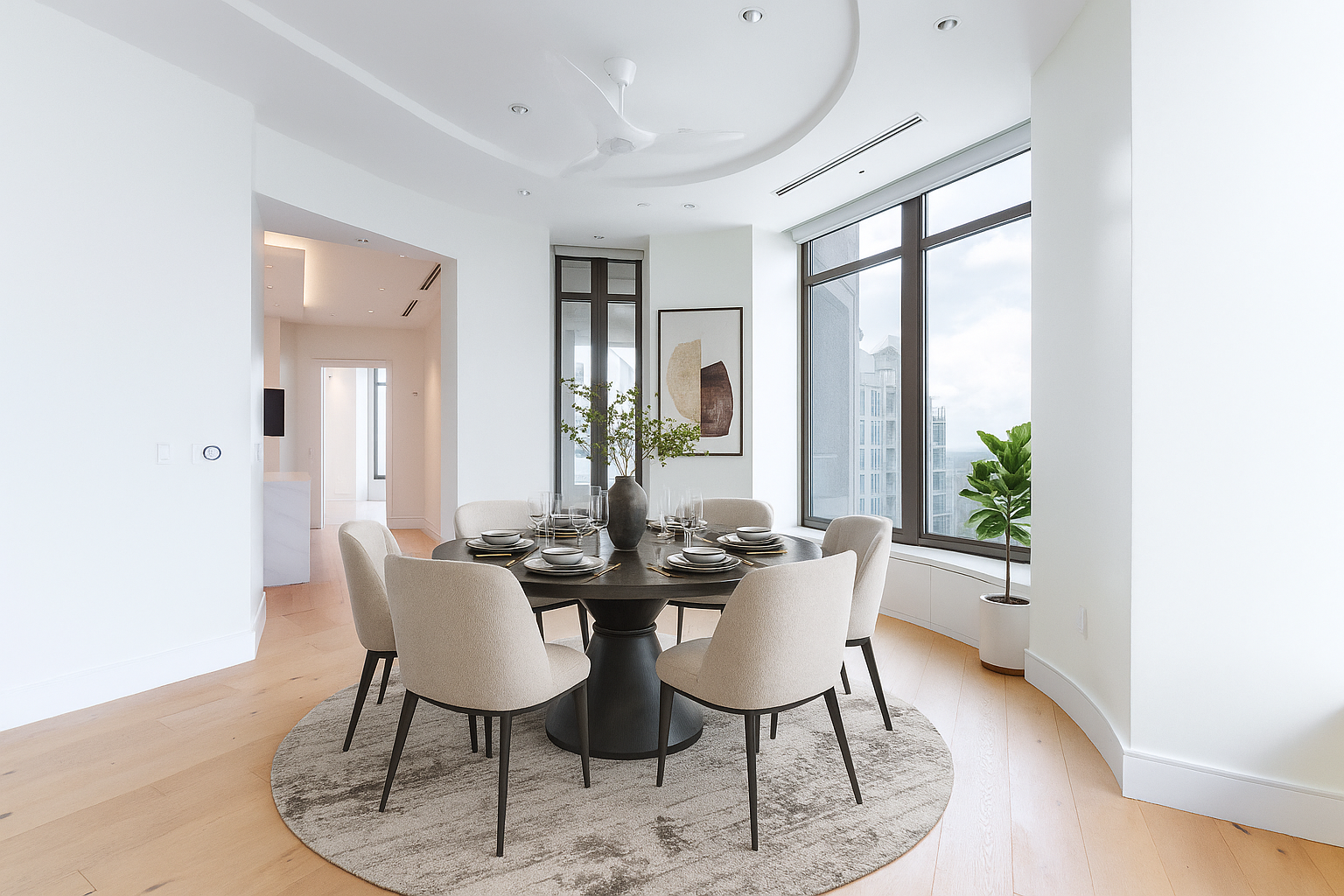



The main salon is a masterpiece of design, balancing open, light-filled spaces with intimate zones for conversation and relaxation. Floor-to-ceiling windows present a living canvas of skyline and forest, anchored by the warmth of a modern fireplace. Adjacent, a dedicated dining area is defined by a gracefully curved wall of windows, creating an immersive backdrop for every meal.
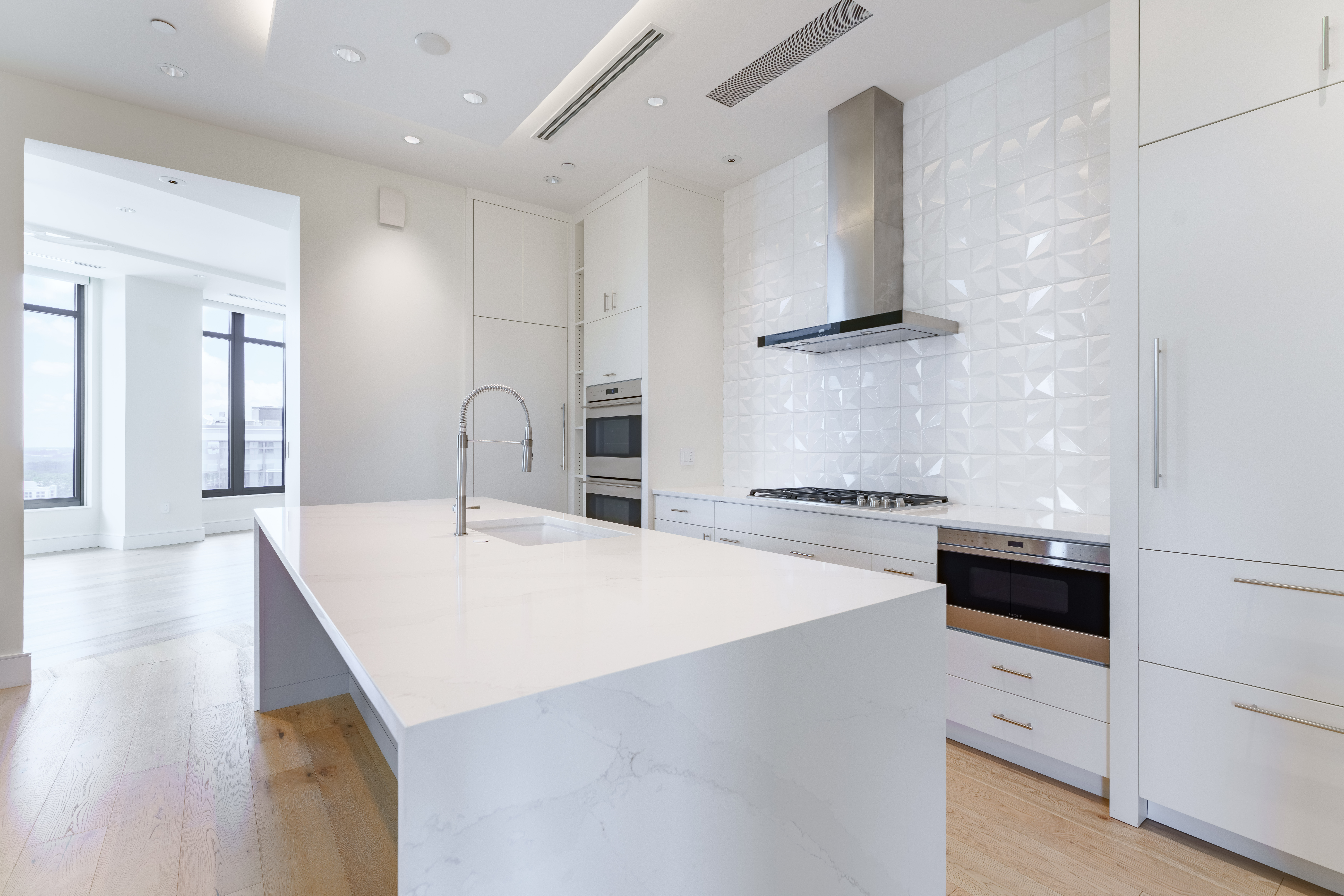
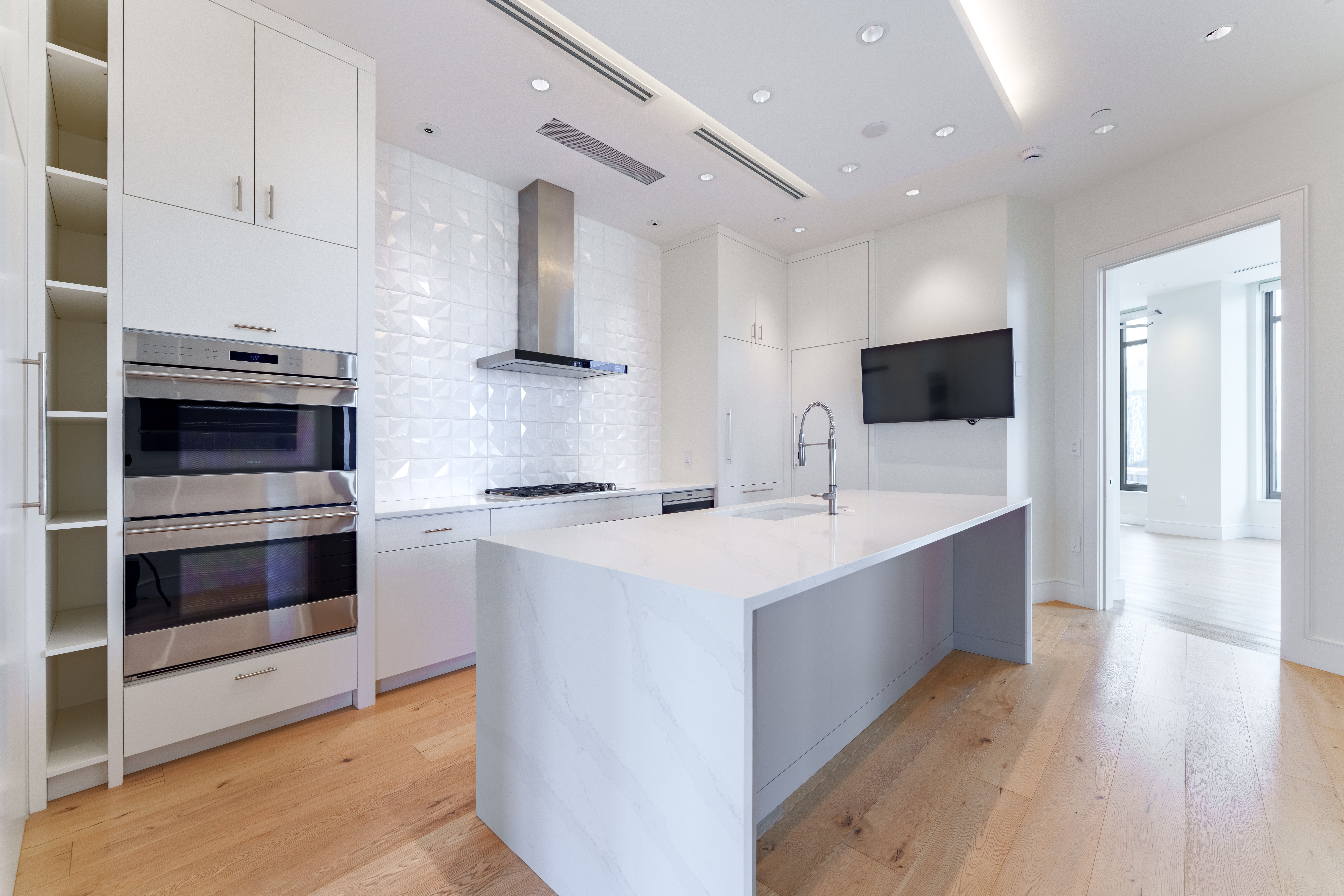

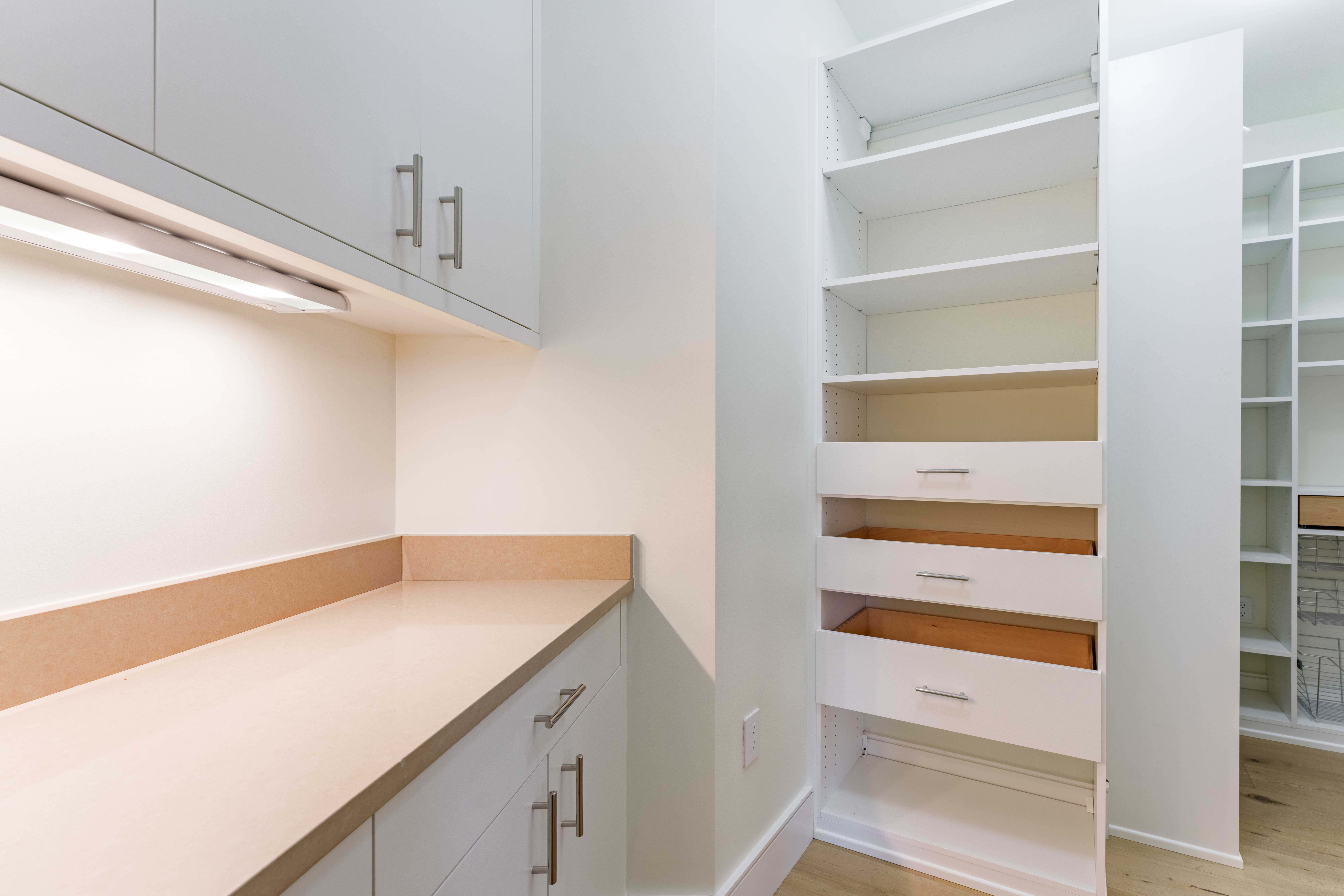
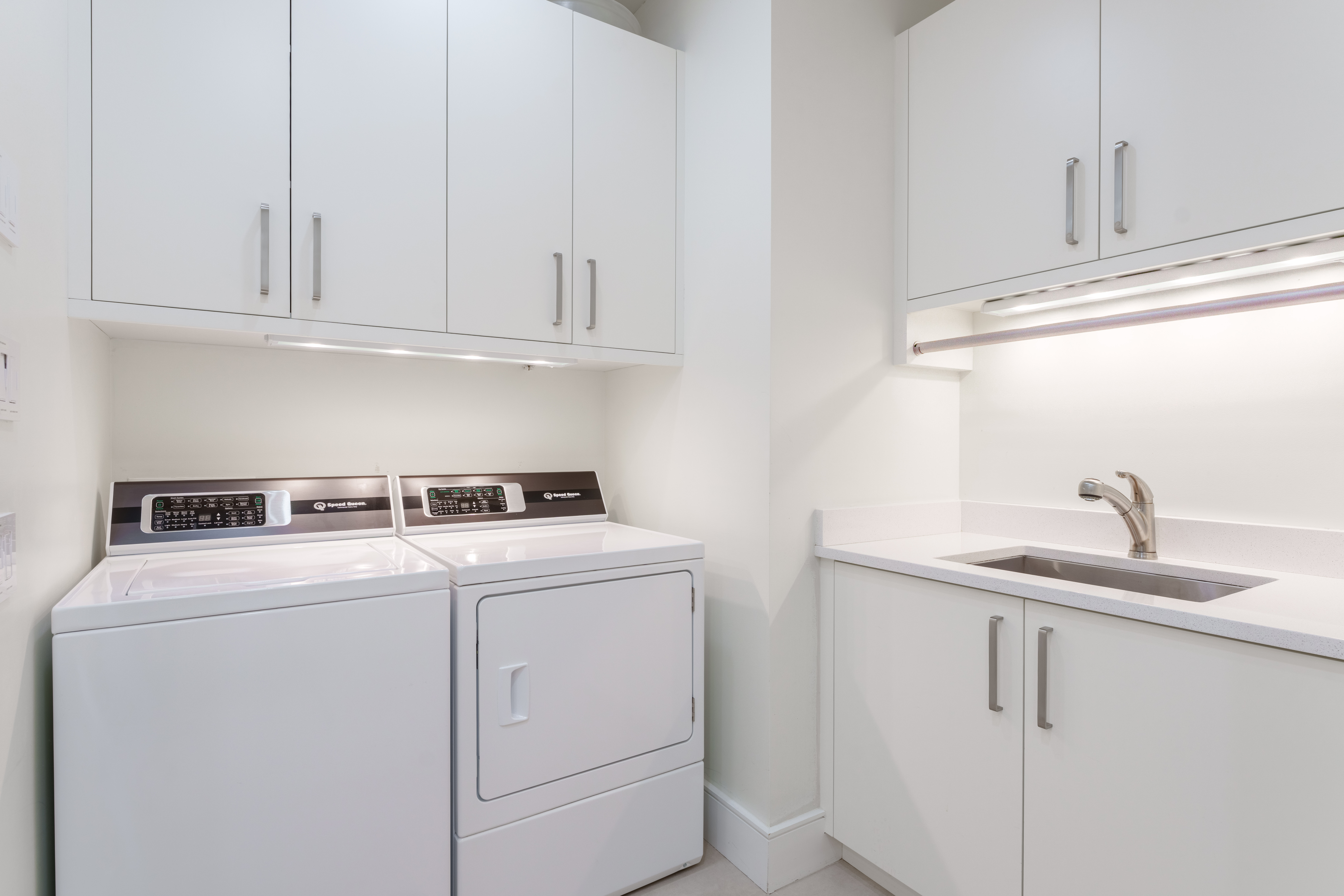
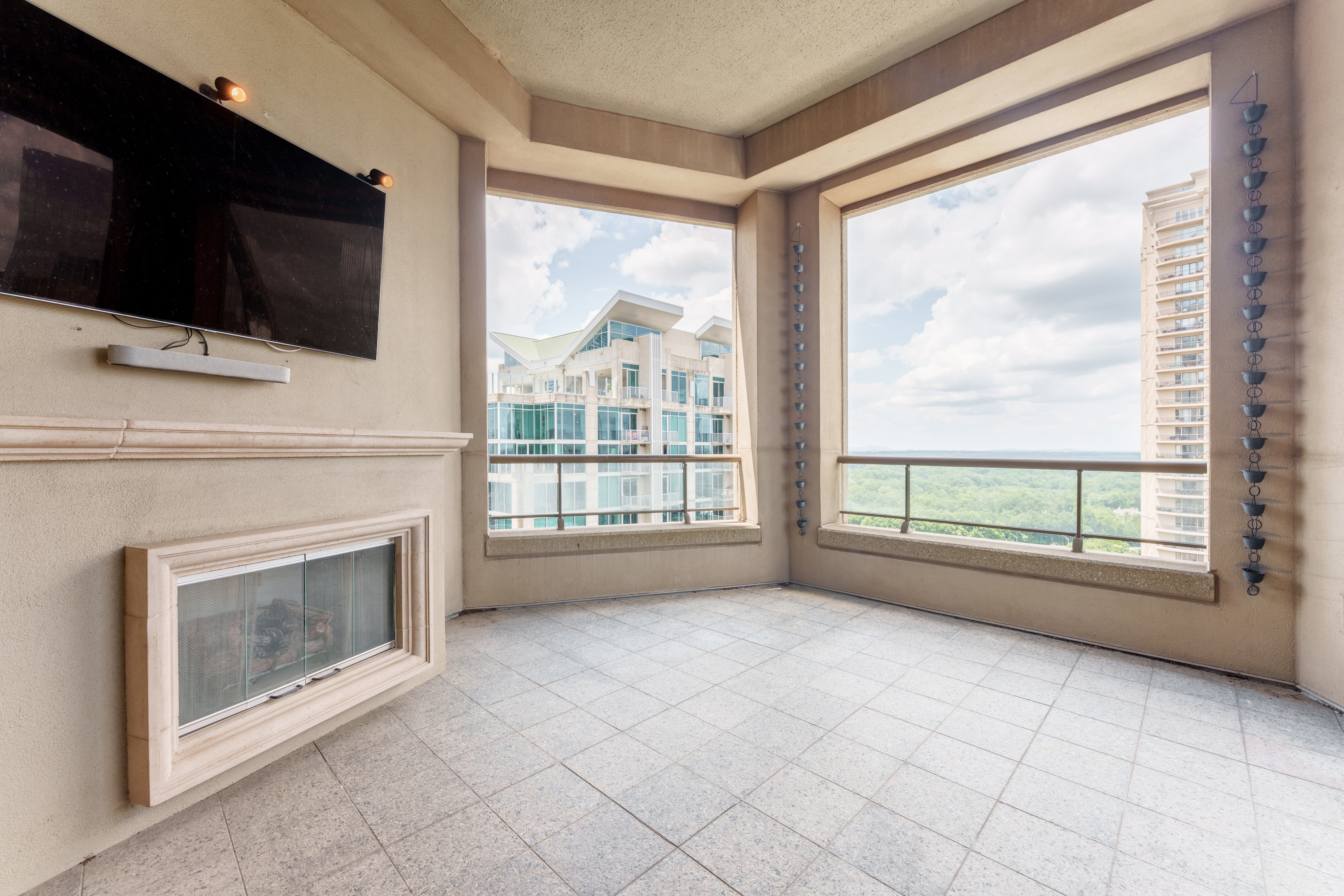
The culinary heart of the home is a testament to form and function, featuring a premier suite of Wolf appliances, fine stone countertops, and a generous walk-in pantry. This space flows effortlessly onto a magnificent covered terrace, where a second fireplace awaits, offering a private outdoor haven for dining and lounging among the clouds.
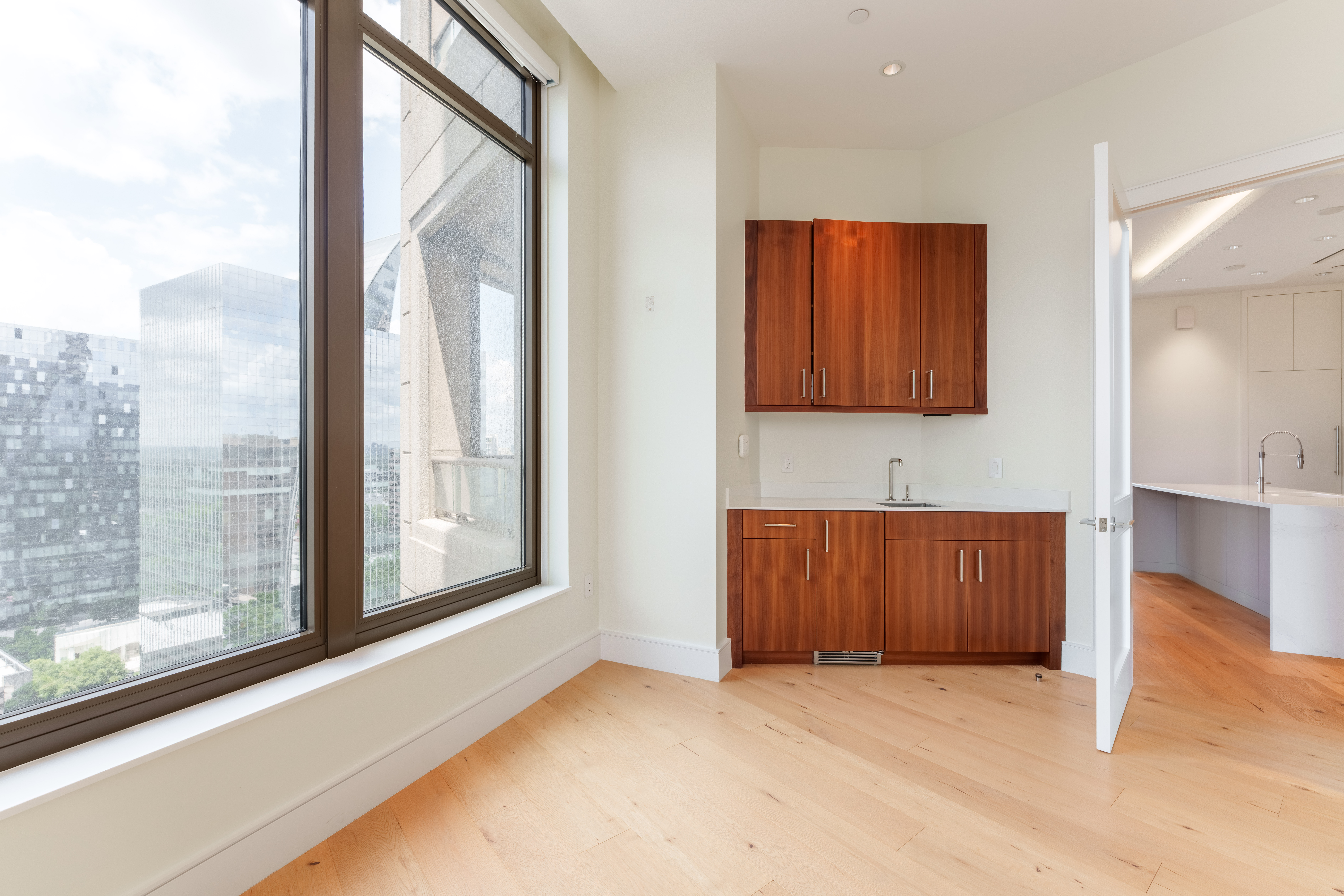
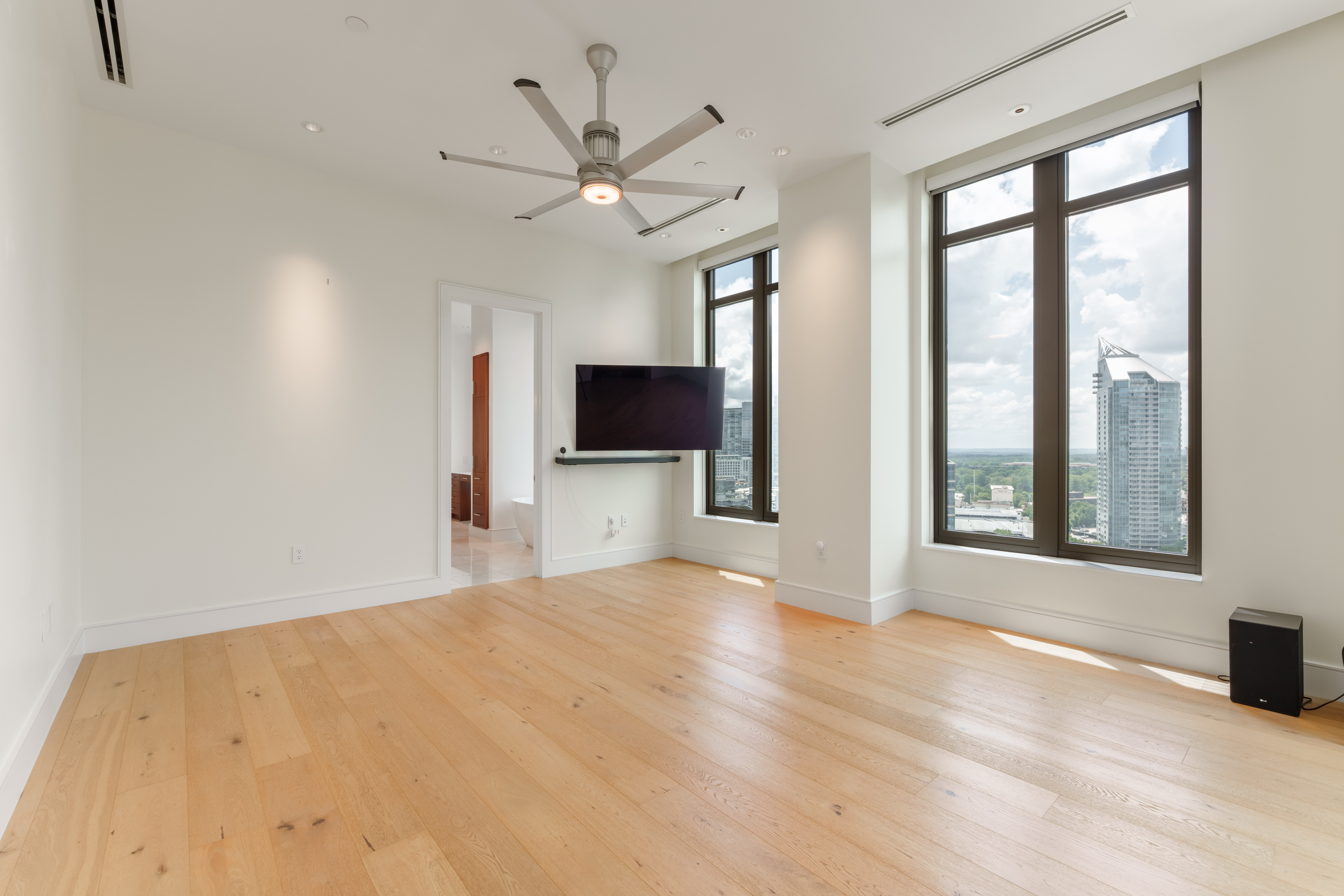
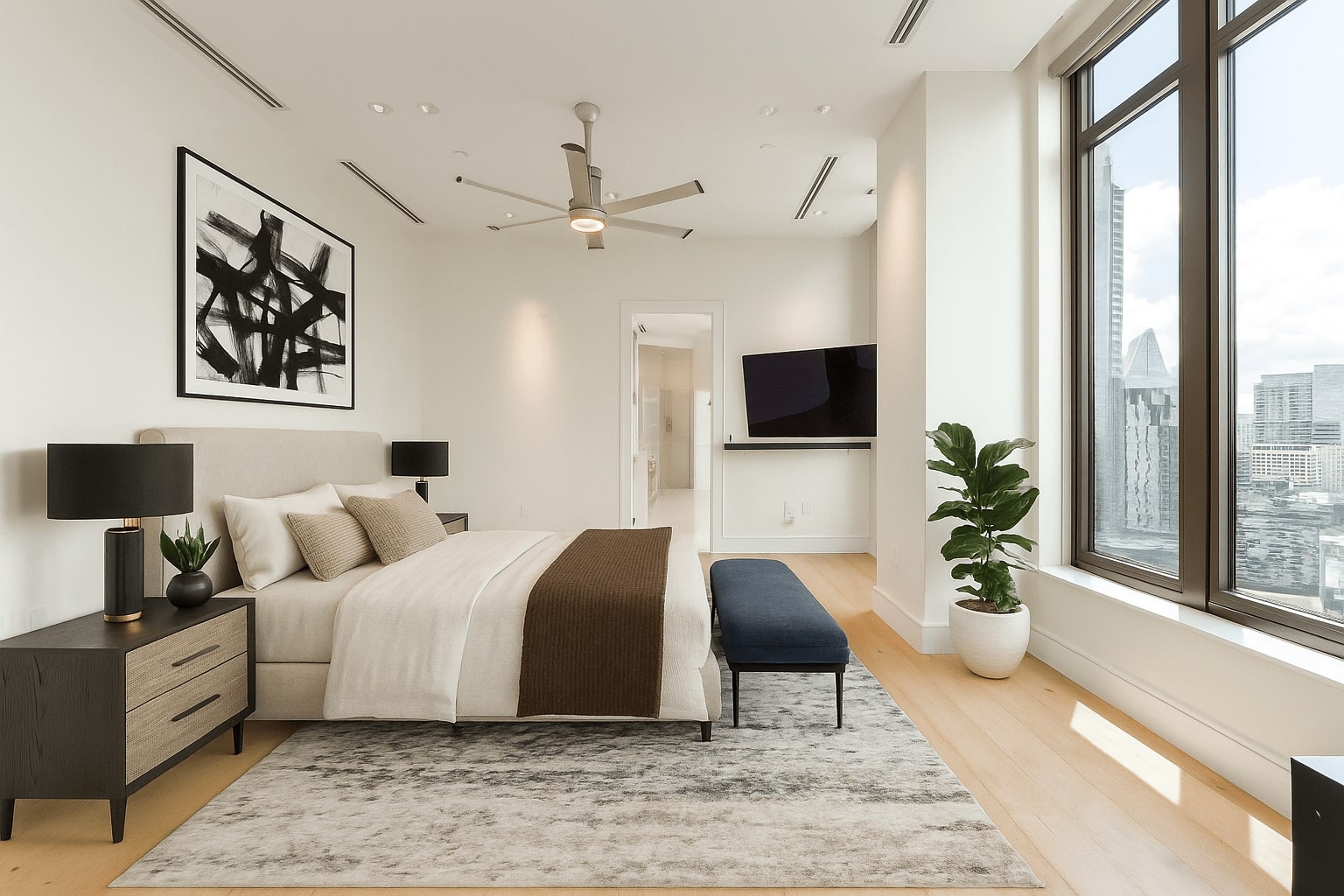

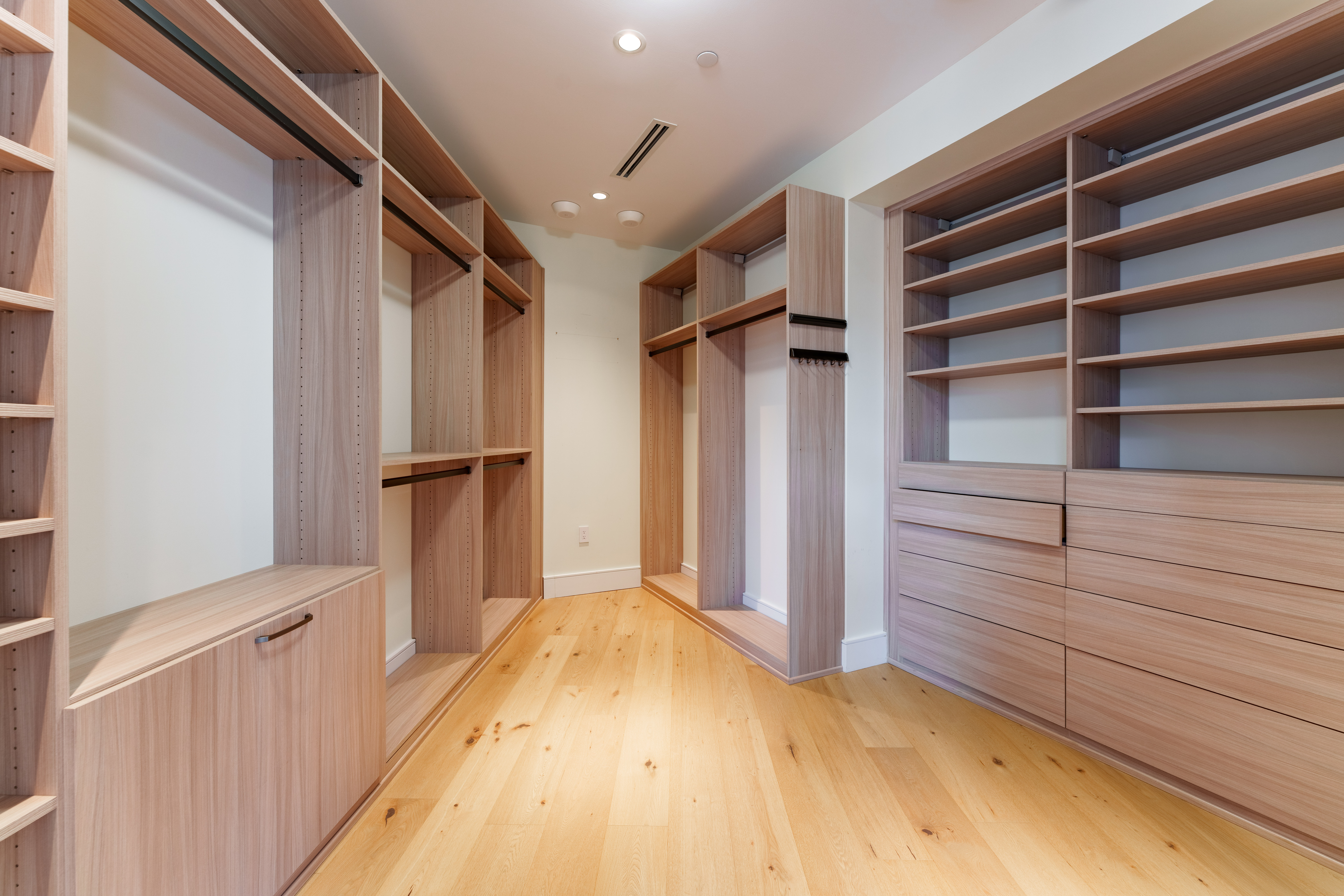
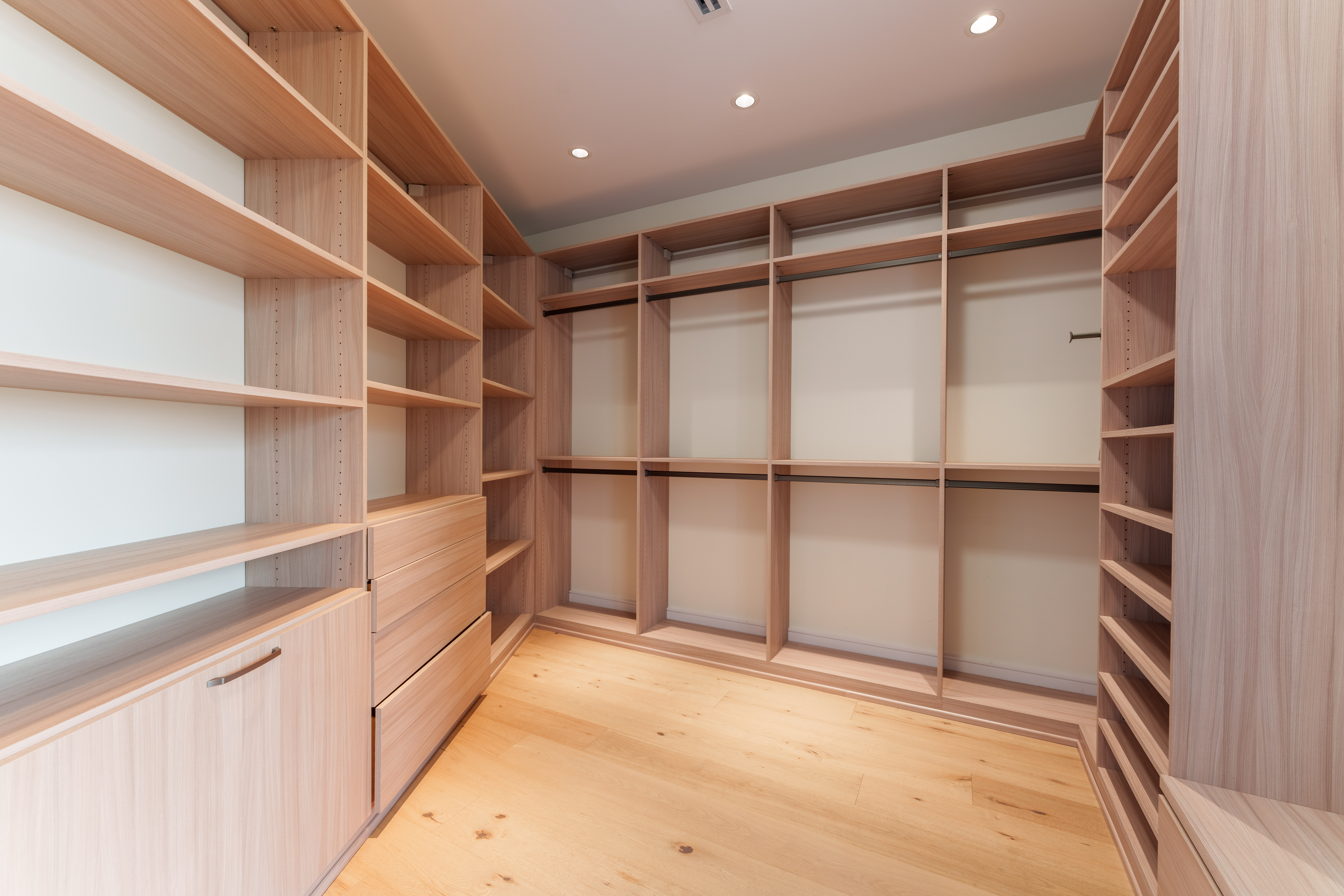
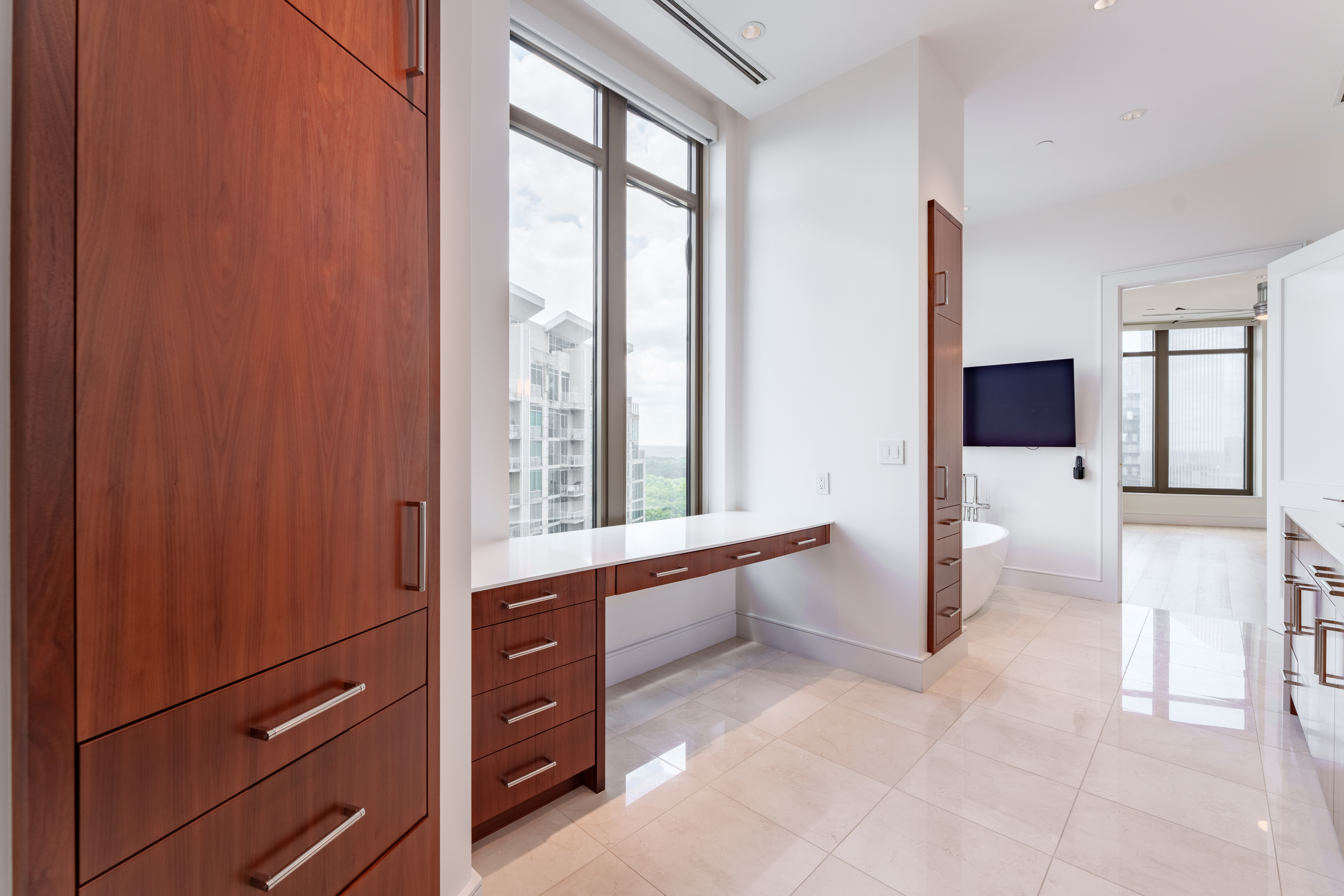

The primary suite is a sanctuary of unparalleled comfort, complete with a wet bar and a tranquil seating area. Its ensuite bath is a study in serenity, with a deep soaking tub placed to capture the most dramatic city views, creating a truly transportive experience.
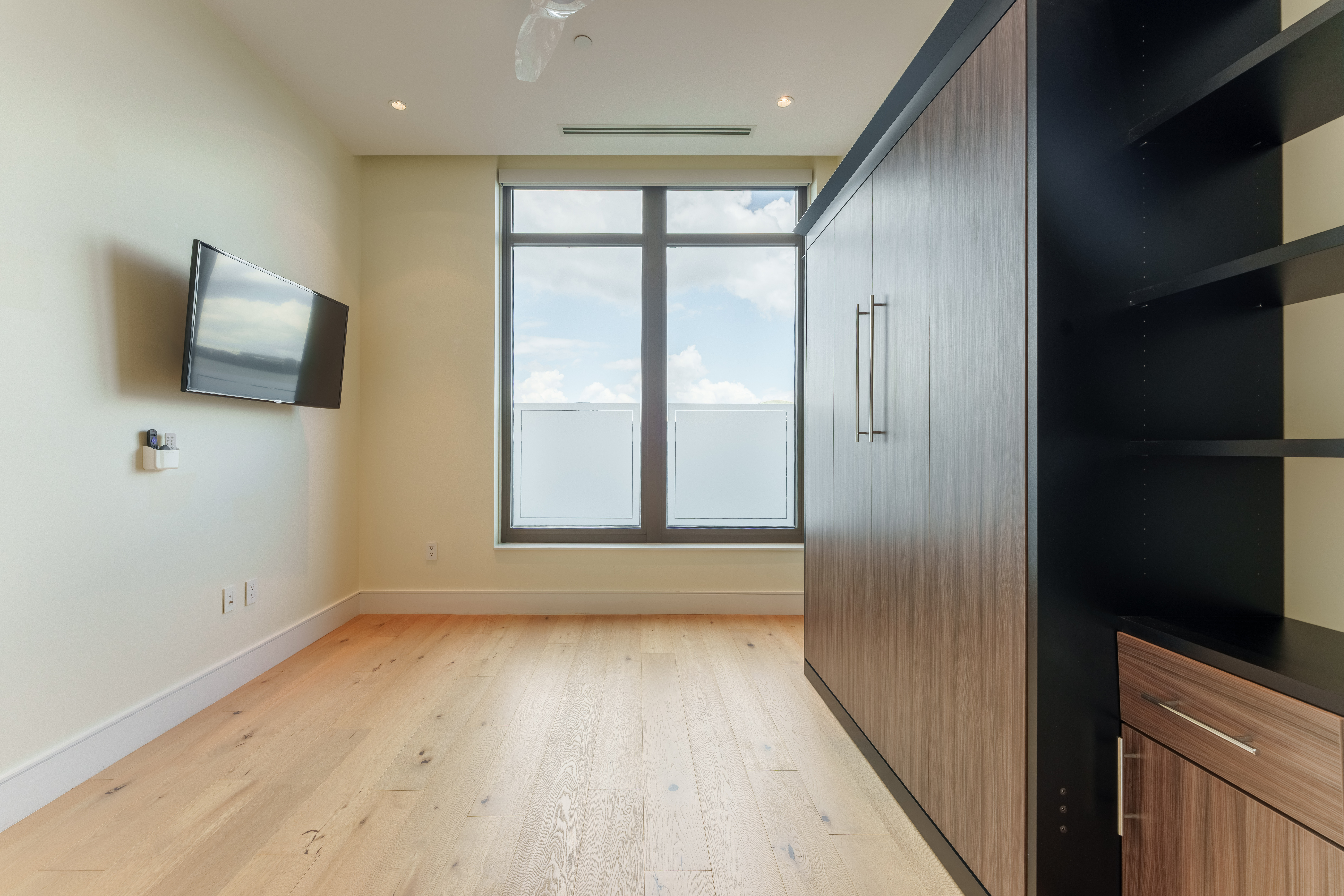
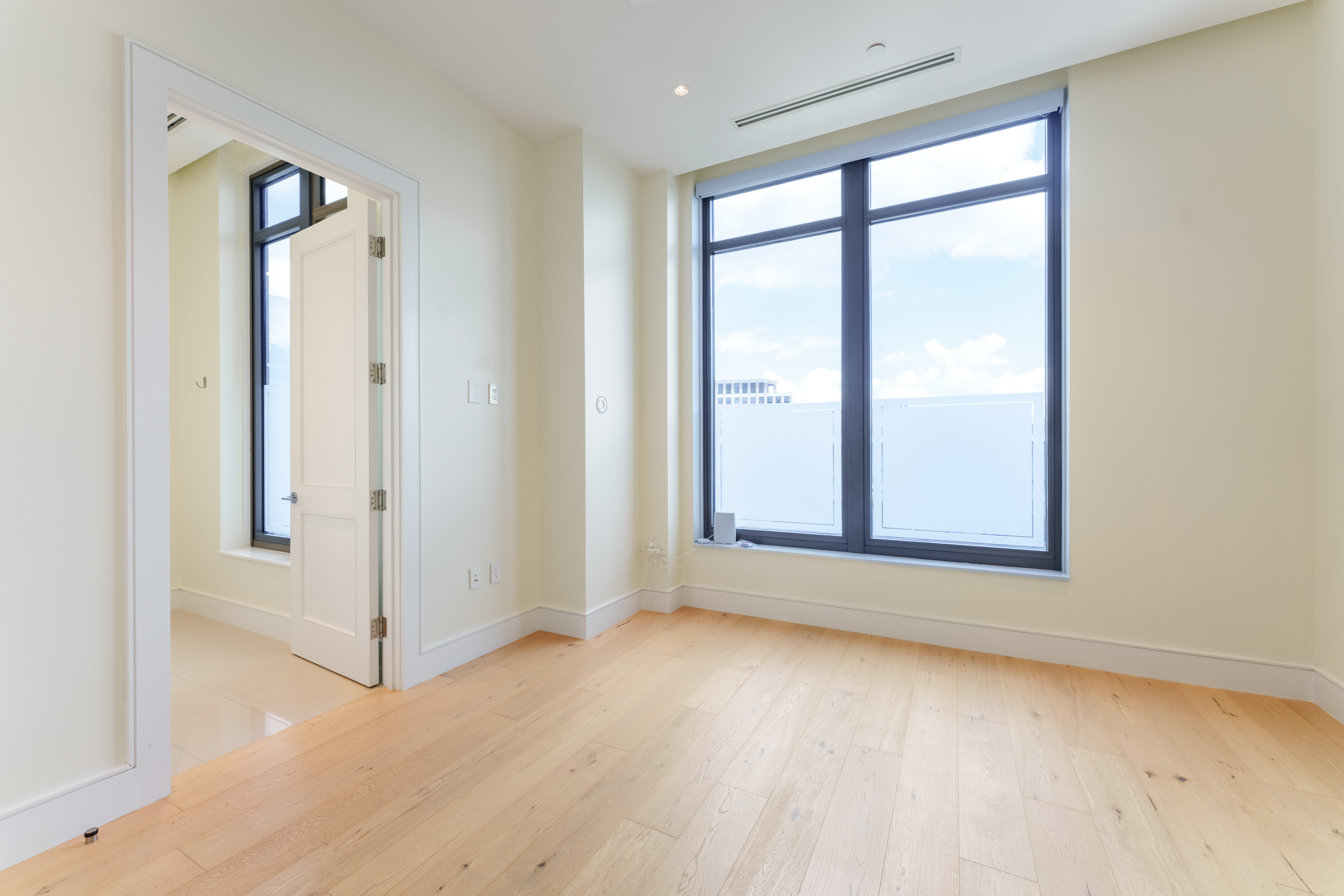
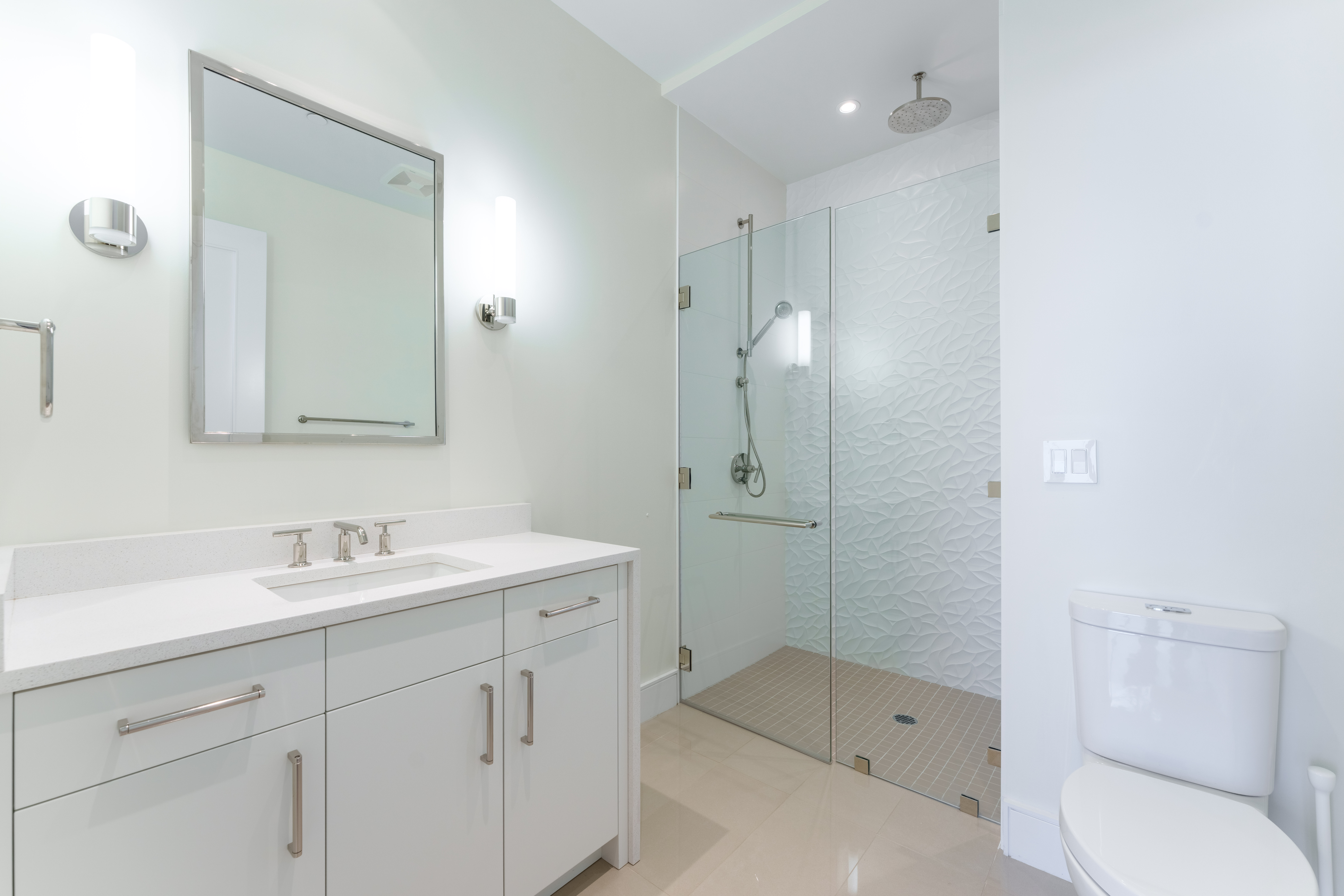
Two additional bedroom suites, each with private baths and custom details, ensure every guest feels perfectly at home. A convenient Murphy bed adds to the functionality of the third bedroom.
This is not merely a residence; it is a gateway to a life of effortless luxury, complemented by the legendary service and amenities of The Waldorf Astoria.
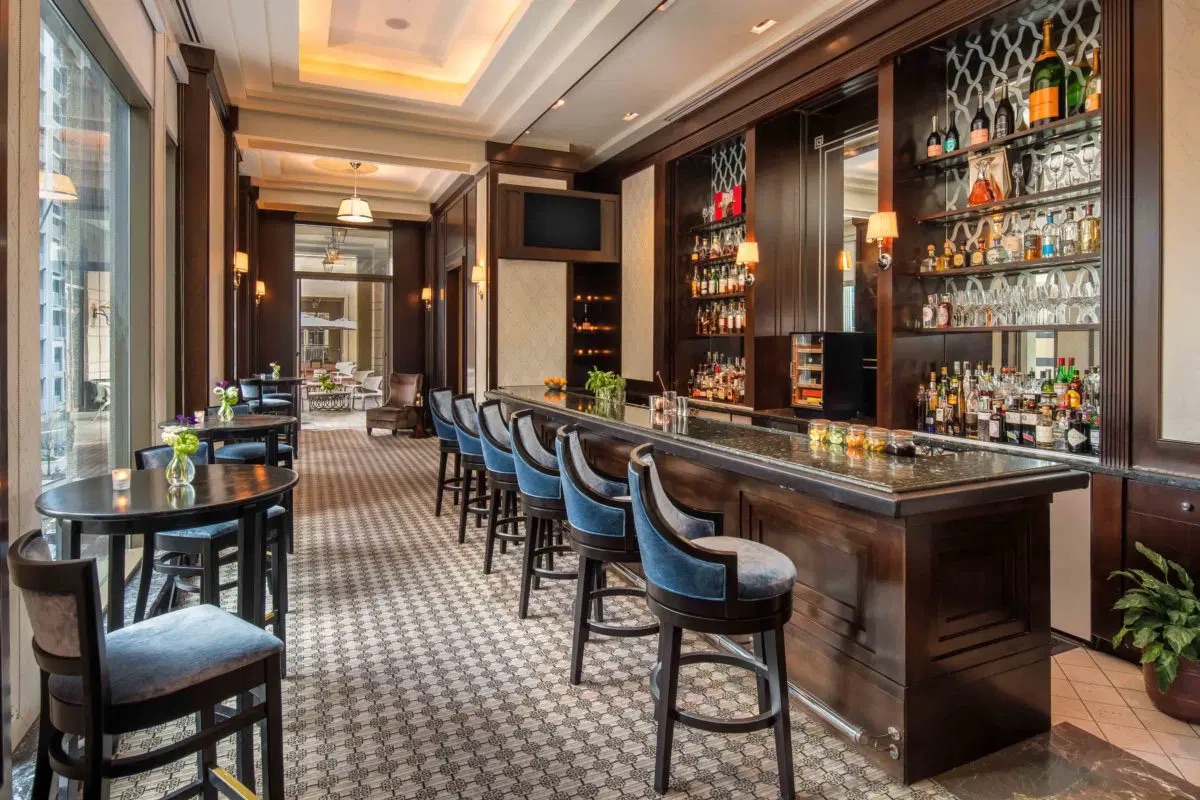
Enjoy indulgent amenities that only the Waldorf Astoria can provide such as climate-controlled enclosed salt-water swimming pool, full spa, personal training in the state-of-the-art fitness center, sauna, steam room and vitality pool, cocktail lounge and cafe. Here you will find the privacy and convenience of a fine home with the luxuries and services of a world-class hotel within walking distance to Buckhead’s finest shopping, dining and business center.
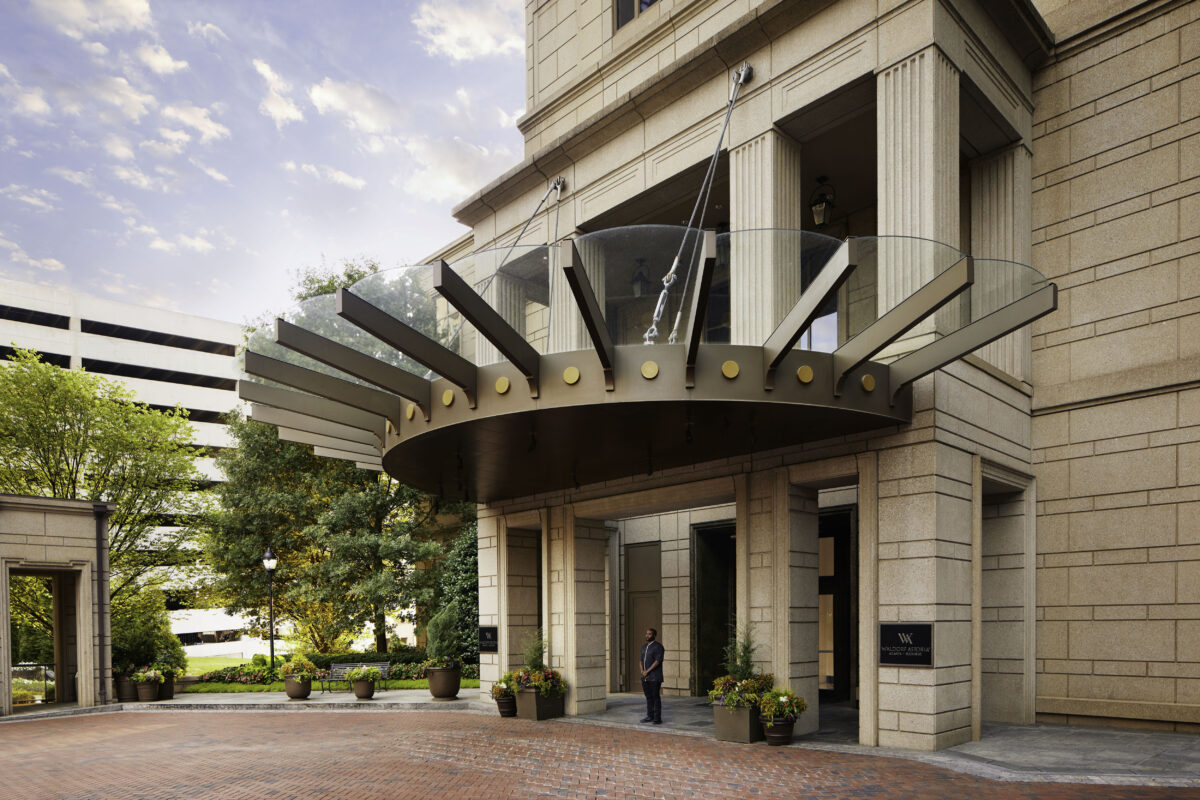
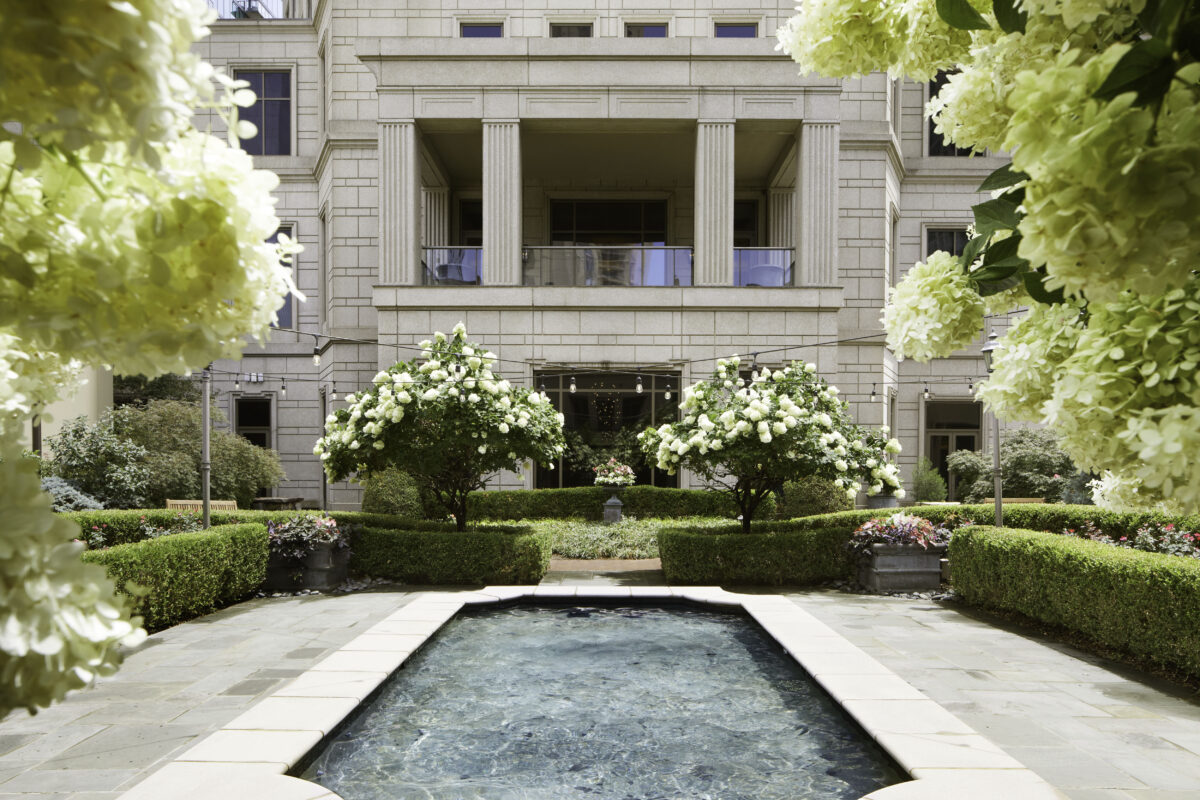


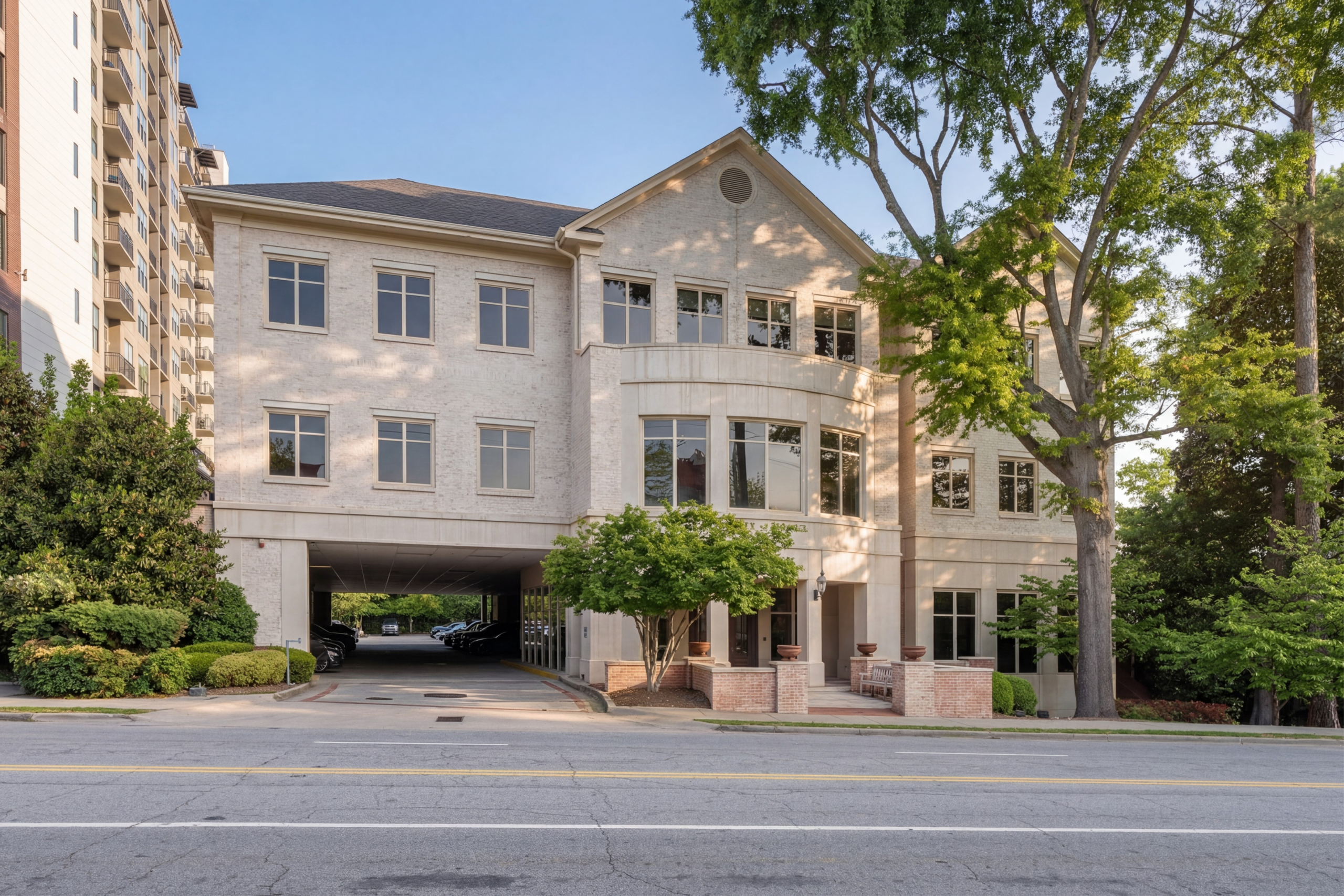
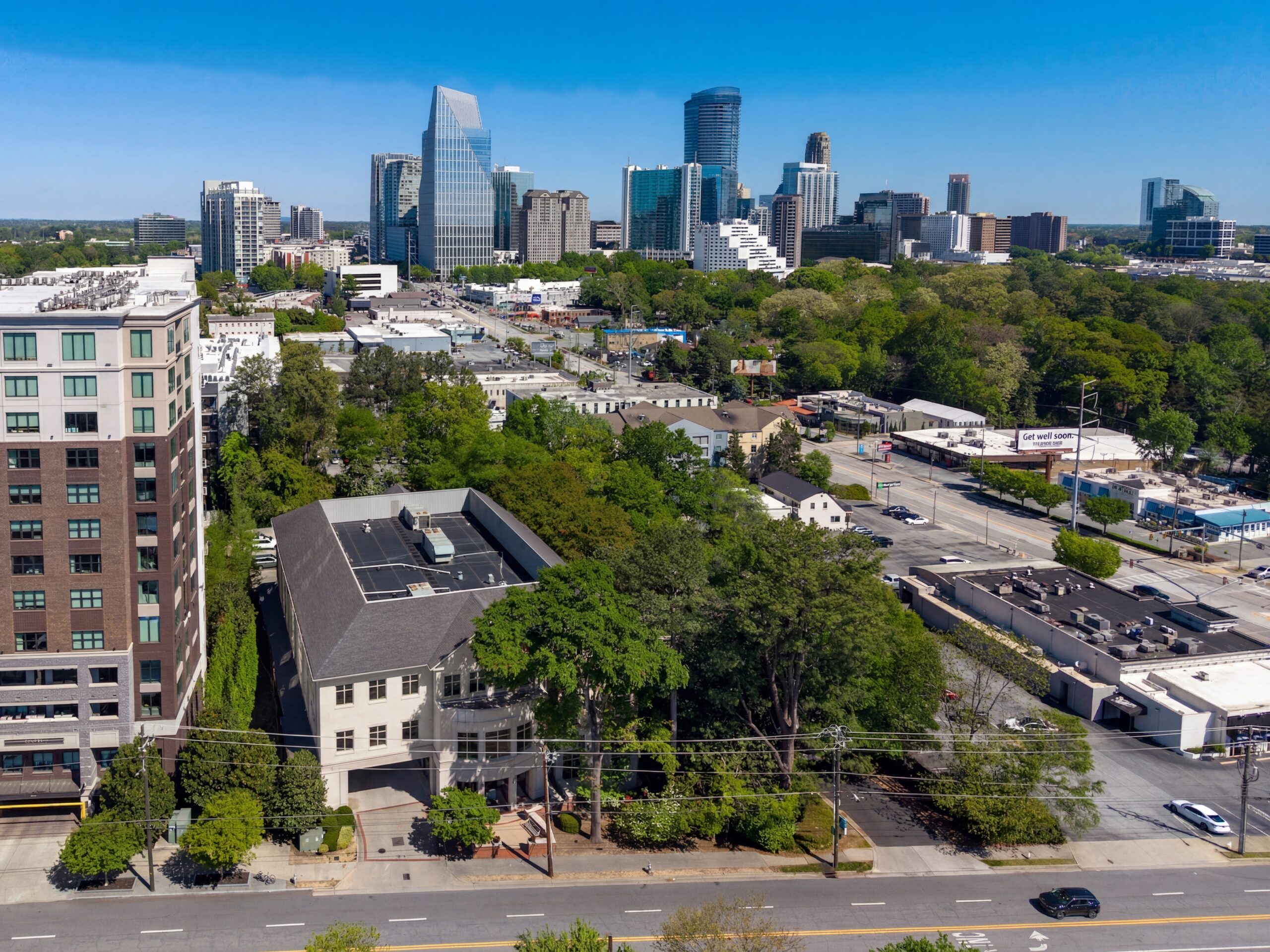
532 East Paces Ferry Road is not your typical office listing — and that’s exactly the point. This is a three-story, 31,208 square foot boutique Class A building on one of Buckhead’s most storied corridors, owned by the Loudermilk Companies and now available for purchase. Built in 2005 to a standard you simply don’t see in low-rise commercial construction — steel frame, concrete floors, and open floor plates; the structural DNA of a high-rise compressed into three elegant stories — this building has been waiting for someone with the vision to claim it. That moment is now.
Most three-story office buildings in Atlanta feel like an afterthought. This one was built like a landmark. The steel frame and concrete floor construction gives the building a solidity and permanence that is extraordinarily rare at this scale — the kind of bones that make architects stop and take notice. With 96 parking spaces (46 covered, with direct elevator access), a roll-up security gate, and a parking ratio of 3.1 spaces per 1,000 square feet, this building offers something Class A towers in Buckhead genuinely cannot: the ability to pull directly into covered parking and walk into your own building.
The building is in the process of becoming something new, a blank slate in which you can design your perfect environment. The dropped ceilings are coming down, revealing ceiling heights that approach 13 feet. The exterior brick — handsome but overdue for a refresh — is being treated with a hand-applied lime wash that will give the facade the kind of aged, timeless gravitas more commonly associated with a Buckhead estate than a commercial address. When this building re-emerges on the market, it will look, feel, and present like an entirely different property — because it will be. (renderings below)

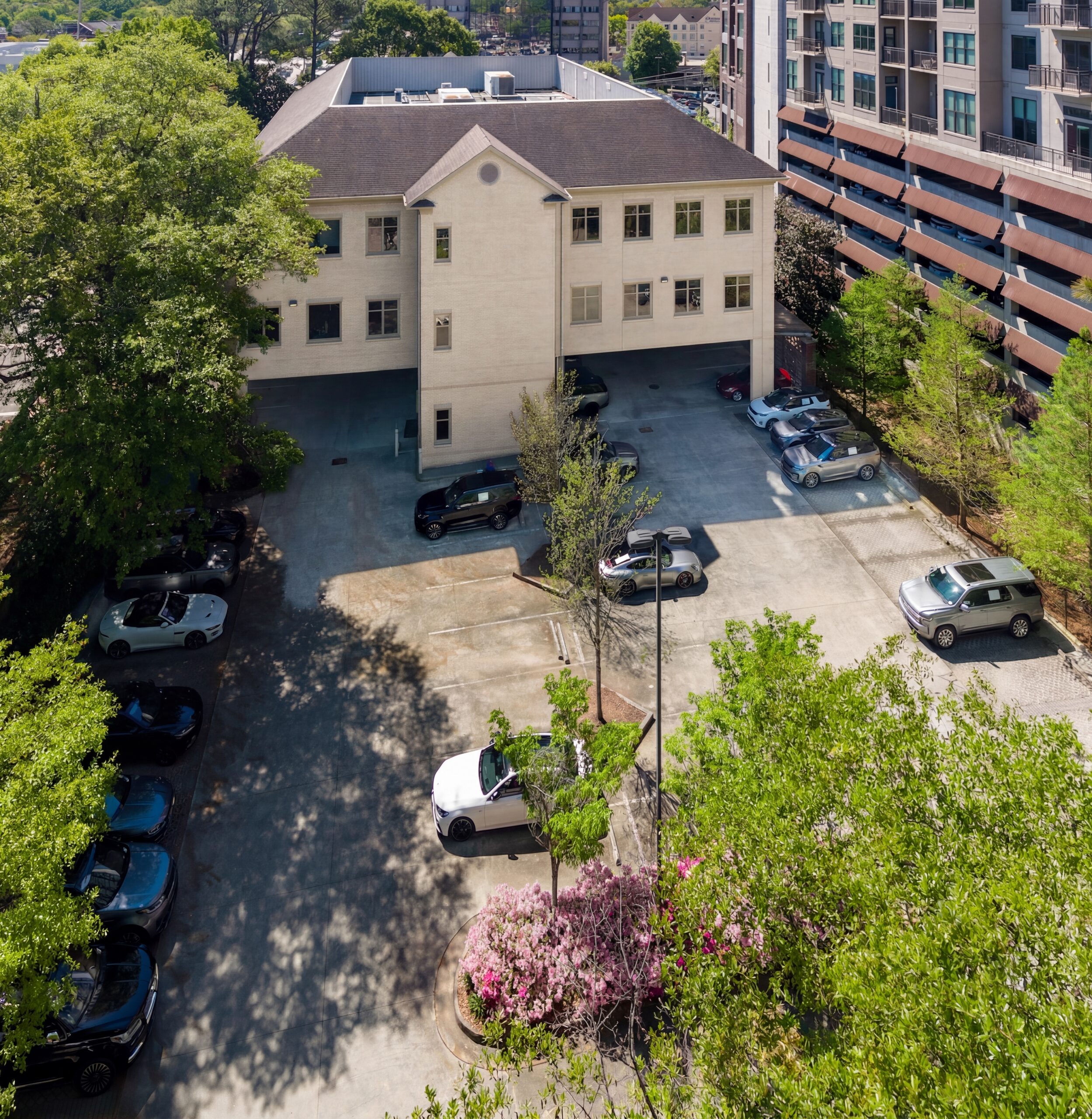
Walk to breakfast at the Corner Cafe. Walk to Bones. Walk to Aria. Walk to Antica Posta. The building sits on East Paces Ferry Road between Peachtree and Piedmont, at the precise intersection of Buckhead’s residential elegance and its commercial energy. Buckhead Village — The Buchead Village District, with its luxury retail and dining — is steps away. GA-400 is less than a mile. Lenox Square and Phipps Plaza are within half a mile. The Walk Score is 91. For a business owner who has spent years fighting traffic into a tower garage, this address is a destination.
Five Thirty Two East Paces Ferry is currently offered as a single building sale — one buyer, one address, one name on the door. This is the most direct path to ownership, and for the right person, the simplest story: a standalone Class A building in the heart of Buckhead, yours entirely. That is the offering on the table today, and it is priced accordingly.
For buyers who need less than the full building, the purchase of a single floor — approximately 16,000 square feet, or roughly half the building — is available upon inquiry at a separate price point. This is the right answer for the business owner who wants a genuine Buckhead headquarters with real equity but doesn’t require the full footprint to make it work. Own your floor, own your address, build your equity. The math is simpler than a lifetime of involuntary displacement and rent checks.
The most compelling path from a pure value standpoint — and the one with the greatest upside for all involved — is the condominiumization of the entire building into individually owned units, each occupied by a business that makes the others more valuable simply by being there.
Think of a design collective: an architect, a landscape architect, an interior designer, and a luxury home builder sharing a building the way they already share clients, referrals, and creative energy. Or imagine a wealth management collective — an estate attorney, a family office advisor, a CPA, and a private banker, each independently owned and operated, but feeding one another business every single day from floors apart rather than offices across town. The model works for any constellation of symbiotic businesses where proximity is not just convenient, but genuinely additive.
This option is not just about dividing square footage — it’s about assembling something greater than the sum of its parts. The combined per-unit pricing would place the total value of the building well above any single-buyer scenario, and the professional community that would take root here would be, frankly, priceless. That upside is real, and it is available to an enterprising buyer — or group of buyers — with the vision to see it.
The building totals 31,208 rentable square feet across two floors on a 0.88-acre site. For context, commercial land in Buckhead Village has traded at more than $10 million per acre. The building that sits on this land was built to last a century. Replacement cost at current construction pricing is a number that makes the value proposition here crystal clear.
This building is for the founder who has always wanted their name on the door. It’s for the design firm principal who is tired of writing a rent check every month with nothing to show for it. It’s for the entrepreneur who sees value in creating a business collective whose members serve parallel markets. It’s for the family office or embassy that needs security, parking, and discretion in a neighborhood they already call home. Buckhead has very few buildings like this left — standalone, owner-occupiable, built to an uncompromising standard, in a location that doesn’t come available twice. Five Thirty Two East Paces Ferry is one of them.
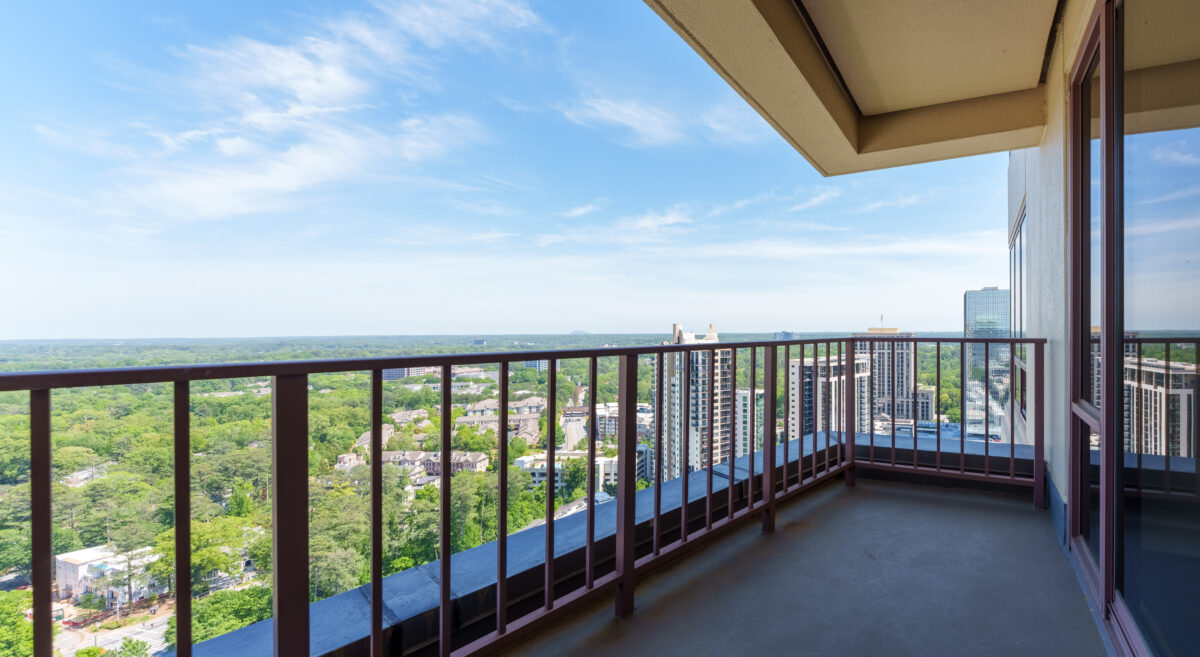
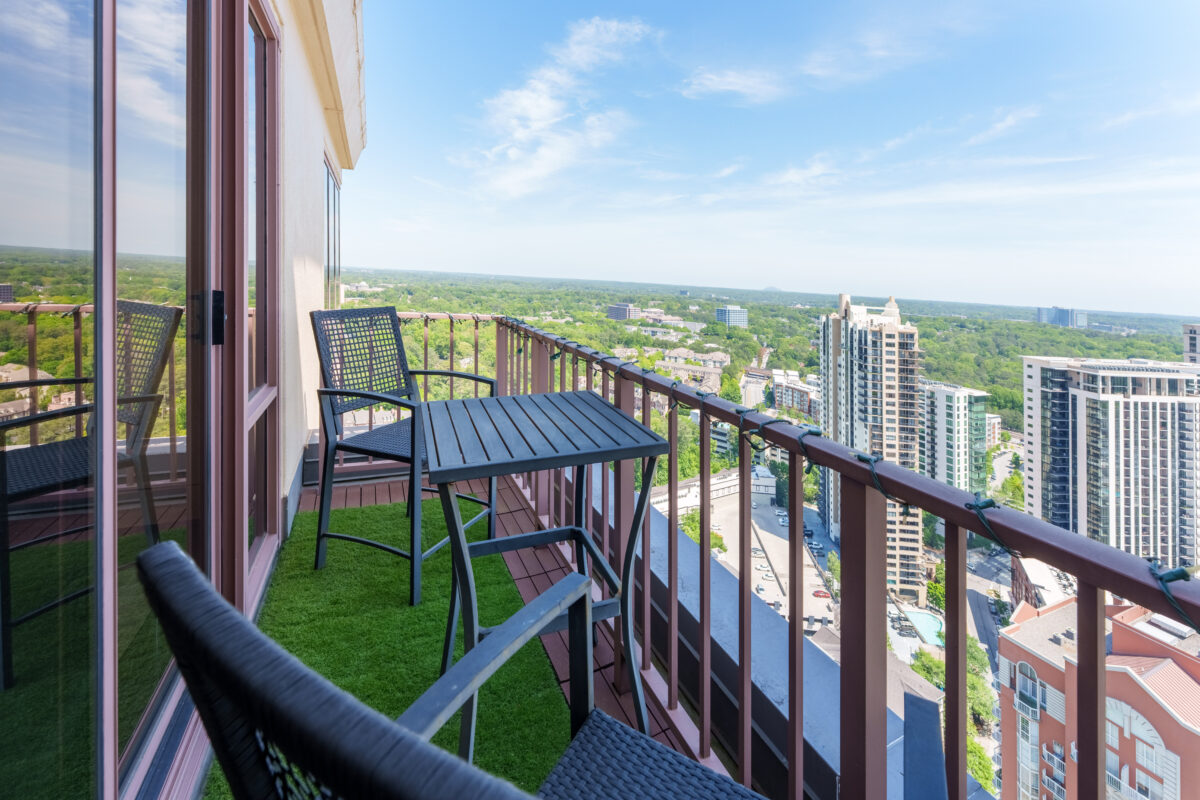
Experience breathtaking views and the ultimate in luxury from the 28th and 29th floors in this exceptional two-story penthouse. With three private balconies and operable windows throughout the unit, there is no shortage of fresh air and an effortless indoor-outdoor living experience, making this unit totally unique! Offering three premium garage parking spaces conveniently located near the elevator, this residence invites you to park your car and step into a vibrant, walkable lifestyle filled with fine dining, shopping, and services just outside your door.
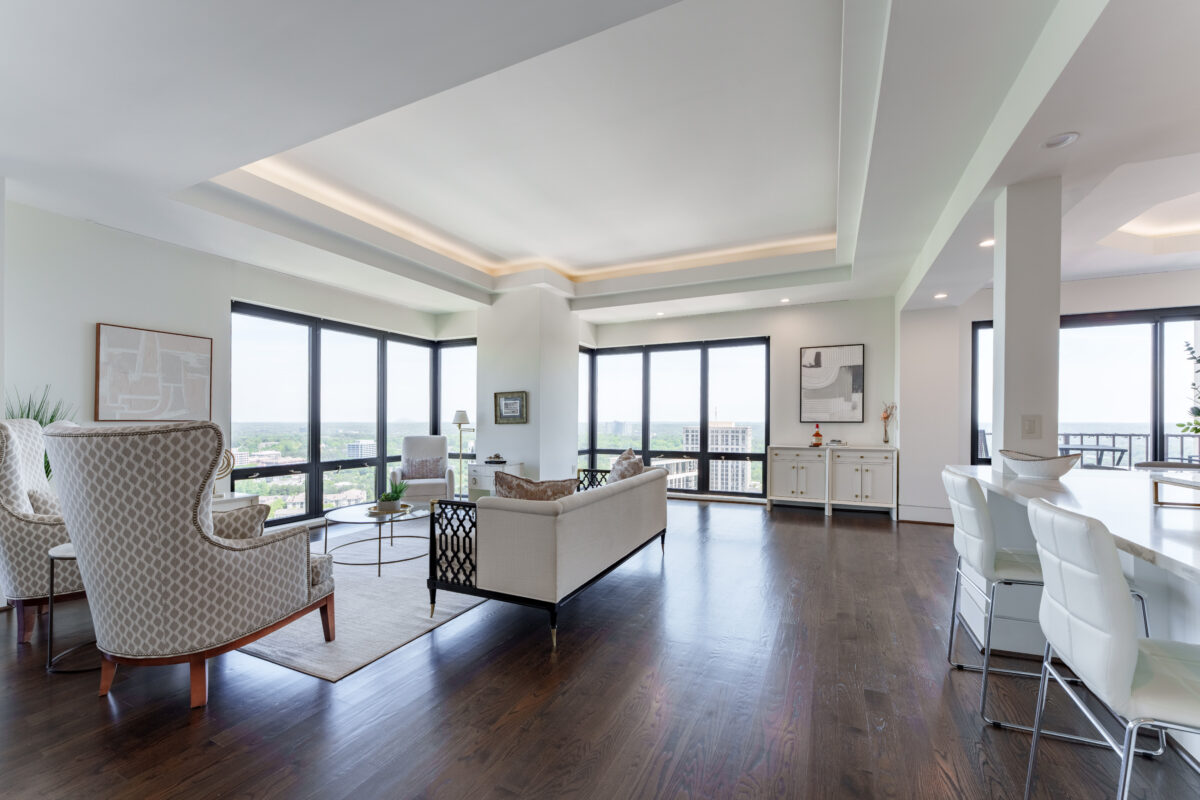
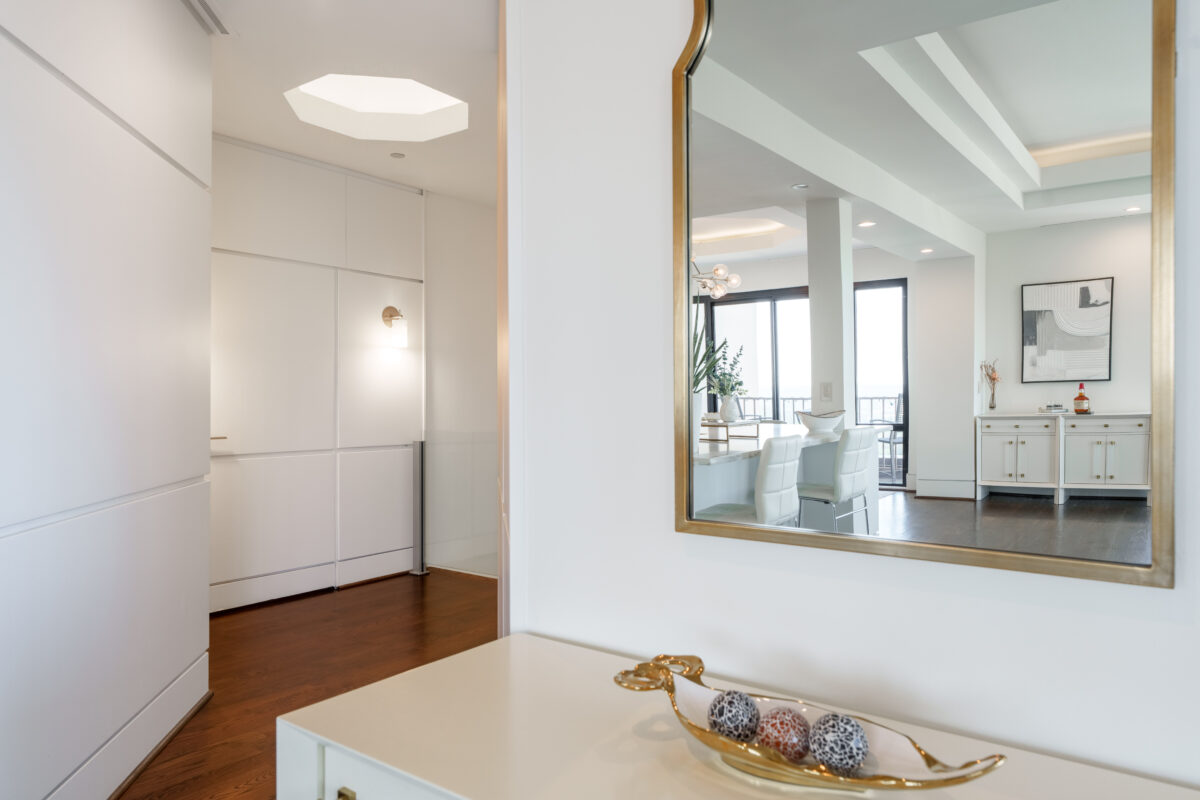
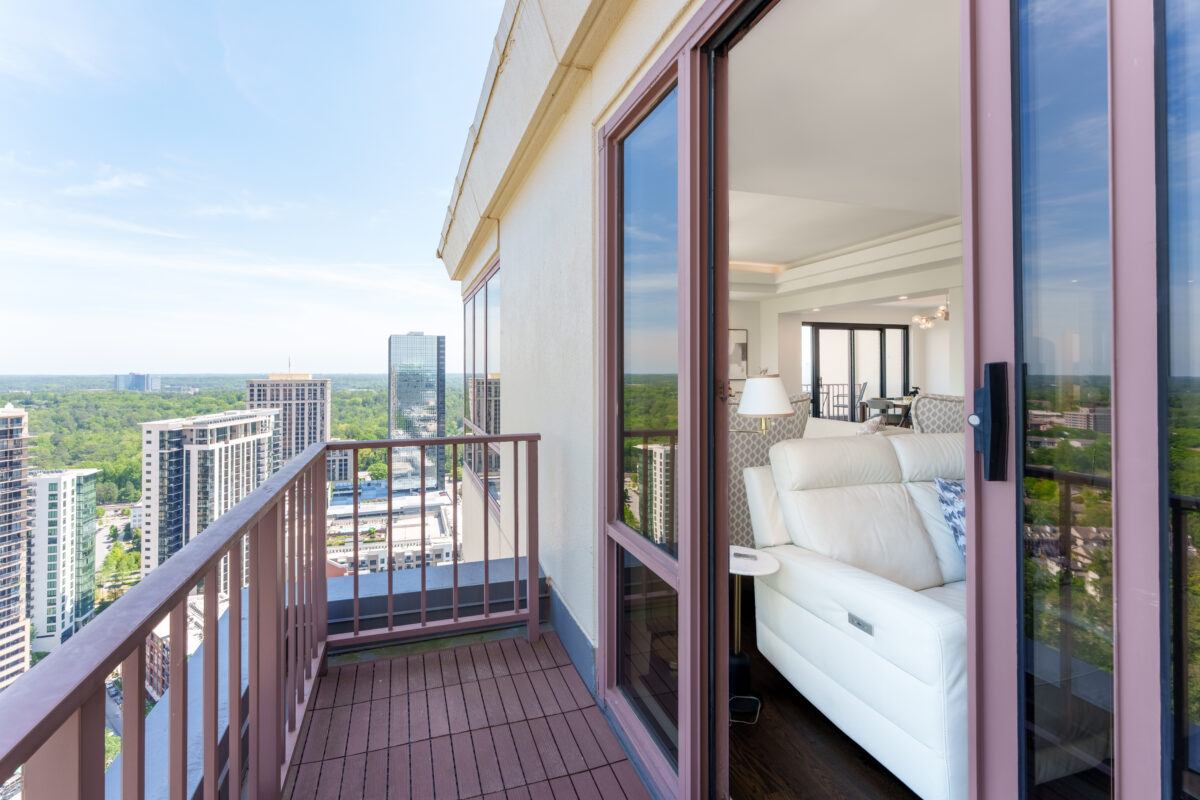
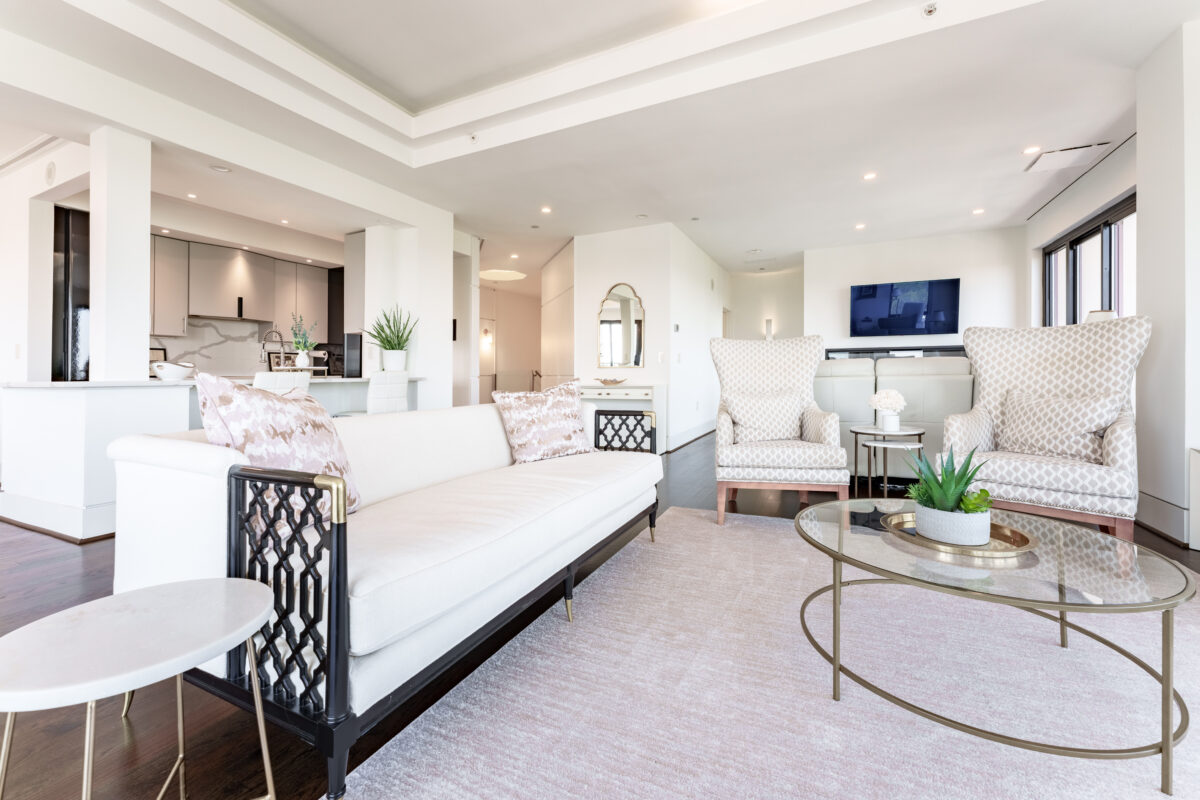
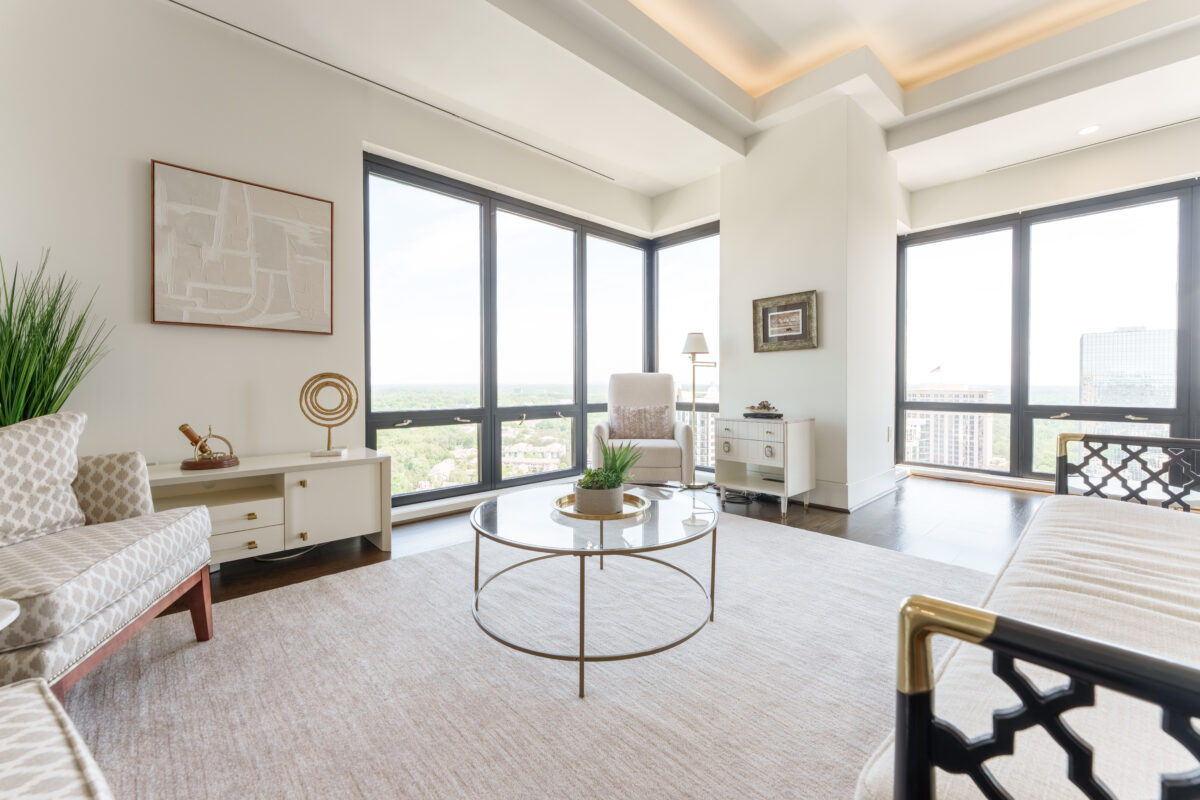
Enter directly onto the 29th floor into a sleek, meticulously renovated penthouse where high ceilings and floor-to-ceiling windows flood the space with natural light and showcase the dazzling skyline. Stunning hardwood floors flow throughout the open-concept floorplan. The designer kitchen features custom cabinetry, top-of-the-line stainless steel appliances, and striking stone countertops. The expansive primary suite impresses with a dramatic curved ceiling and a luxurious, spa-like bath. On the opposite side of the main level, a second bedroom—equally large and beautifully appointed—offers an en-suite bath with extraordinary finishes. A stylish powder room and a concealed laundry closet complete this sophisticated main floor.

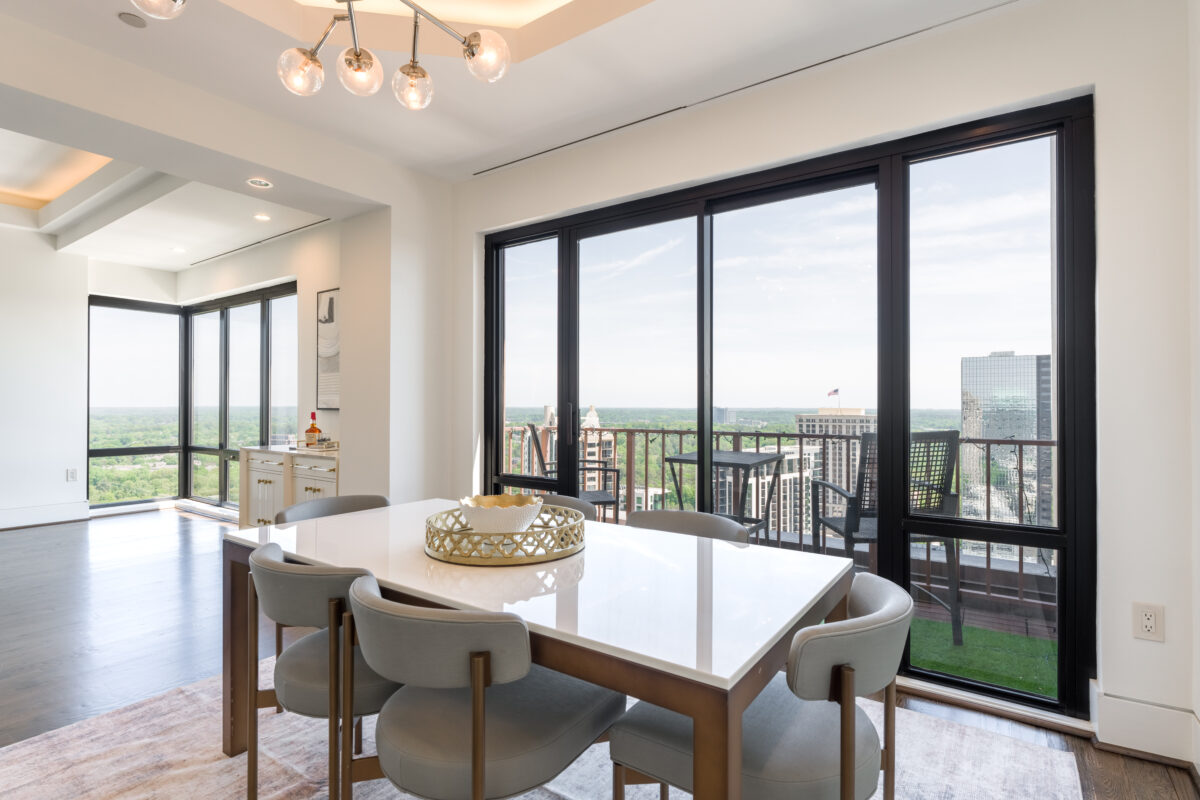
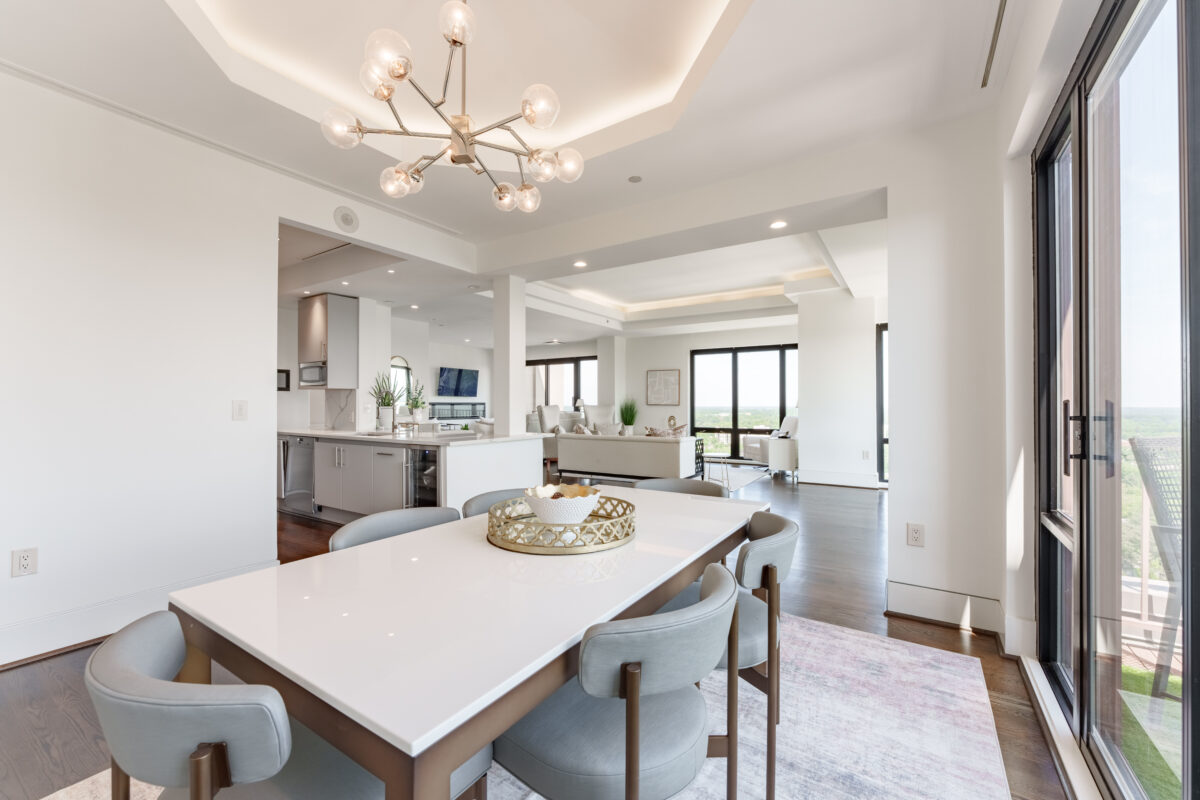

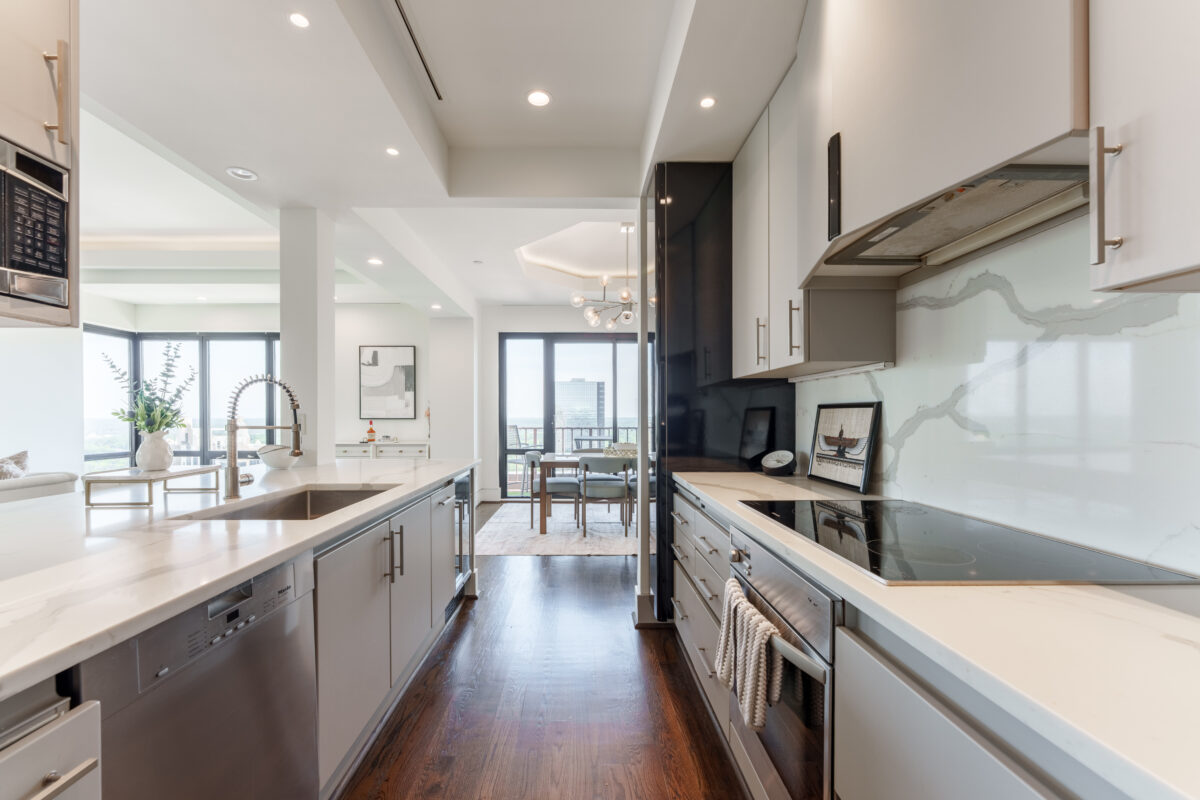

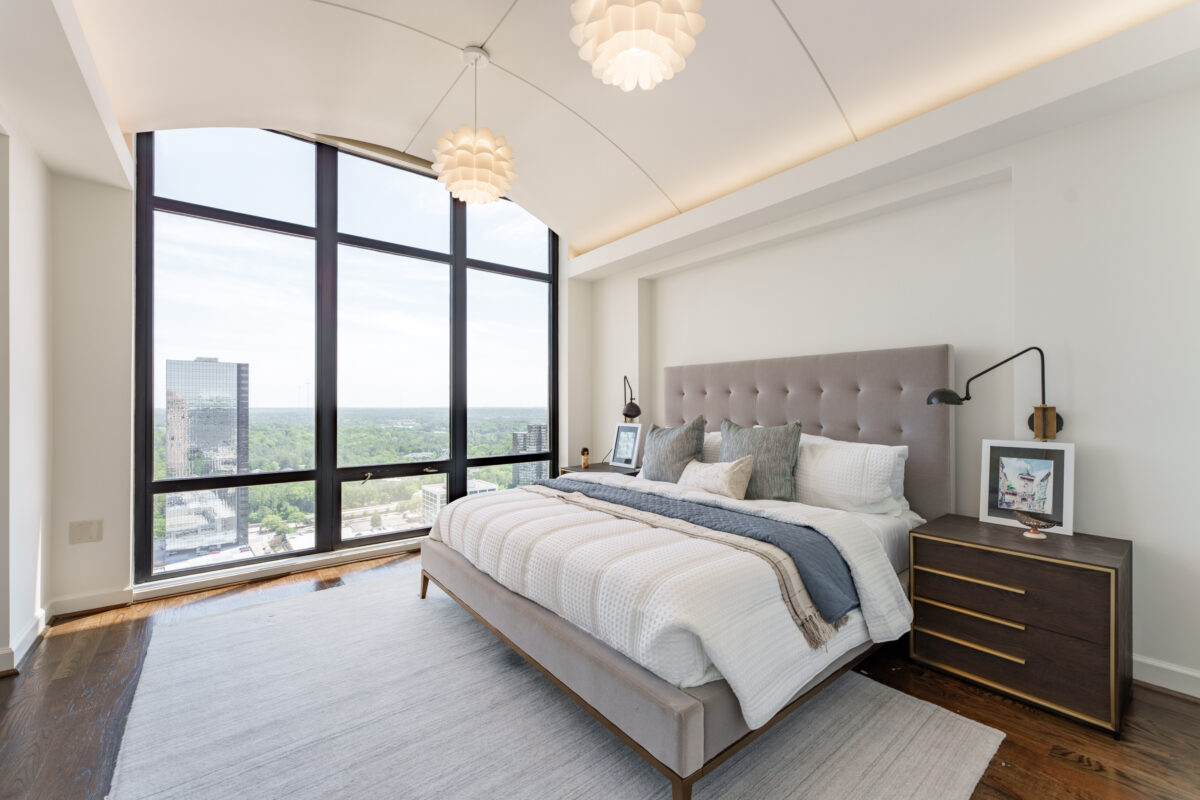




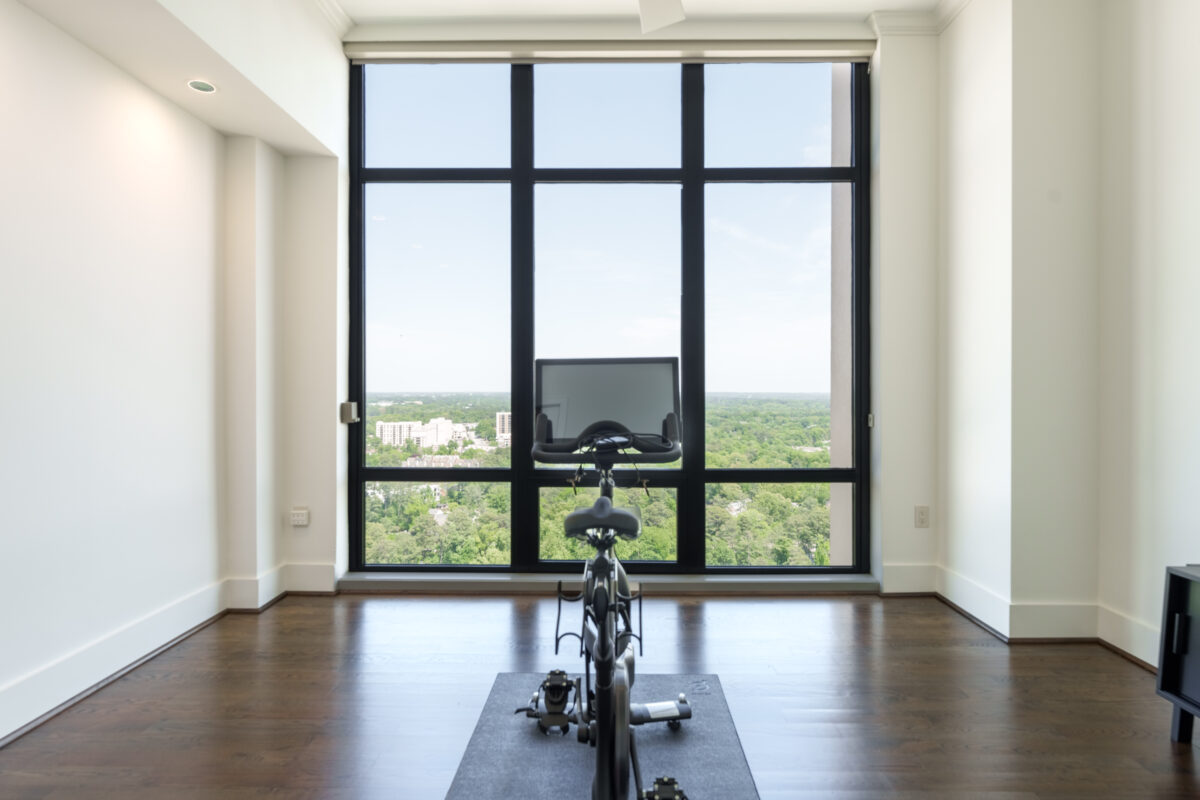
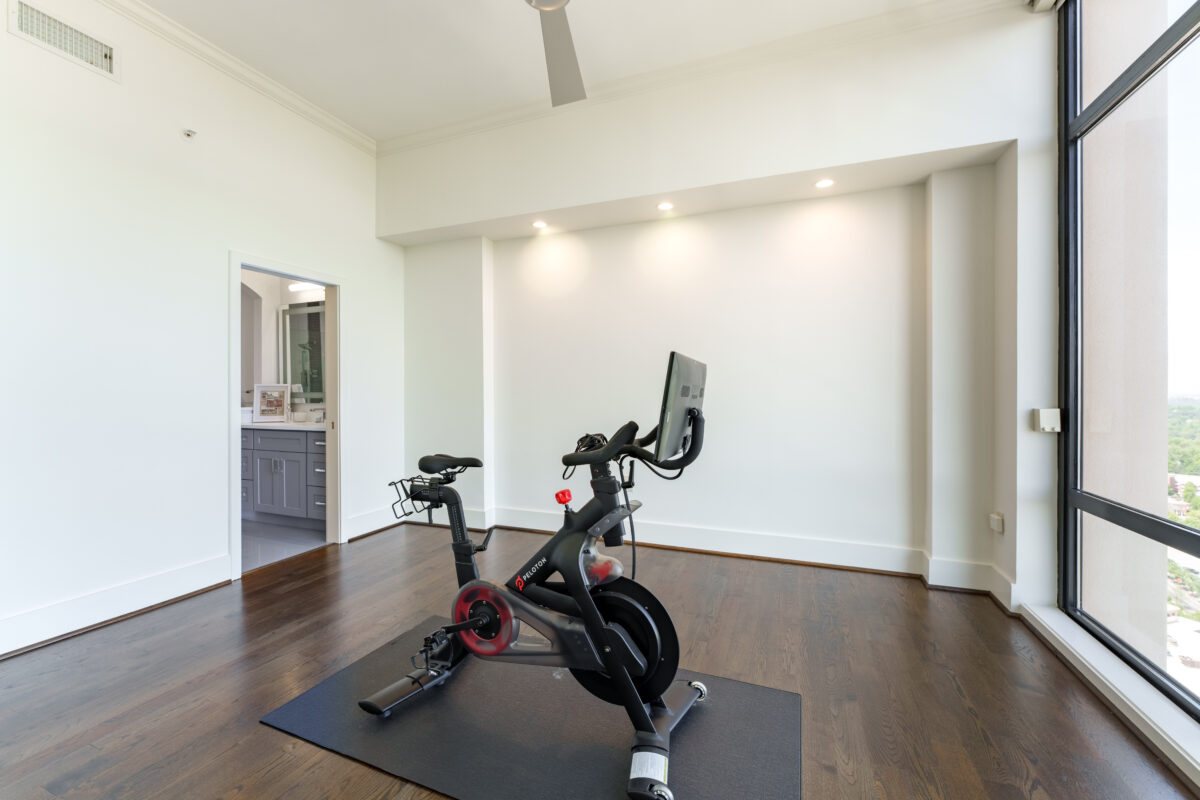

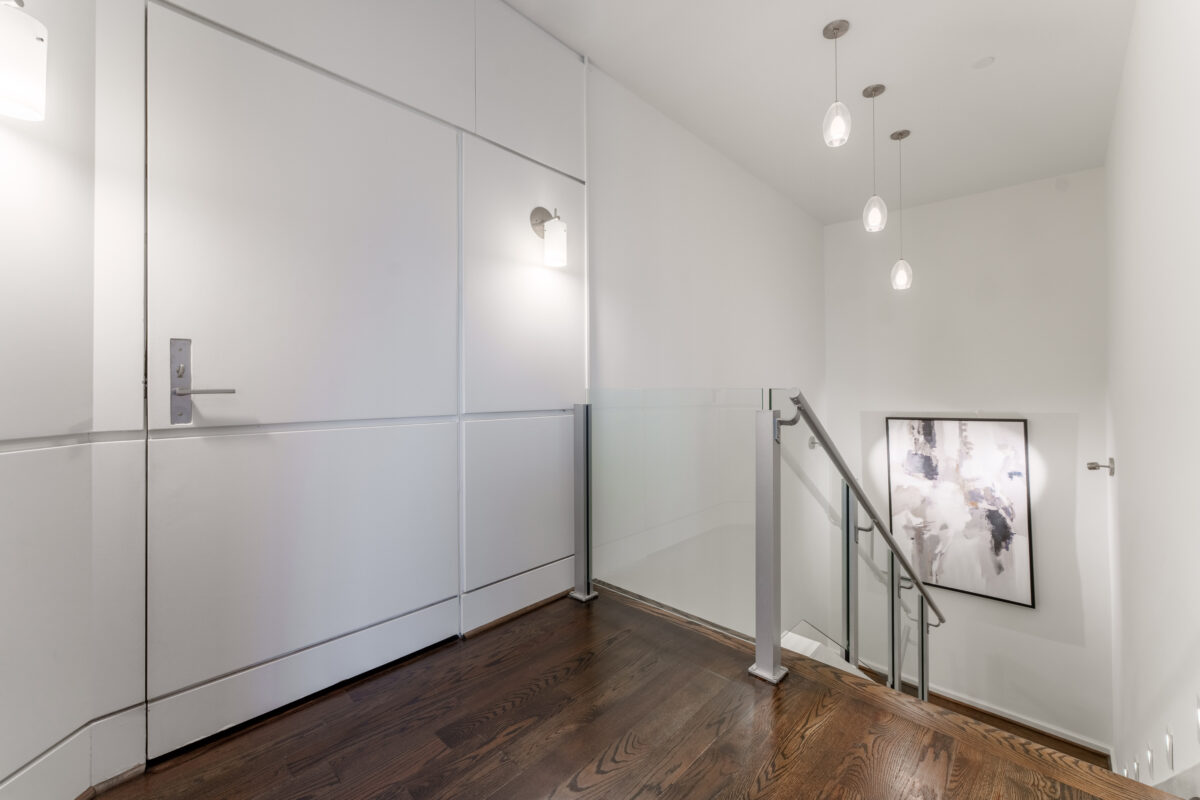
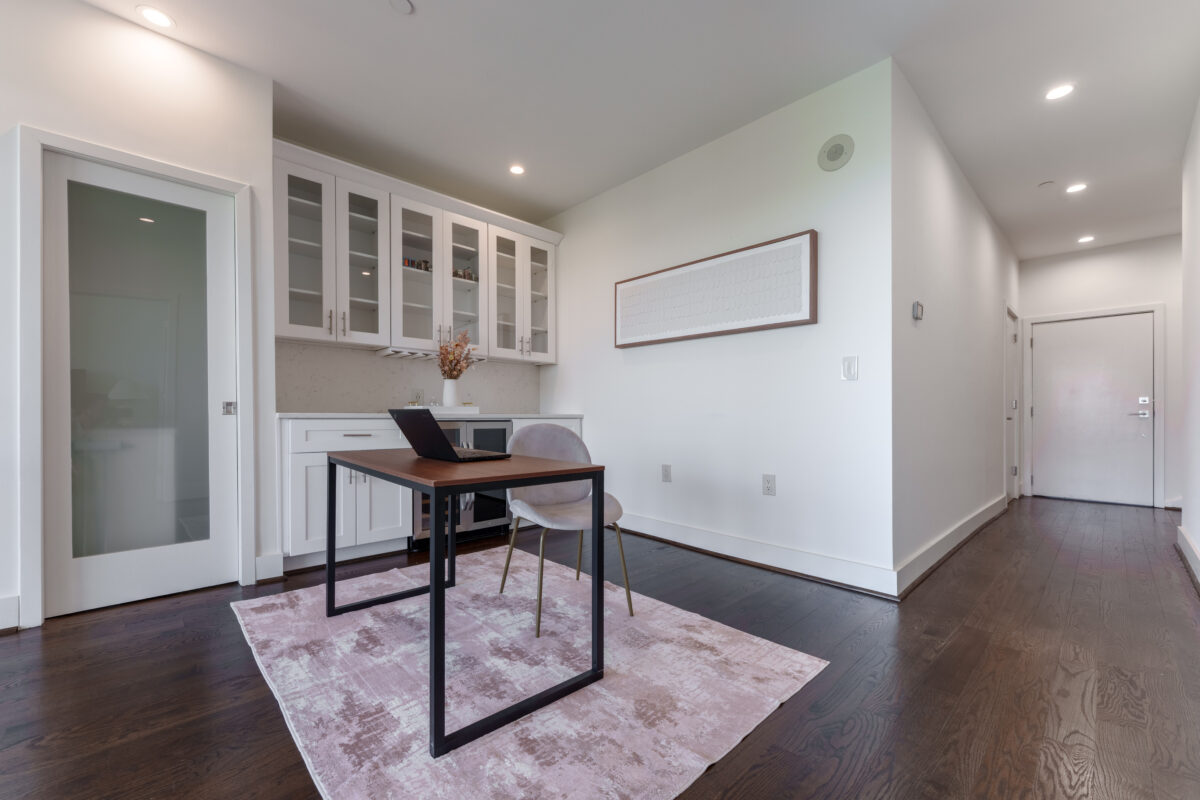
A dramatic staircase leads to a lower level designed for both comfort and entertainment. This level includes a spacious secondary living area or office with built-ins, a deep, temperature-controlled wine cellar, an elegant third bedroom with dual closets, and another opulent bath with double vanities and high-end finishes. As an added indulgence, enjoy your own private sauna, completing the ultimate penthouse experience.
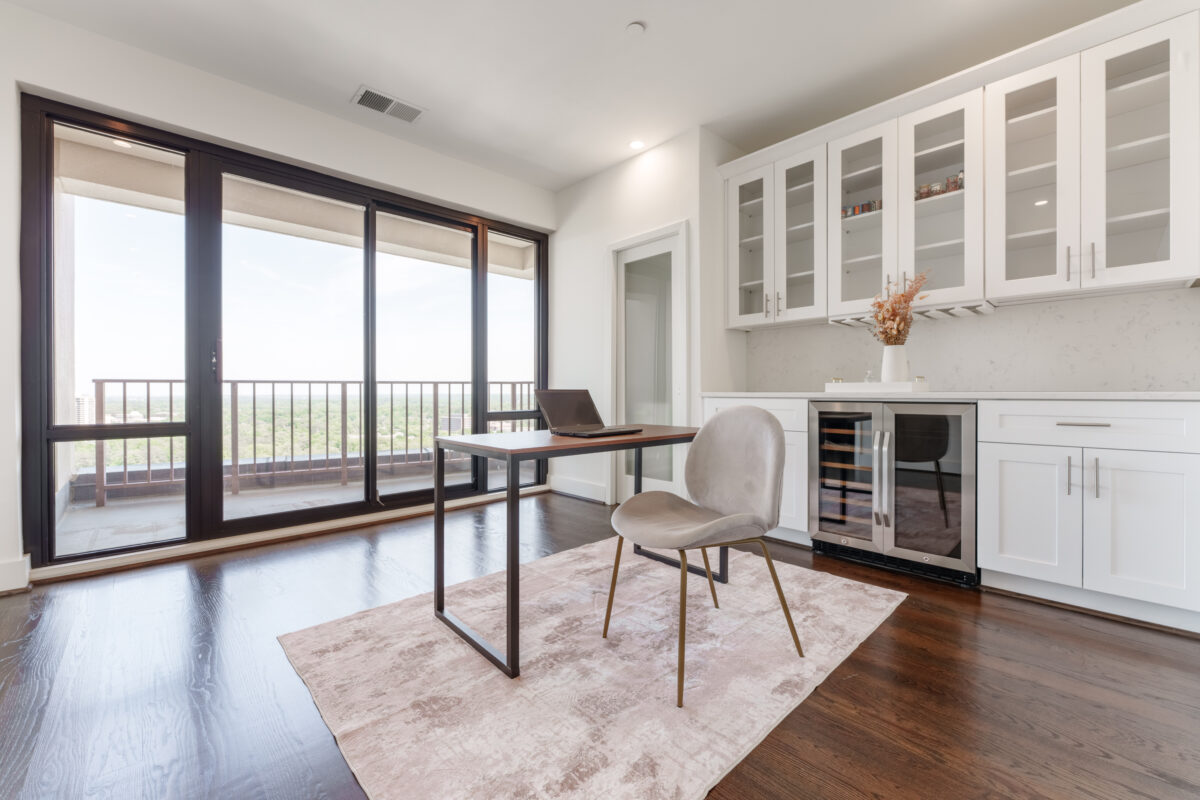
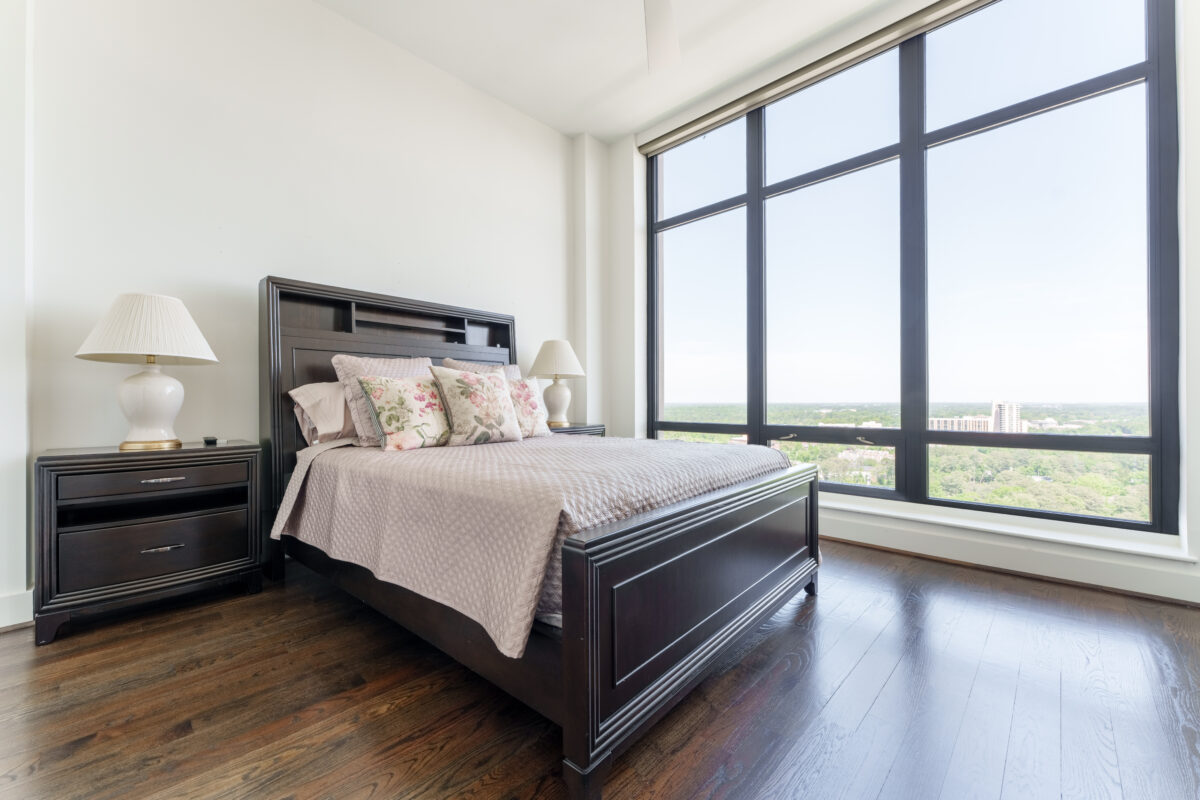
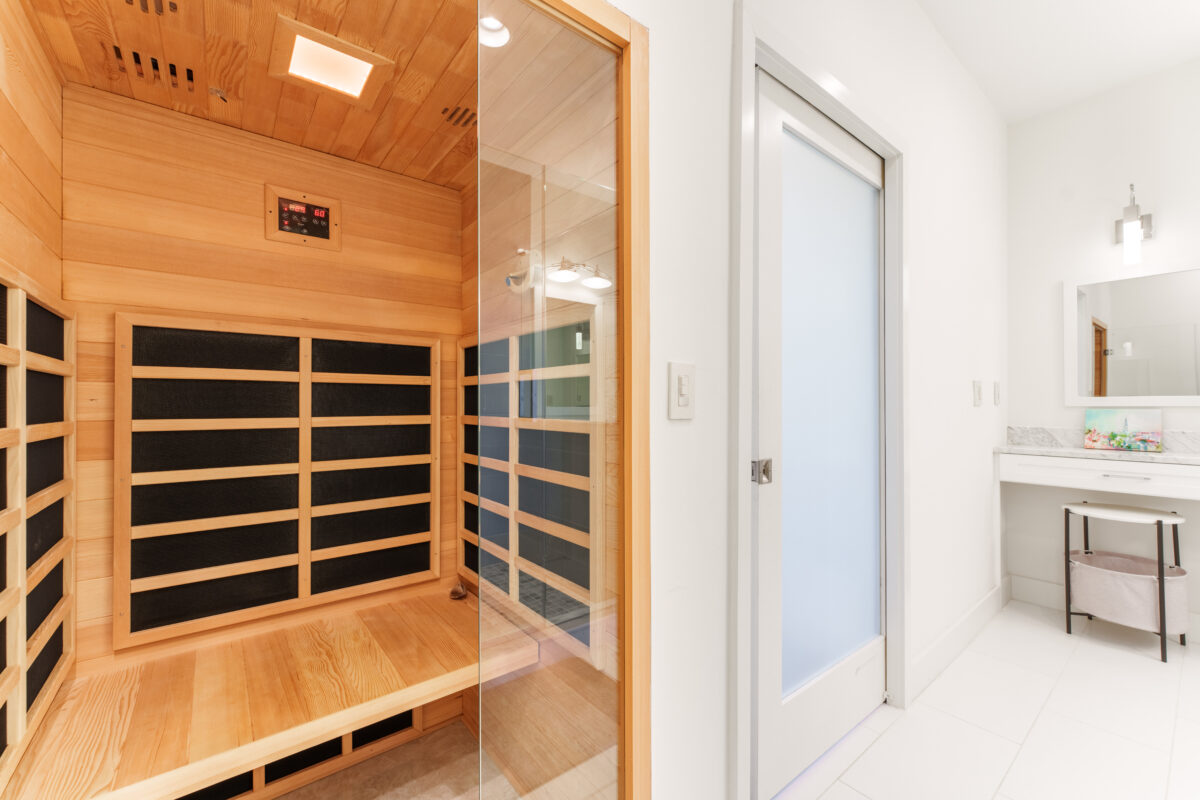
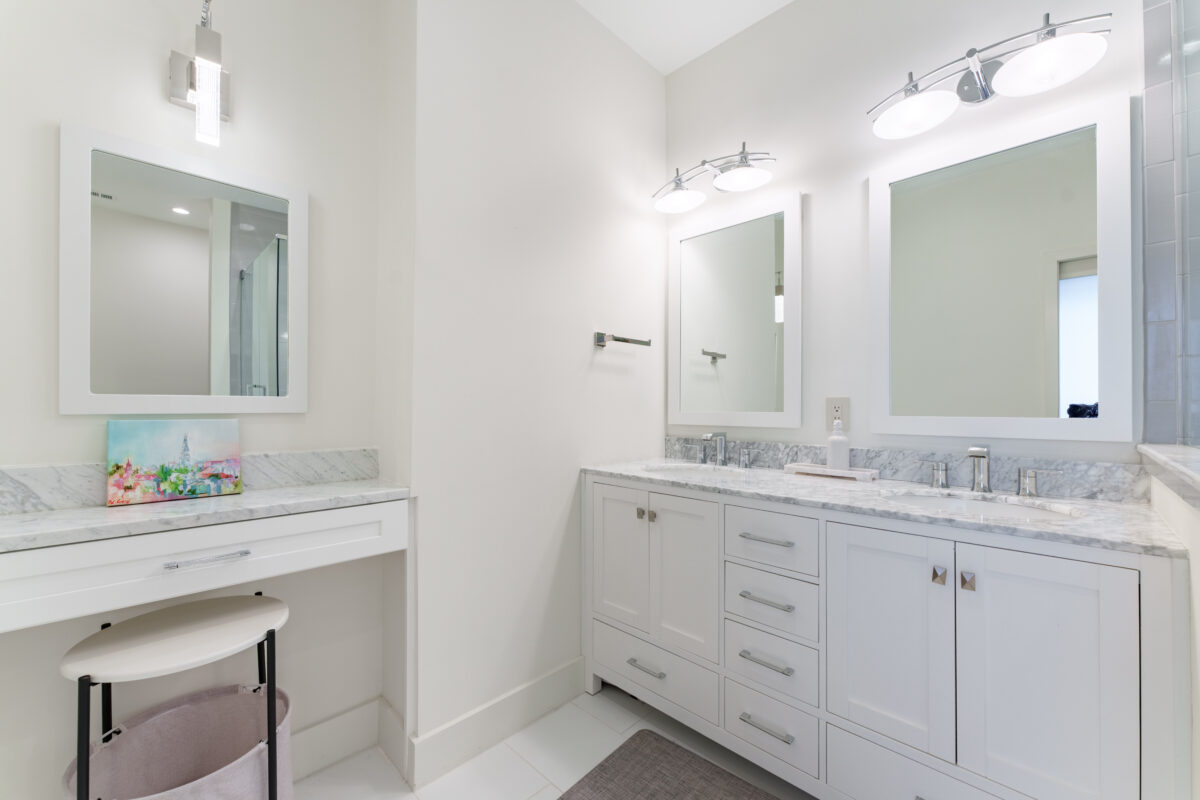
Life at The Oaks offers resort-style amenities, including a saline pool and jacuzzi, state-of-the-art fitness center, guest suite, 24-hour concierge, club room, business center, serene courtyards, and a fully secured parking garage. Buckhead’s premier shopping, dining, and entertainment are just a short stroll from this extraordinary residence.
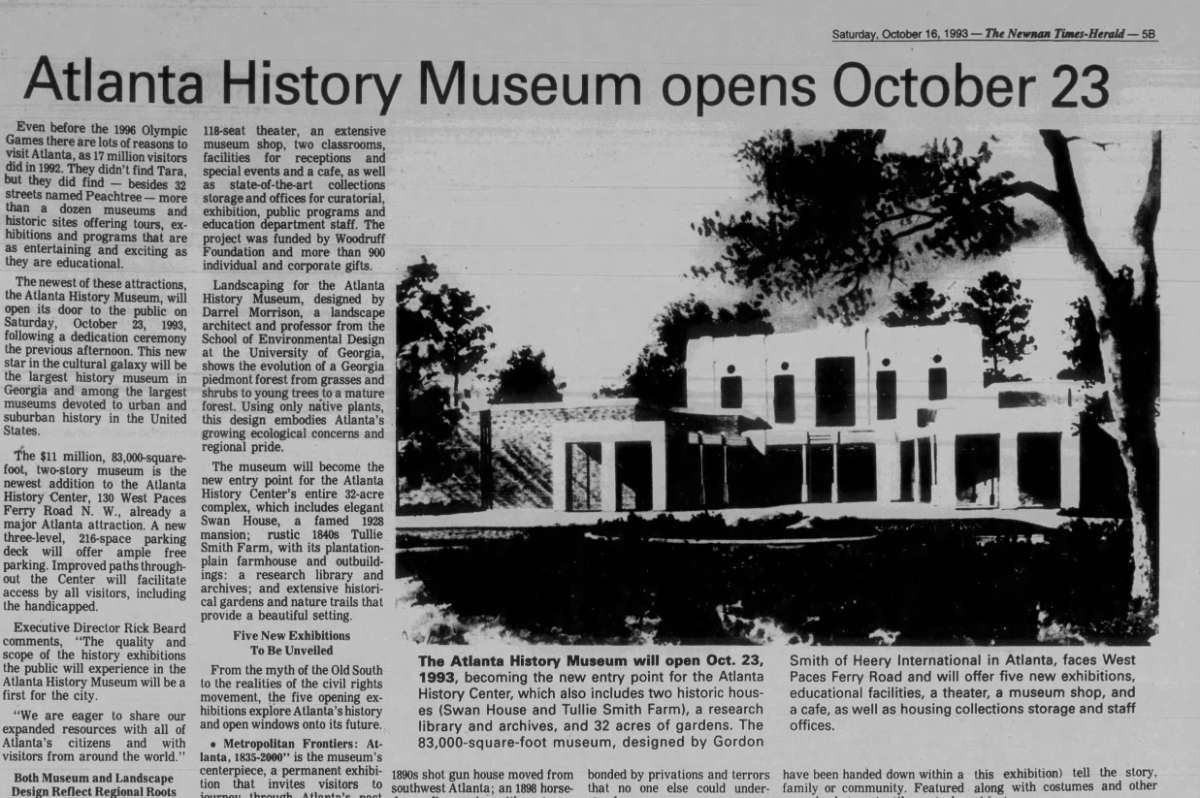
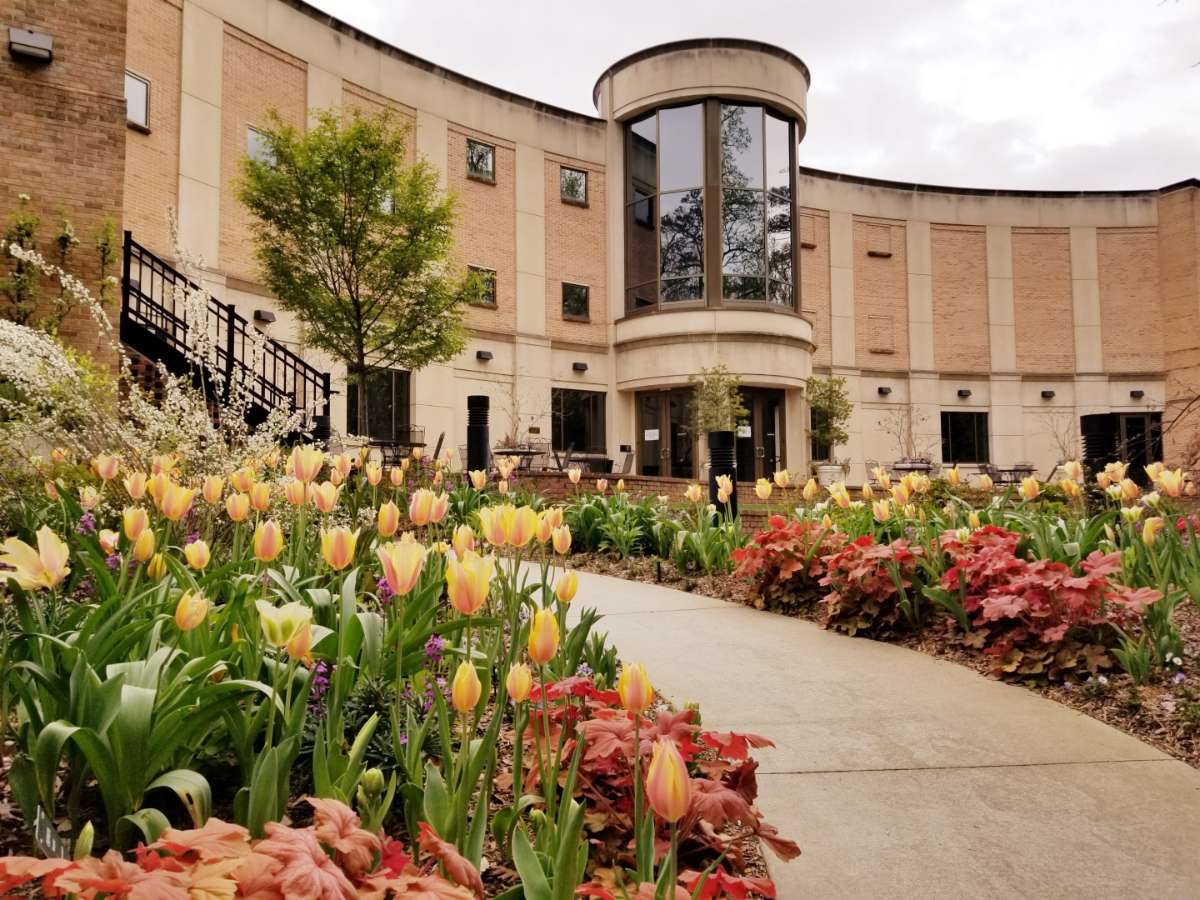
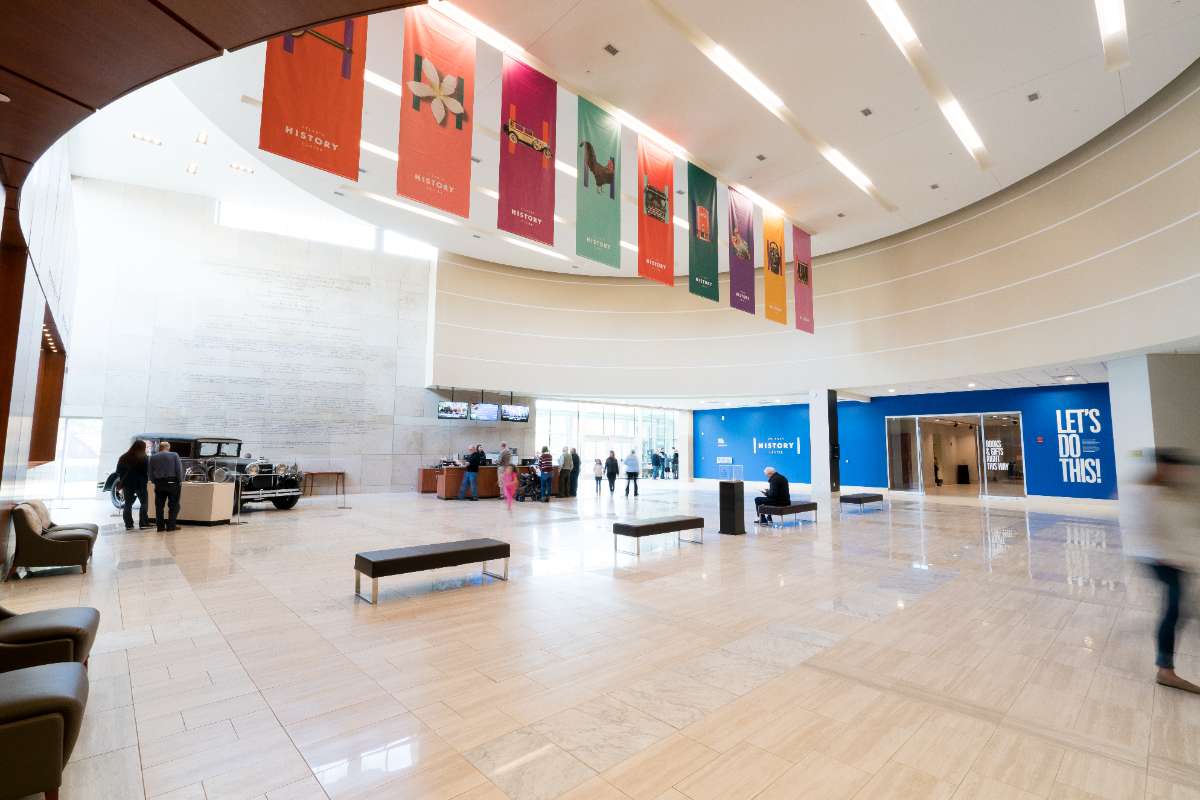
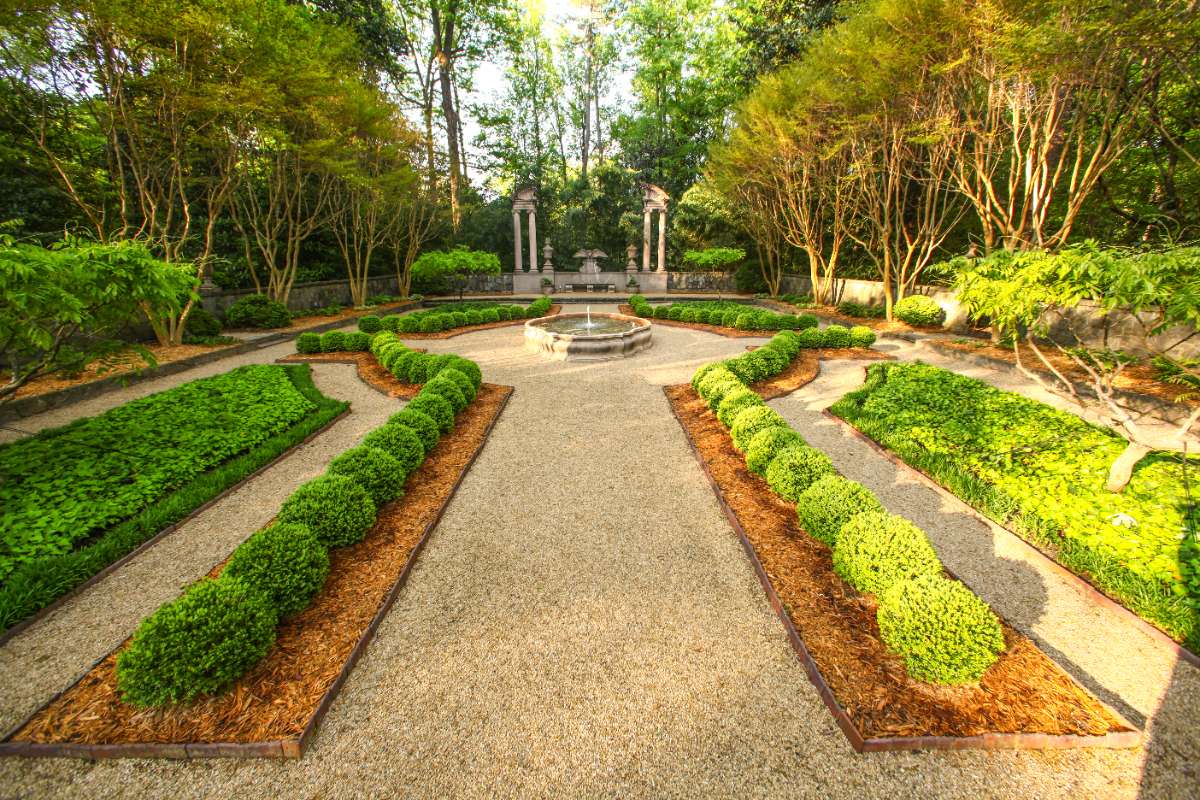
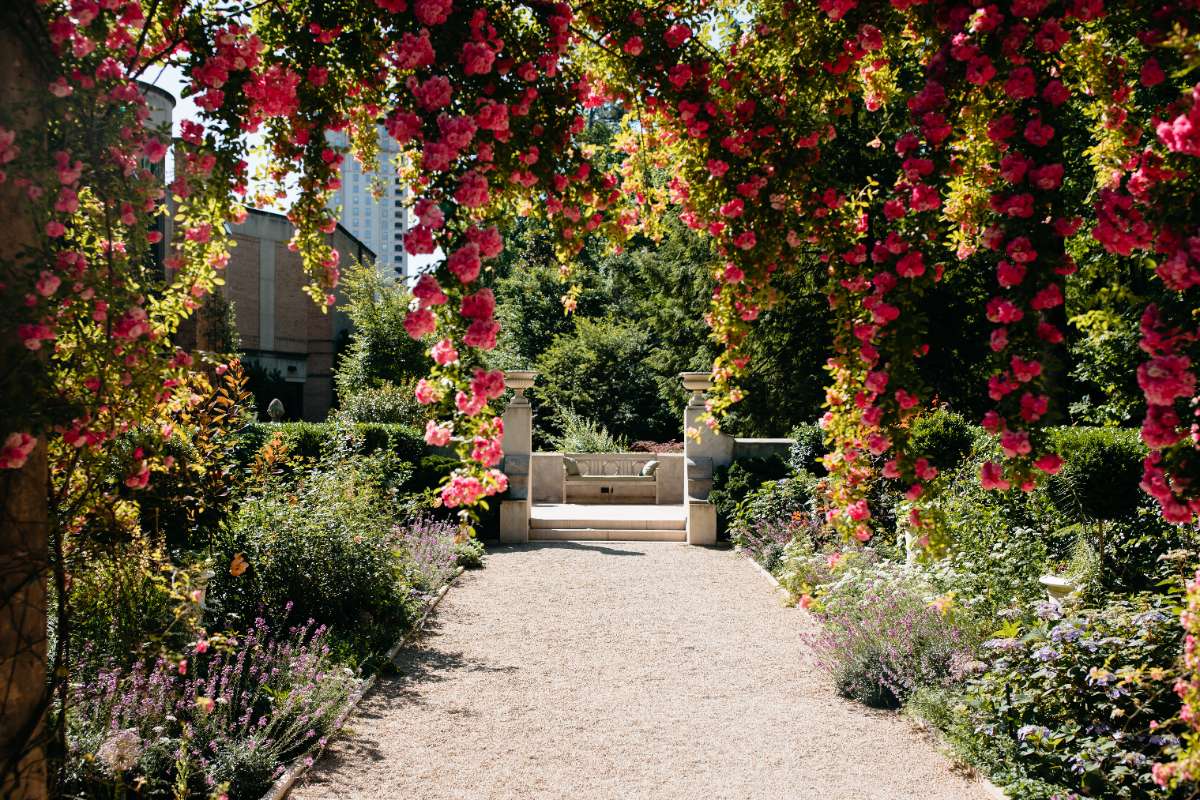
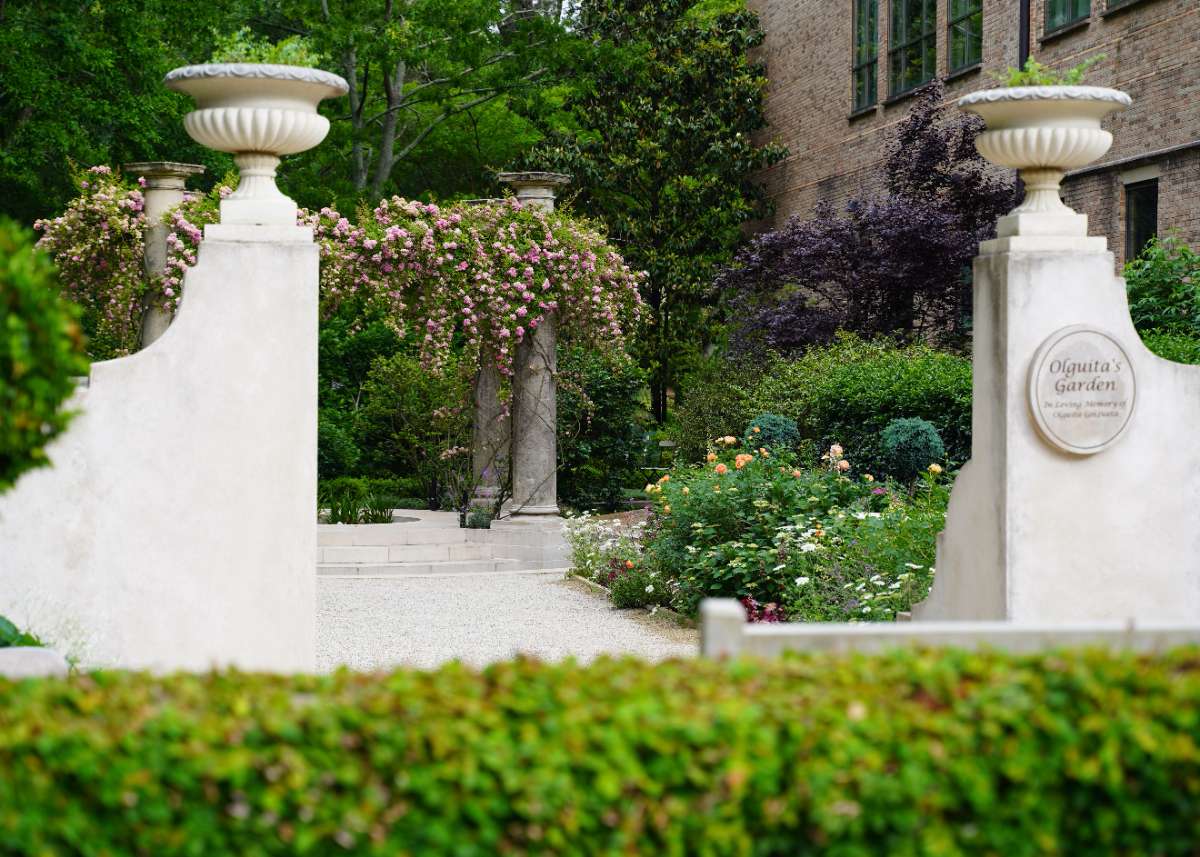
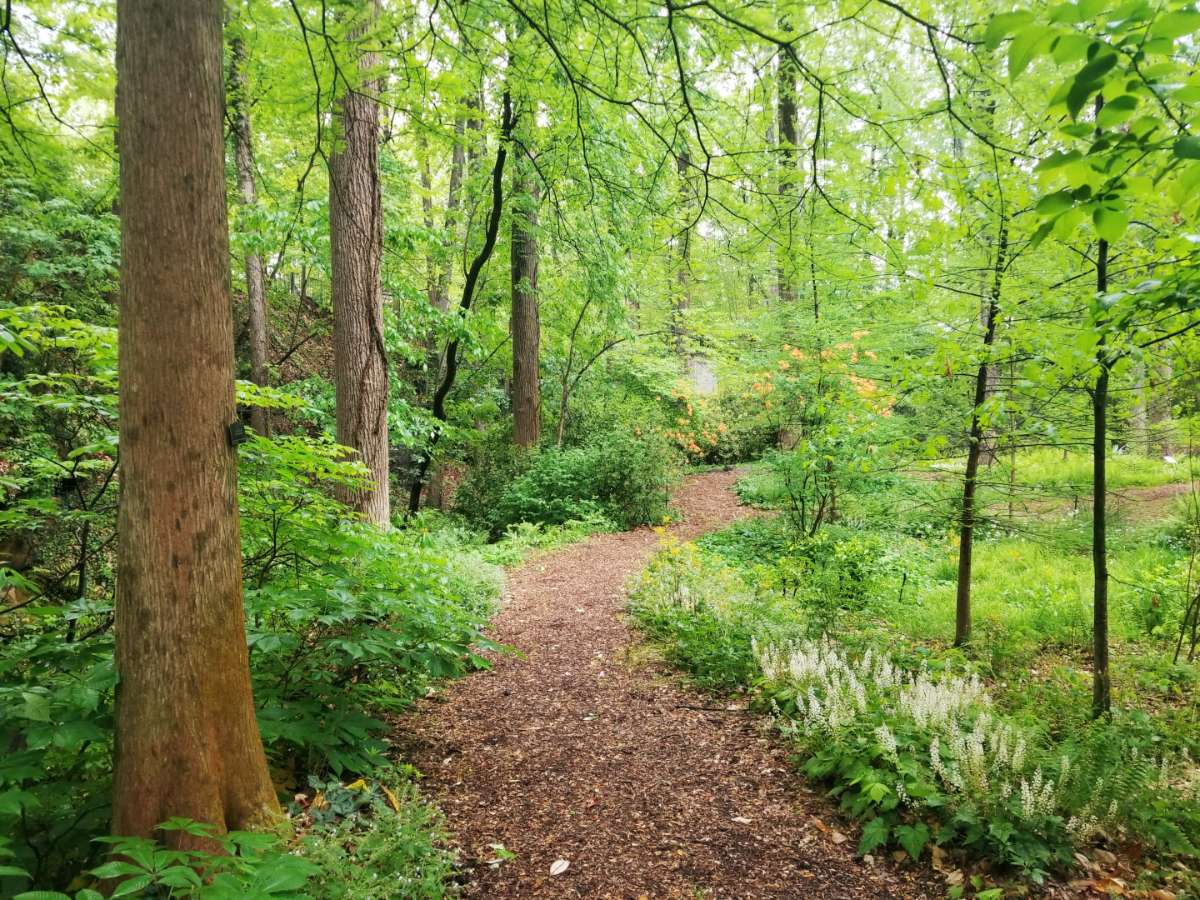
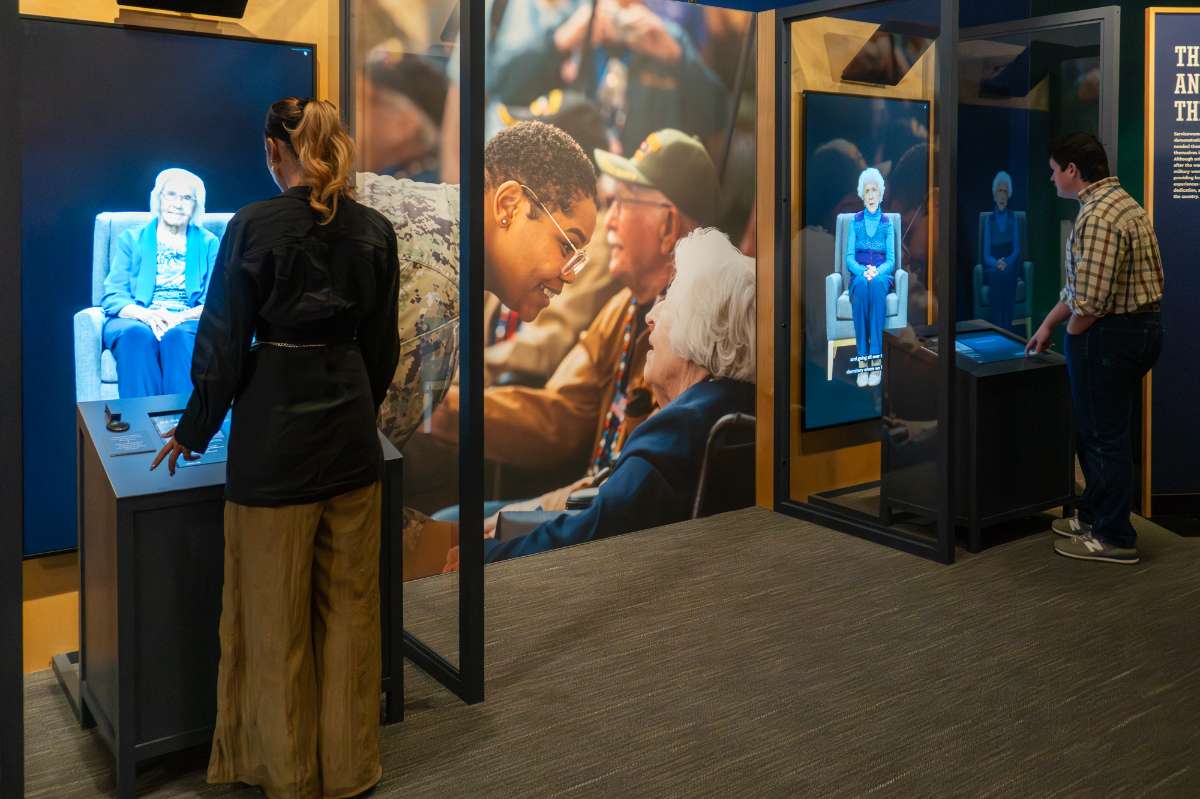
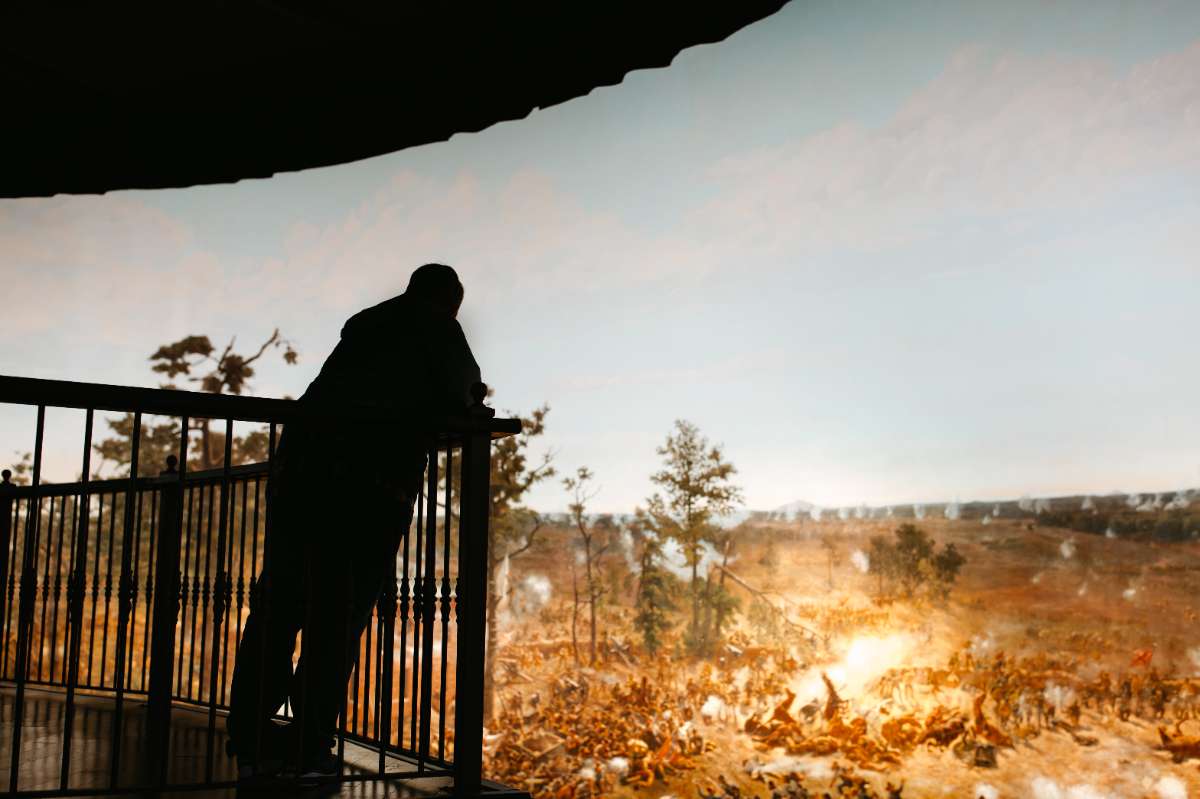
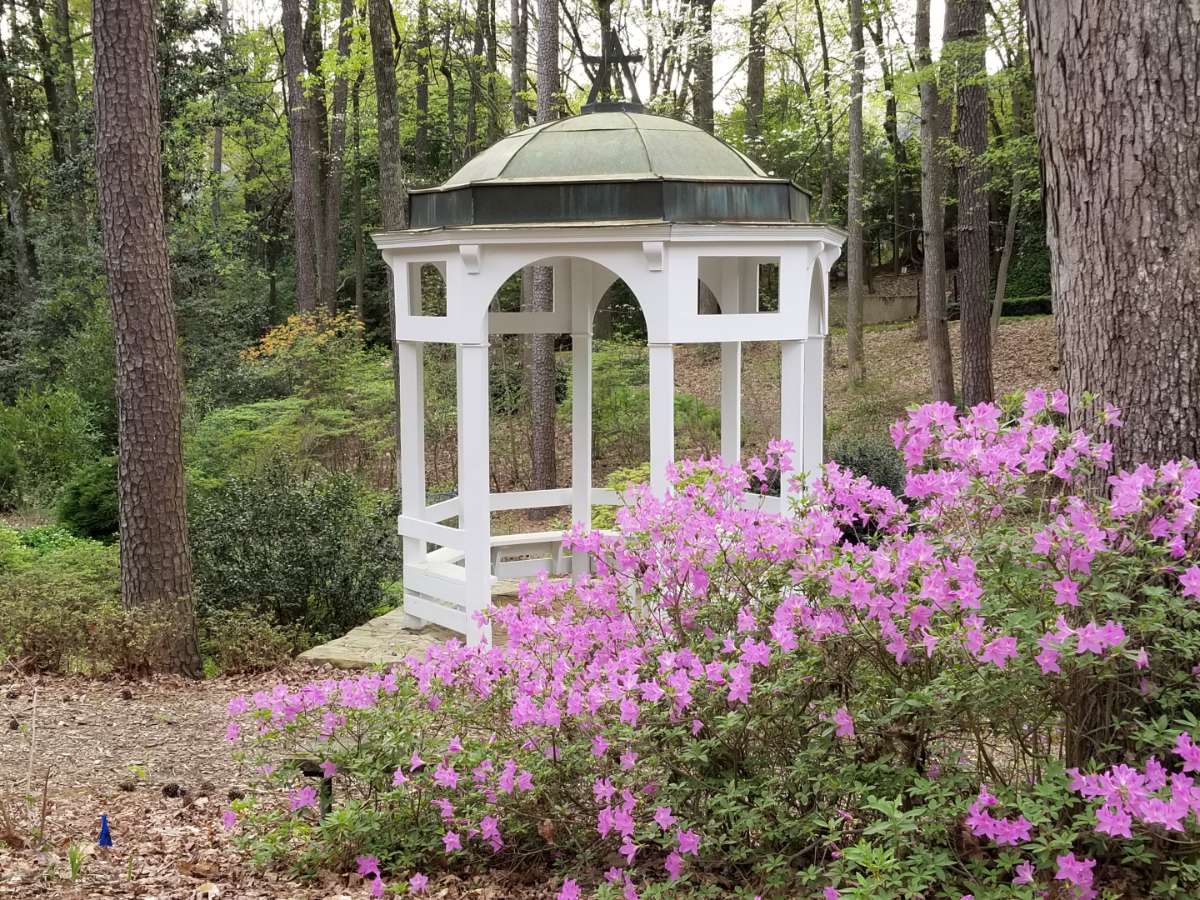
Tucked just off the bustle of Buckhead Village, 33 acres of rolling gardens, historic homes, and winding pathways form one of the most unexpected escapes in all of Atlanta. Most people know it as the Atlanta History Center. Neighbors know it as something closer to a hidden park—a place where nine curated gardens, heritage-breed farm animals, and centuries-old trees make it easy to forget you’re minutes from Peachtree Road. Founded in 1926 to preserve the city’s history, the institution has grown into a campus that engages more than 200,000 Atlantans and visitors each year through its programming, exhibits, and events. This year’s centennial celebration will see a flurry of activity as Atlanta is highlighted on the world stage for this summer’s FIFA World Cup.
Sheffield Hale, the president and CEO of Atlanta History Center, says the centennial isn’t just about looking back. “It’s also about acknowledging the trajectory of Atlanta History Center and preparing for our next 100 years as a trusted place for clear, even-handed, evidence-based history,” he says. “I hope visitors leave with a deeper appreciation for Atlanta’s role in shaping the nation, and a sense that history is not distant or abstract, but deeply connected to their own lives.”
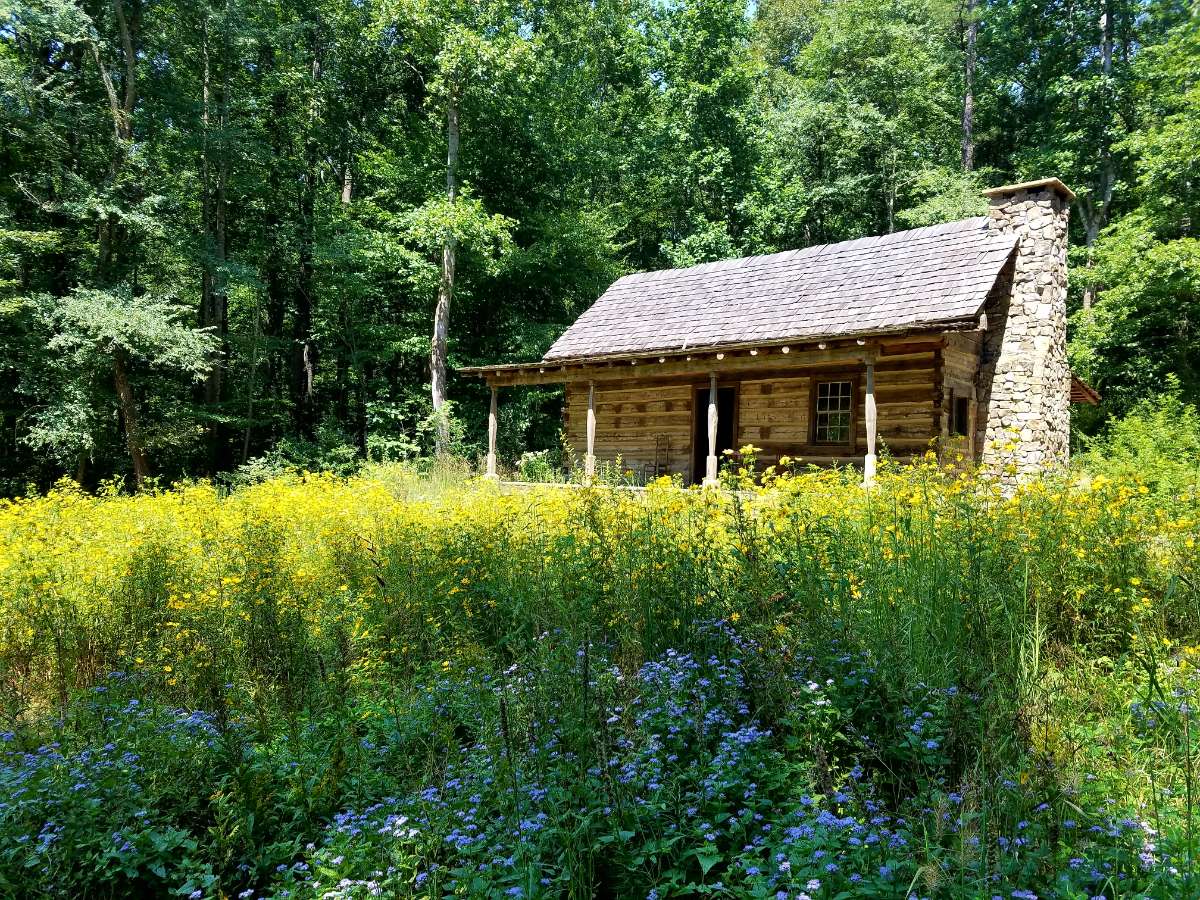
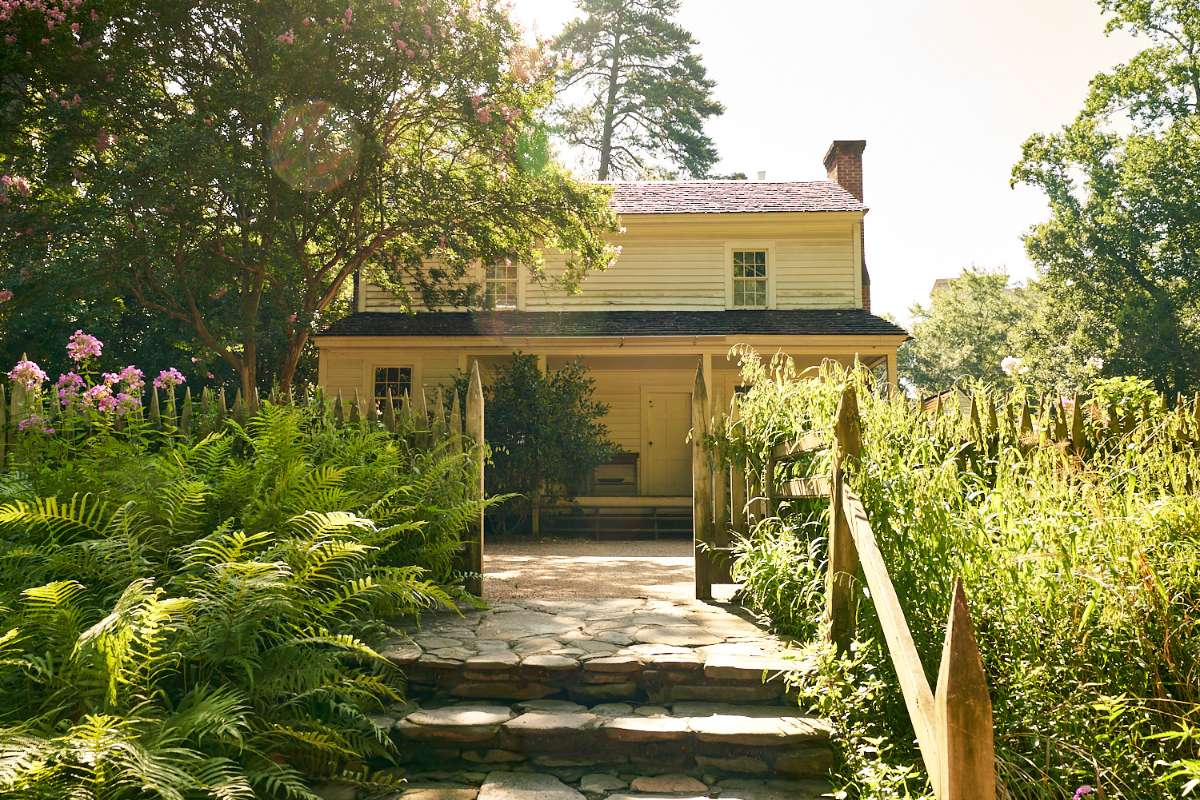
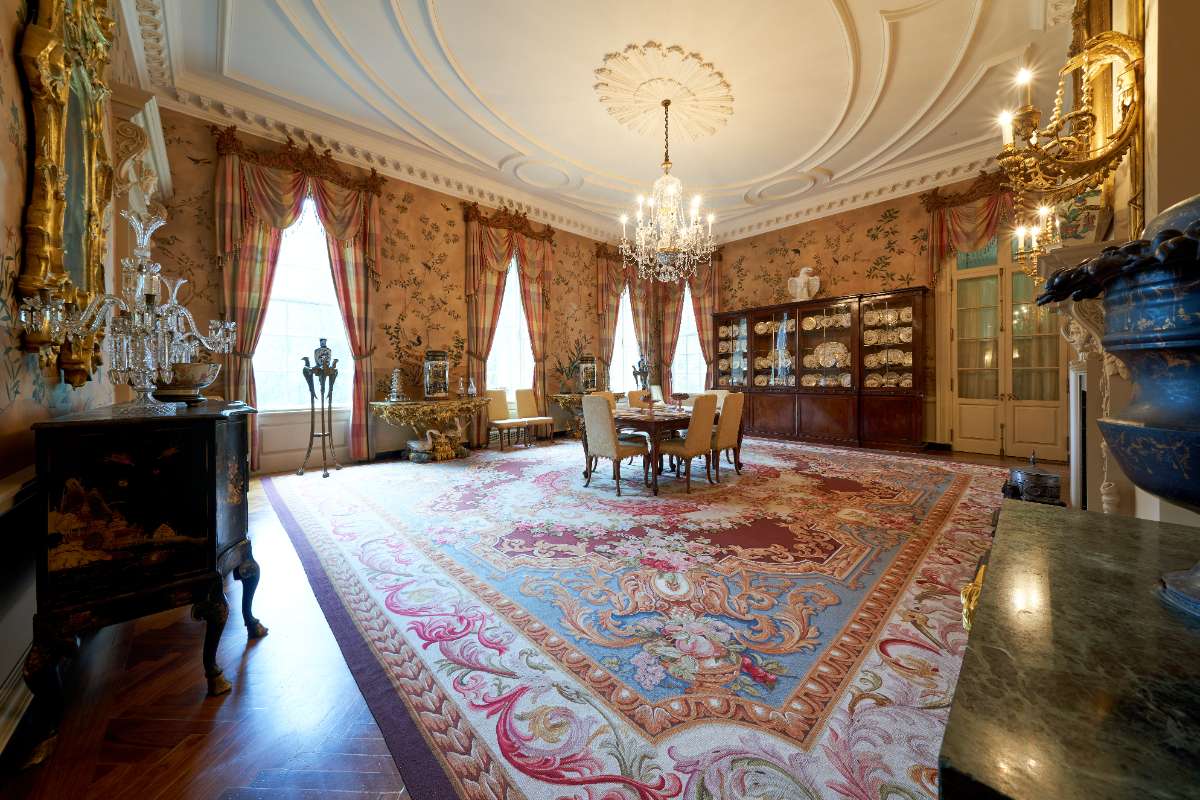
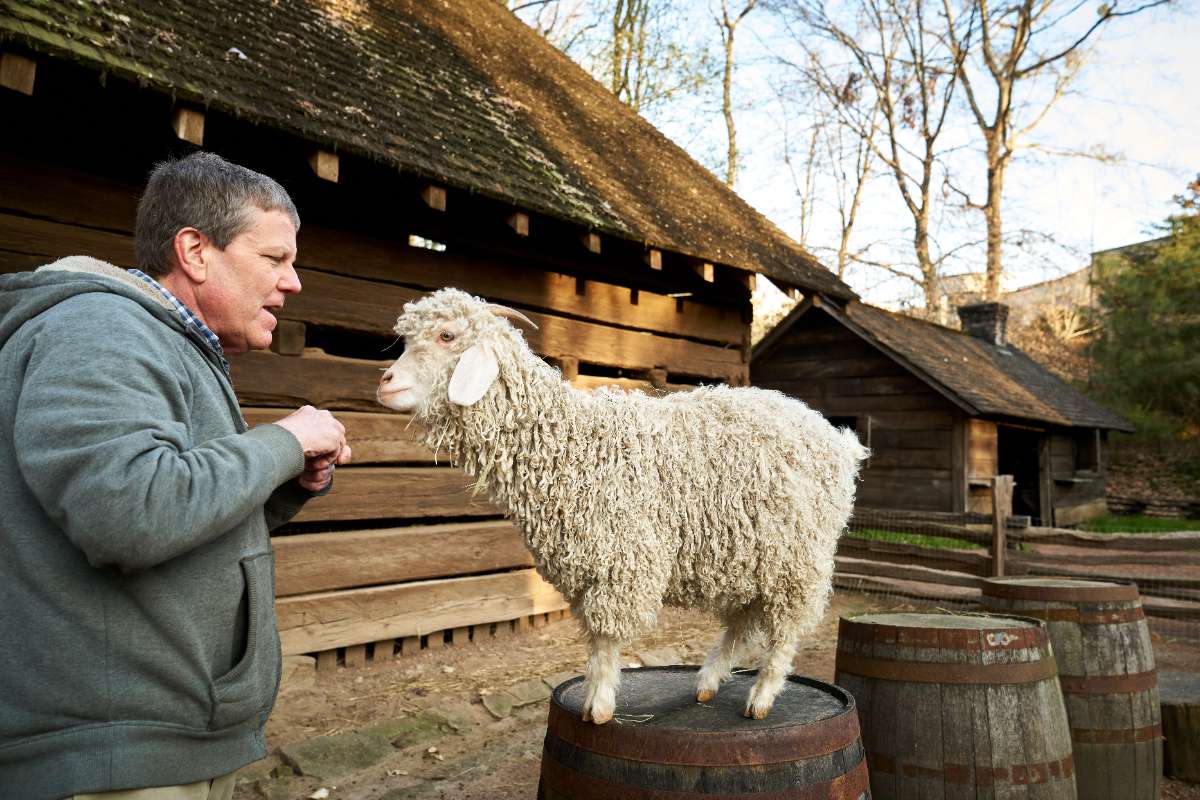
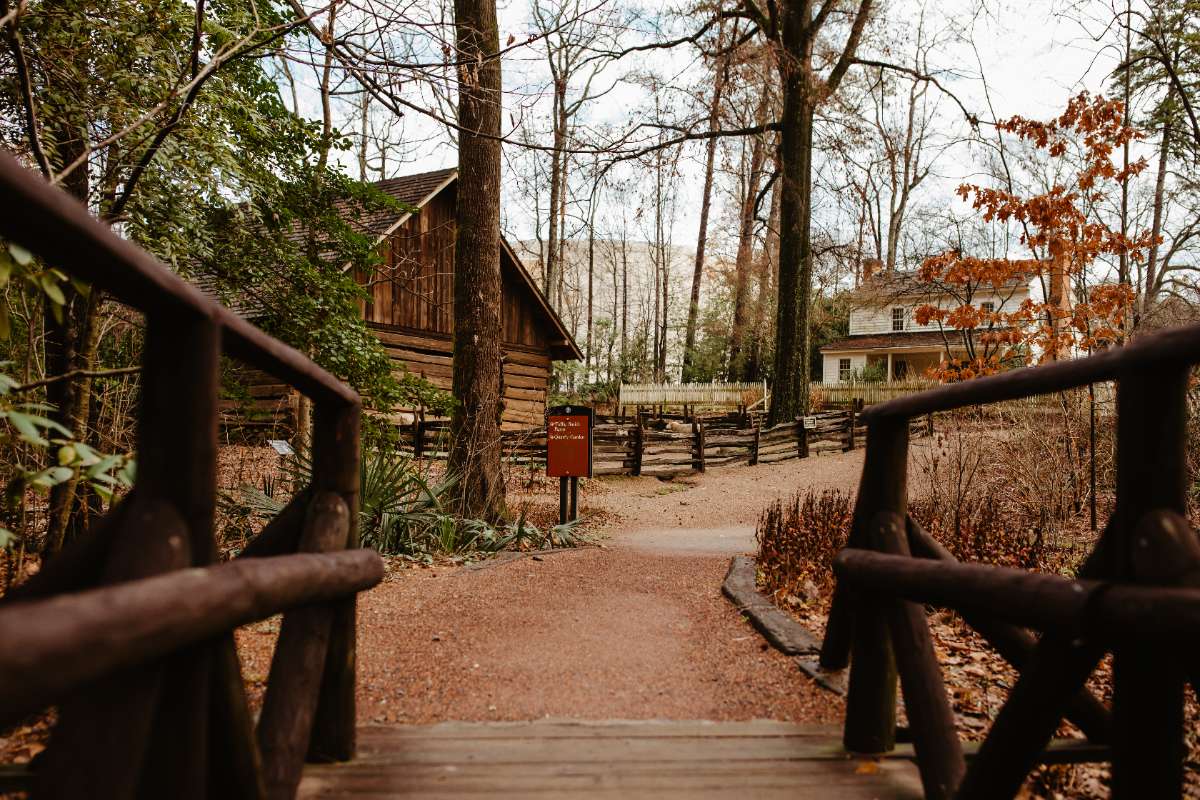
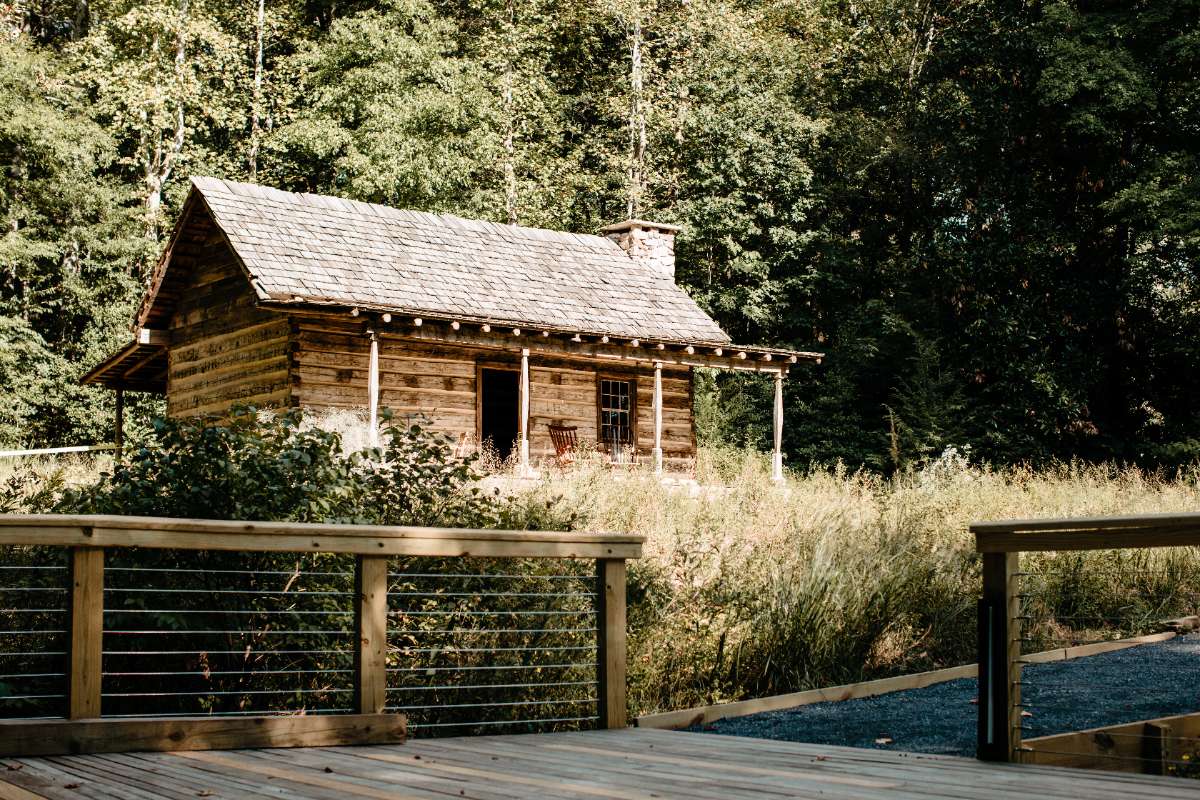
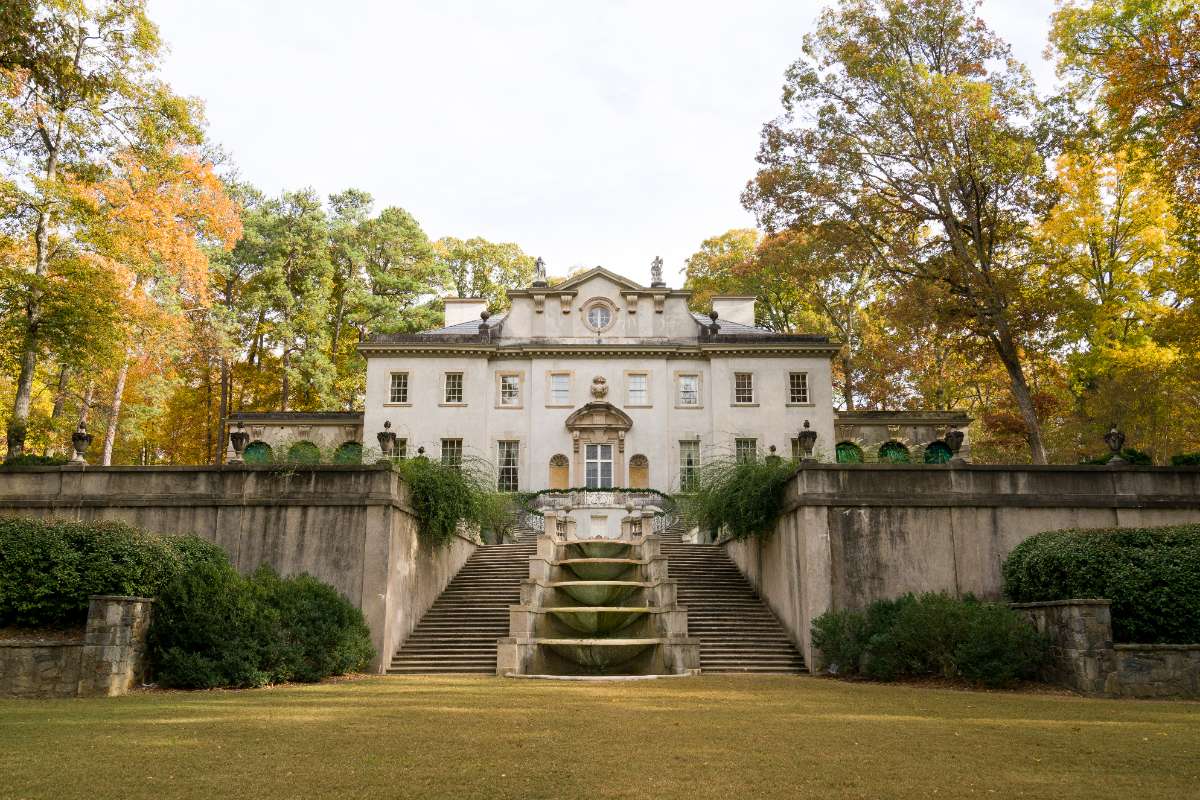
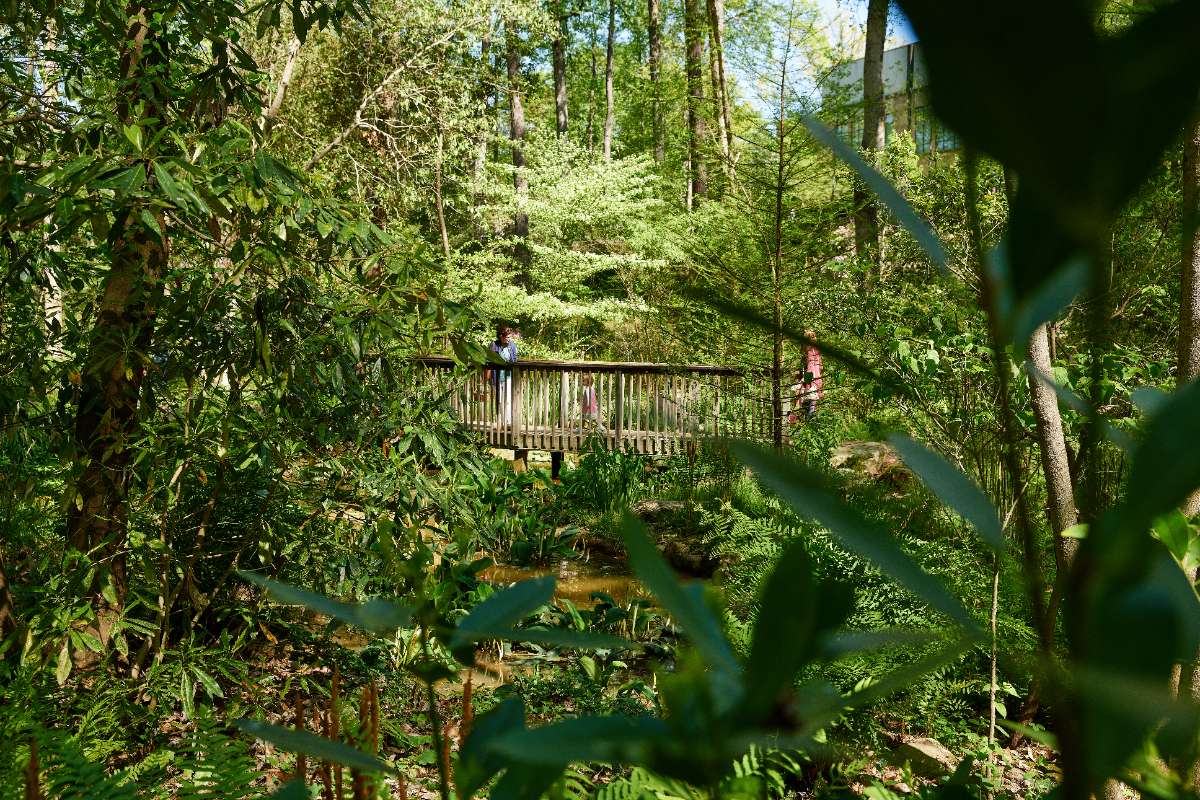
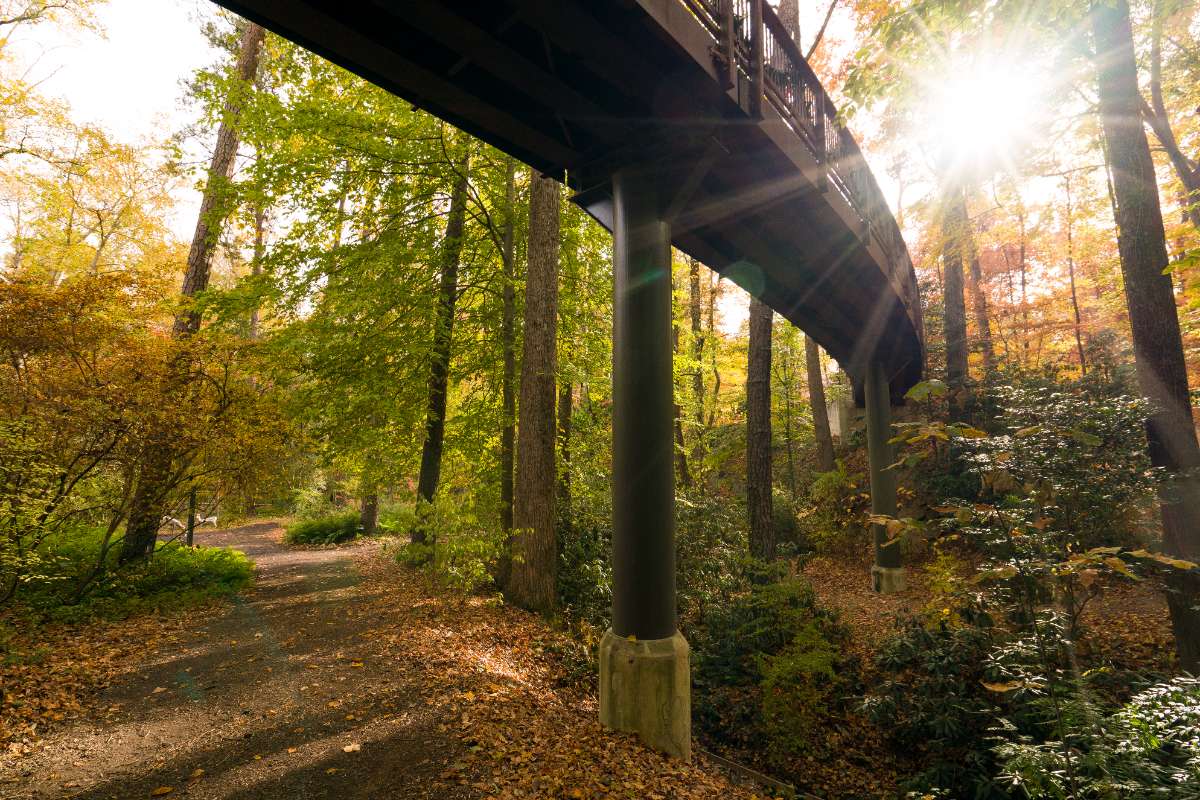
The Buckhead campus is a destination unto itself. Three historic homes—the 1920s Swan House, the 1860s Smith Farm, and the 1830s Wood Family Cabin—sit among gardens that range from the dramatic Quarry Garden, carved from an old granite quarry, to the lush Frank A. Smith Rhododendron Garden. A radial walkway system connected by the Quarry Garden Bridge links it all together, making it possible to spend an entire afternoon wandering from gallery to farmstead to woodland trail. At Smith Farm, visitors can explore a working 19th-century homestead complete with heritage-breed sheep, chickens, and vegetable gardens that bring agricultural history to life. The Kenan Research Center houses photographs, maps, oral histories, and manuscripts documenting the American South across more than 20,000 linear feet and over 61,000 museum object records, while the Cherokee Garden Library is one of the nation’s leading archives on gardening, landscape design, and horticultural history.
“The changes over the last few years are in the same spirit of the last 100; we have always tried to collect and tell as much of Atlanta’s story as we can,” Hale says.



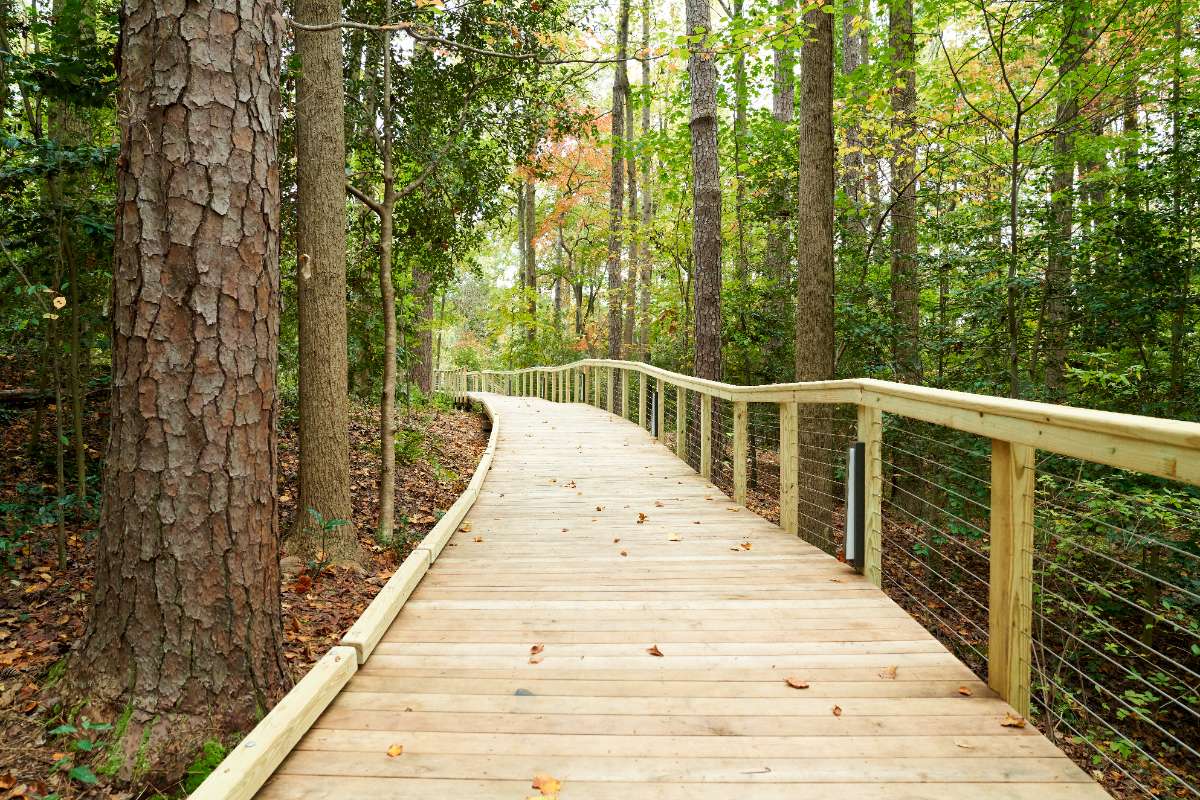

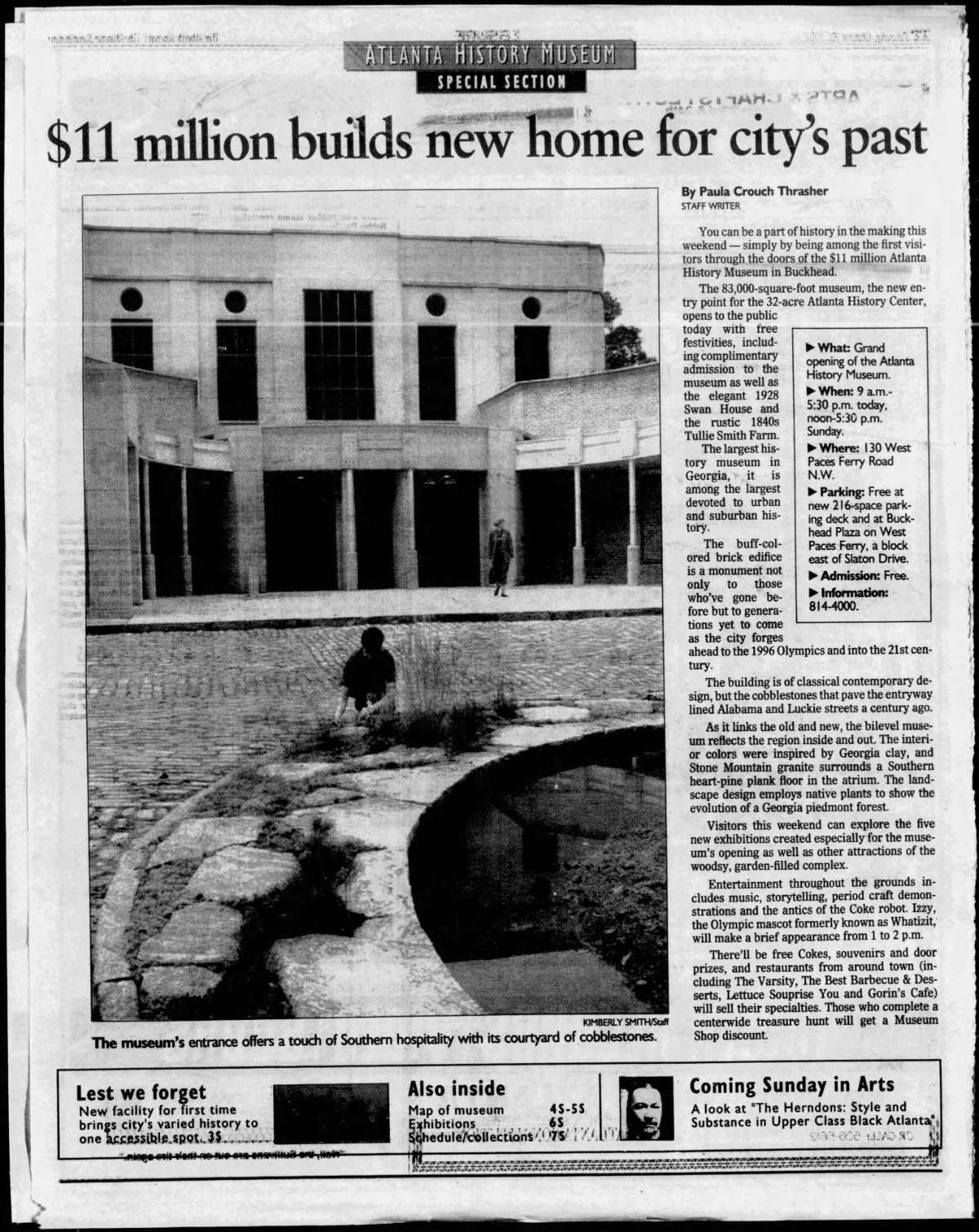
Highlights from the centennial celebration will occur all year long and include:
July: The Debut of More Perfect Union: The American Civil War Era, the Museum’s Largest Exhibition to Date
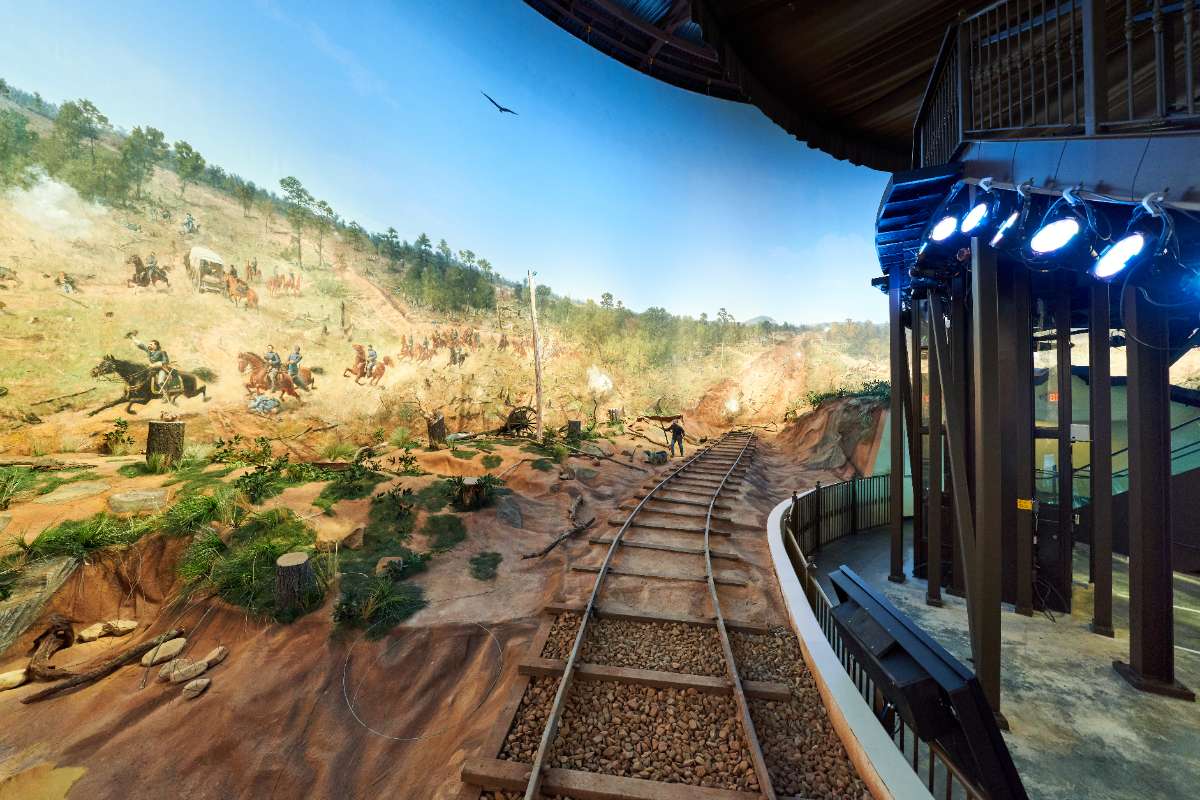
Atlanta History Center’s most ambitious exhibition ever will showcase a completely renovated and reimagined Civil War Era experience in the DuBose Gallery. More Perfect Union moves beyond the battlefield to explore the decades leading into the war and the generations shaped by its aftermath. It will feature rare artifacts, including an 1856 abolition campaign banner, shackles from the Middle Passage, and the battle flag of the 127th U.S. Colored Troops, paired with immersive storytelling and the latest scholarship.
October: The Opening of Hard Hand of War: Soldiers, Weapons, and Mass Production
This Civil War Era exhibit in the Goldstein Gallery serves as a battlefield-focused extension of the experience, presenting a dramatic armory-style permanent exhibition of weaponry, uniforms, and military gear that illuminates the brutal realities of war and the conditions soldiers faced on both sides of the conflict.
Fall: Exile from Georgia: The Cherokee and Muscogee Trail of Tears Debuts
This exhibit tells the story of Georgia-based Cherokee and Muscogee Native Americans who were forced from their land, explaining how treaties with the United States government were created and broken in the process. Contemporary voices from the two tribes describe how that loss continues to impact their lives. Visitors will enter an immersive theater space to experience the brutality of the Trail of Tears and the tremendous resiliency shown by those who endured it.
Ongoing: The Margaret Mitchell House and Exhibition
Atlanta History Center’s Midtown campus, at the corner of 10th and Peachtree Streets, is home to the Margaret Mitchell House, where a newly renovated permanent exhibition explores the life, legacy, and cultural impact of one of the world’s most famous—and complex—authors. The site also features The Trellis Room, a boutique ballroom that opened in 2025 with a modern interior and two private lawns overlooking Peachtree Street, joining the Swan House as one of the Southeast’s premier event venues.
Beyond the exhibitions and events, the centennial year will bring the return of signature programs including Living Room Learning, Party with the Past, History on the Rocks, seasonal festivals, and Author Talks—each designed to connect audiences with history in fresh, accessible ways.
For a century, Atlanta History Center has been doing what its founders set out to do: preserve the story of a city that never stops reinventing itself. That the institution has quietly grown into one of the most beautiful green spaces in Buckhead—a 33-acre sanctuary of gardens, forests, and farmland just steps from some of the most valuable real estate in the Southeast—feels like a story worthy of the place itself. Whether you come for the artifacts, the gardens, or simply a long walk under the tree canopy, the invitation for the next hundred years is the same as it was for the first: come see what Atlanta has to tell you.
For the full centennial schedule, visit AtlantaHistoryCenter.com.
From infrared-heated Pilates studios to boxing-inspired strength training, the options for staying well in Buckhead are aplenty. Whether you’re looking to build strength, increase flexibility, or simply carve out time for yourself, consider this your go-to guide for gyms that are as elevated as the neighborhood we call home.
Founder Hanna Sellers brings a background in biomedical science to every anatomically-driven sequence at her Andrews Square studio–which boasts the most beautiful interior in town. Whether sweating it out in the infrared heated room for mat-based classes or stretching on the reformer, Pêche’s moody red-and-green color palette brings swanky Paris cafe DNA to Buckhead.

Stellar Bodies’ custom-built machines deliver a workout that is often mistaken for Pilates or weightlifting, but is truly its own. Since becoming Georgia’s first Megaformer studio in 2011, Stellar Bodies has offered low-impact, high-intensity training designed to sculpt lean muscle and strengthen the core. Clients can choose between the signature full-body class or a targeted experience focused on abs and arms.
Those craving true intensity need look no further than Barry’s, a pioneer in the boutique fitness industry since its first studio opened in 1998. Today, Buckhead Village District’s outpost of the nationwide chain offers hybrid workouts that make use of treadmills, heavy weights, and even stationary bikes to knock out strength and cardio all in one. In the infamous Red Room, dim lights and loud music create a club-like atmosphere so fun you might not notice that rapidly-escalating heart rate.

While many fitness studios claim to offer Lagree, the namesake Megaformer workout of celebrated trainer Sebastian Lagree, obtaining certification is a stringent process that few actually complete. PACE proudly houses Lagree Method-certified instructors and spring-based Megaformer MS3s for slow, controlled resistance training. Beyond the Lagree Method, many PACE instructors also hold certifications in post-natal education and personal training.
The group classes at BACH (pronounced “batch”) fall into two camps: strengthening and lengthening. For the former, the H.I.S.T. class offers a form-focused, heavy-weight focus on high-intensity strength training, while the Bodywork class incorporates deep stretching and breathwork for active recovery–since training like an athlete requires recovering like one.

The Roswell Road location of Atlanta’s most ubiquitous yoga studio offers infrared heated workouts ranging from the signature Yonder Flow to beat-driven hip-hop classes. Unlike its outposts in Inman Park and the perpetually-crowded Midtown Promenade, parking is a breeze at Buckhead Court; for post-flow fuel, the studio is just steps from a plant-based, cold-pressed DTox Juice.
Named for the way professional boxers “pepper” their bags to prepare for matches, Pepper combines no-contact shadowboxing with heavy teardrop-style bag combos and weighted bar exercises. If you’ve ever been to a gym where you felt like you were watching your neighbor the whole time, the circular configuration of a Pepper class ensures that an experienced instructor is always within your line of sight instead.

Though you’ll also find The Forum at Ponce City Market and in Forsyth County, its home in Buckhead reigns supreme thanks to its convenient location inside Lenox Square. Serious lifters and runners will enjoy its state-of-the-art equipment, a full schedule of cardio agility and fast-twitch classes tailored to different muscle groups, and a dedicated clientele that’s equal parts quiet young professional and fitness influencer.
Just across the street from The Forum stands Life Time at Phipps Plaza, Buckhead’s gym of choice for those seeking a luxe, country-club feel from their workout. Lifters have access to state-of-the-art equipment, while boutique-fitness devotees treat it as a one-stop shop with more than 100 classes offered weekly. But, of course, Life Time isn’t just about the workout, and its amenities lean indulgent: a detoxifying eucalyptus steam room, LifeSpa services ranging from massage to skincare and nail treatments, and a rooftop pool with sweeping views of the Buckhead skyline. Plush coworking spaces—complete with complimentary Wi-Fi throughout—make it just as easy to log in as it is to log reps.
In his 1998 novel A Man in Full, Tom Wolfe captured how some see the architecture of Atlanta’s social order with a single observation about the Piedmont Driving Club: “You might have the grandest house in all of Buckhead and the summer place on Sea Island and the biggest private jet and the ranch or two in Wyoming, every toy a man could possibly long for—and yet your failure to make the roster of the Piedmont Driving Club would always be hanging over you, like a reproach.”
Nearly three decades later, that sentence still lands a punch. I don’t subscribe to Wolfe’s worldview—I don’t belong to any private clubs and have no particular desire to join one, beyond the occasional pang of jealousy at members’ easy access to racket sports. But dismissing the influence these institutions hold would be naive. Whether or not you care about making anyone’s roster, Buckhead’s private clubs shape the neighborhood’s culture, business networks, and philanthropic landscape in ways that ripple far beyond their membership rolls.
Past the boutiques of Buckhead Village, beyond the high-rises of Peachtree Road, exists another layer of the neighborhood—one accessed not by GPS coordinates, but by introductions, referrals, and occasionally, a secret phone number. These clubs span a remarkable spectrum: from institutions with century-long legacies to speakeasies that didn’t exist five years ago. Whether you’re a longtime resident curious about what lies behind that unmarked door you’ve passed a hundred times, or a newcomer decoding how this city works, here’s your guide.
The Capital City Club, chartered in 1883, counts among its earliest members Robert Woodruff and Bobby Jones. The downtown clubhouse remains a temple of old Atlanta elegance, while its Brookhaven location offers championship golf. The Buckhead Club, perched 26 floors up in the Sovereign building, represents the city club tradition with panoramic skyline views and curated networking events.
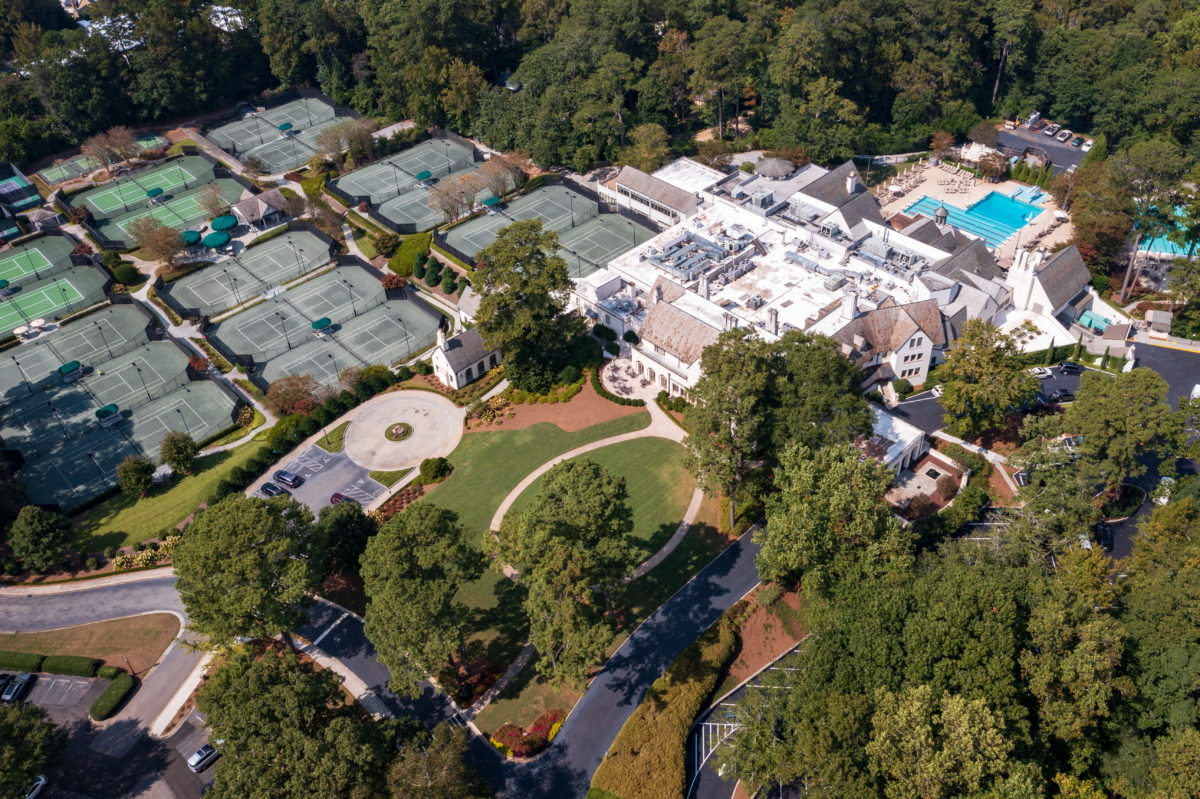
If any single institution anchors Buckhead’s private club culture, it’s Cherokee Town and Country Club. Founded in 1956 when a group of young couples decided Atlanta’s northwest quadrant deserved a social club of its own, Cherokee now operates two locations: the Country Club with a golf course along the Chattahoochee River in Sandy Springs, and the Town Club on West Paces Ferry Road—the geographic and symbolic heart of Buckhead. The Town Club occupies the Grant Estate, a residence built in 1917 that has been greatly expanded over time as membership grew (another significant expansion is in process). Today, Cherokee sits just down the road from the Governor’s Mansion, named the “Very Best Private Country Club” in America, its membership invitation-only and its waitlist measured in years.
Just beyond Buckhead’s borders sit two clubs whose influence on Buckhead is substantial.
The Piedmont Driving Club in Midtown, founded in 1887 as the Gentlemen’s Driving Club—named for members who “drove” horse-drawn carriages on the grounds—sold the adjacent land that became Piedmont Park in 1904. PDC maintains the exclusivity Wolfe documented; membership reportedly requires twenty-plus referrals. Many of Buckhead’s most prominent families (and the heirs of those who were once prominent) hold memberships, making PDC’s reach considerable.
Ansley Golf Club, also in Midtown with a second location in Roswell, was founded in 1912 and earned designation as a Five-Star Platinum Club of America—the most respected ranking in the private club industry. Sports Illustrated rated its historic nine-hole Midtown course second-best in America among nine-hole layouts, while the Settindown Creek championship course in Roswell ranks among Georgia’s top ten. Membership requires five sponsoring members and board approval following a 60-day review period. Known as the most family-oriented of Atlanta’s elite clubs, Ansley draws heavily from Buckhead families seeking a more relaxed atmosphere without sacrificing prestige. The waitlist is currently several years long.
Lions Head, tucked away on East Andrews Drive adjacent to Yebo Beach Haus, takes privacy to its logical conclusion. Founded by restaurateur Justin Anthony—a former professional soccer player from Johannesburg who arrived in Atlanta in 1996 and pivoted to hospitality after a career-ending knee injury—this members-only club requires a referral just to apply, with applications reviewed monthly by a membership board. Upon entry, staff place a sticker over your phone camera. Photography is strictly prohibited.
Those who’ve visited describe sophisticated warmth inspired by Anthony’s South African roots. The club’s name references Lion’s Head mountain in Cape Town. The wine program draws on Anthony’s connections to South African vineyards—he co-founded King of Clubs wine with Robert Mondavi Jr.—offering members rare allocations typically unavailable elsewhere. True Story Brands, Anthony’s hospitality group, is expanding Lions Head to Ponte Vedra Beach, described as offering “an elegant, discreet and intentionally curated experience.”
The Club at Chops operates behind an unmarked door within Chops Lobster Bar, accessible via magnetic keycard. Buckhead Life Restaurant Group founder Pano Karatassos opened it in 2000 as a private space for cigars and conversation as Georgia’s smoking laws tightened. What started as a small lounge has evolved into a networking hub for approximately 650 members.
Inside the humidor room—resembling a private library with sliding track ladders—brass nameplates mark personal cigar boxes of members who reportedly include a certain NBA analyst and one of Napa’s most celebrated winemakers. More than 100 whiskeys line the bar. Live jazz plays five nights weekly. Karatassos himself approves every new member, and the waitlist has a waitlist.
Warhorse Investments, perhaps the most enigmatic entry, is run by Unsukay (Muss & Turner’s, Roshambo, Local Three). Opened July 2017 at 3290 Northside Parkway, its website offers one sentence: “This website is only accessible to the members of Warhorse Investments.”
What filters through Atlanta’s culinary rumor mill paints a picture of an old-Hollywood steakhouse where recognizable names prefer not to be photographed—Robert Downey Jr. is most frequently mentioned. The Unsukay partners describe it as “Atlanta’s most audacious private club.” The Arbitrage Room hosts 24-person dinners occasionally auctioned for charity through The Giving Kitchen, which the Unsukay partners co-founded.
The Perlant opened January 2025 in nearly 10,000 square feet at Two Buckhead Plaza. Founded by Christian Ries, it centers on wine—Elizabeth Dames oversees a cellar with 10,000-bottle capacity. Ries told Buckhead.com, “We are committed to building a community of individuals who want to come together to spend time and share wine. Our criteria is built on our core tenants of being Humble, Generous and Kind, rather than occupation or zip code.”
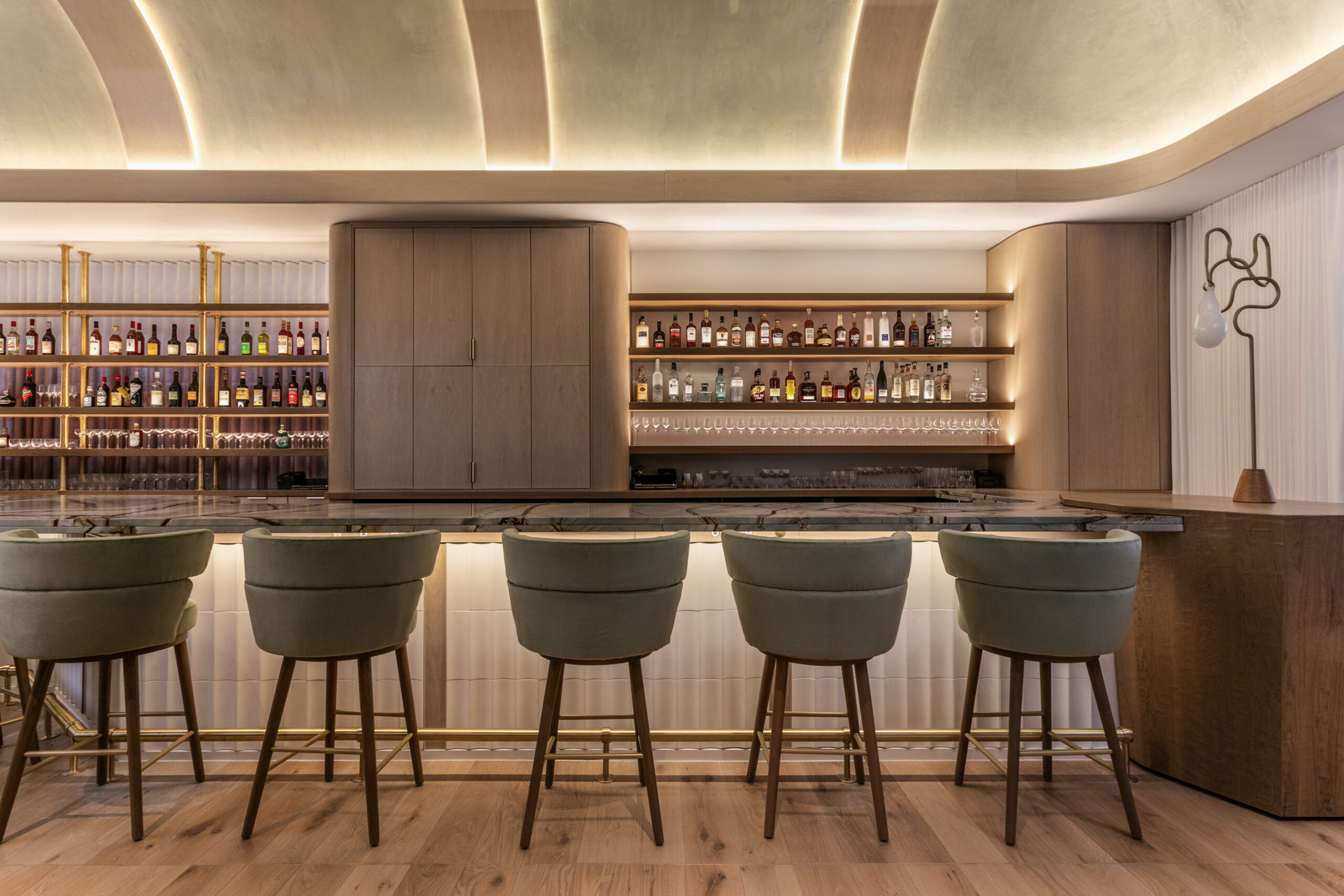
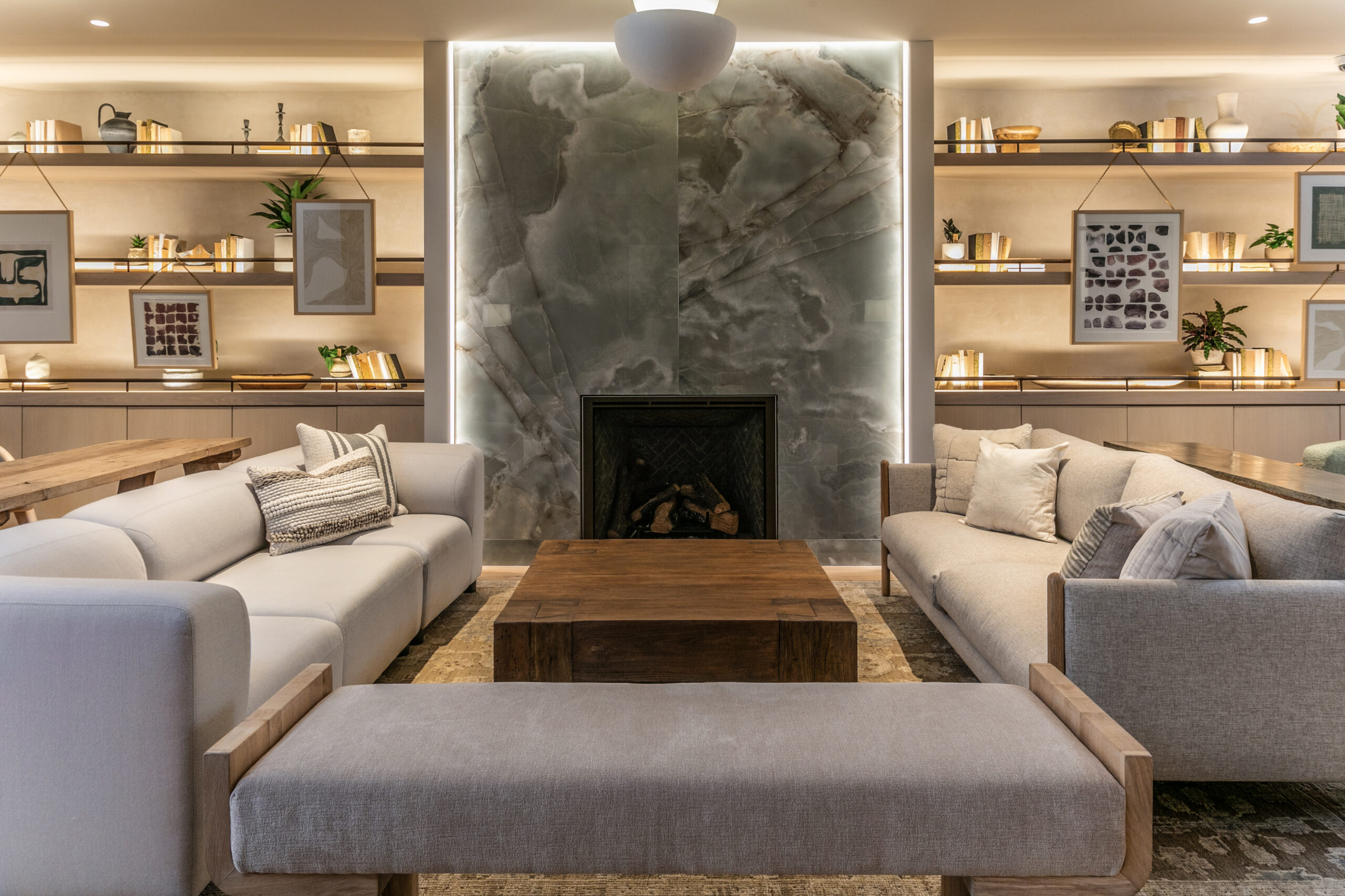
Intown Golf Club, also at Two Buckhead Plaza, represents the most ambitious Buckhead-born club concept currently scaling nationally. The idea germinated in 2018 when serial tech entrepreneur David Cummings installed a golf simulator in his basement. After testing the concept in a boardroom at Atlanta Tech Village—the Buckhead startup hub he founded—Cummings recognized an opportunity. He partnered with tech executive Michael Williamson and golf industry veteran Clint Jarvis to launch the flagship Buckhead location in 2021. Tennis legend Andy Roddick and actress Brooklyn Decker joined as early investors.
Cummings, who sits on the Buckhead Coalition board and has founded ten companies including Pardot and SalesLoft, sees Intown as addressing a generational shift. “The millennial generation—brought up on Instagram and Twitter and Snapchat, and more so for those living in urban areas—they want that live, work, play, and walkability component to it,” he told the Atlanta Business Chronicle. “Traditional golf is typically a six-hour endeavor.”
The 12,000-square-foot Buckhead club features ten TrackMan simulator bays where members can complete 18 holes in 45 minutes, playing St. Andrews or Augusta without leaving Peachtree Road. A full restaurant, locker rooms, steam room, and pro shop complete the experience.
The model has proven remarkably scalable. Ranking #204 on the Inc. 5000 list of America’s fastest-growing private companies, Intown now operates clubs in Charlotte, Columbus, Philadelphia, Nashville, and—as of December 2025—Houston. Raleigh opens in 2026, with Dallas and Austin on deck.
“We’ve never done any marketing, but we have huge waiting lists,” CEO Williamson noted. “We think most cities in America need more accessible golf options and new ways to discover the game.” For Cummings, the vision extends further: “Our goal is to bring the golf club camaraderie and experience to every major market across the country and eventually the world.”
Red Phone Booth requires a secret code dialed from an antique London phone booth. Himitsu operates by reservation only. But The Bureau, hidden behind the open kitchen at KR SteakBar in ADAC West, represents a different philosophy entirely—one that eschews the membership model in favor of simple hospitality.
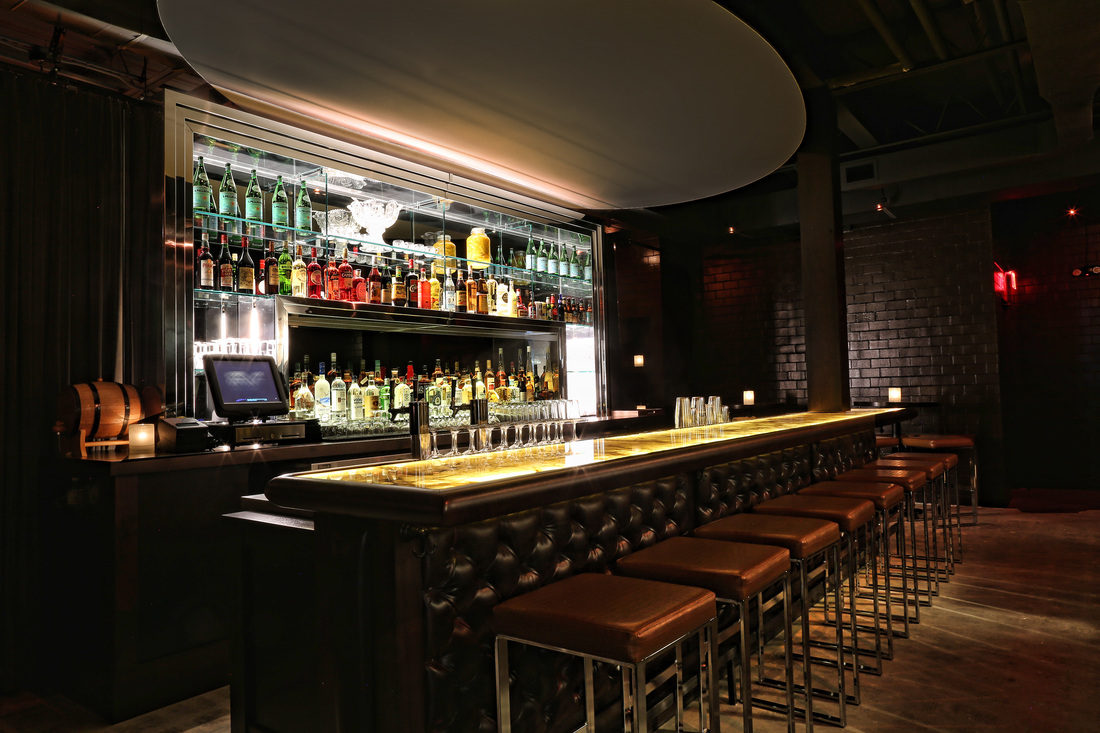
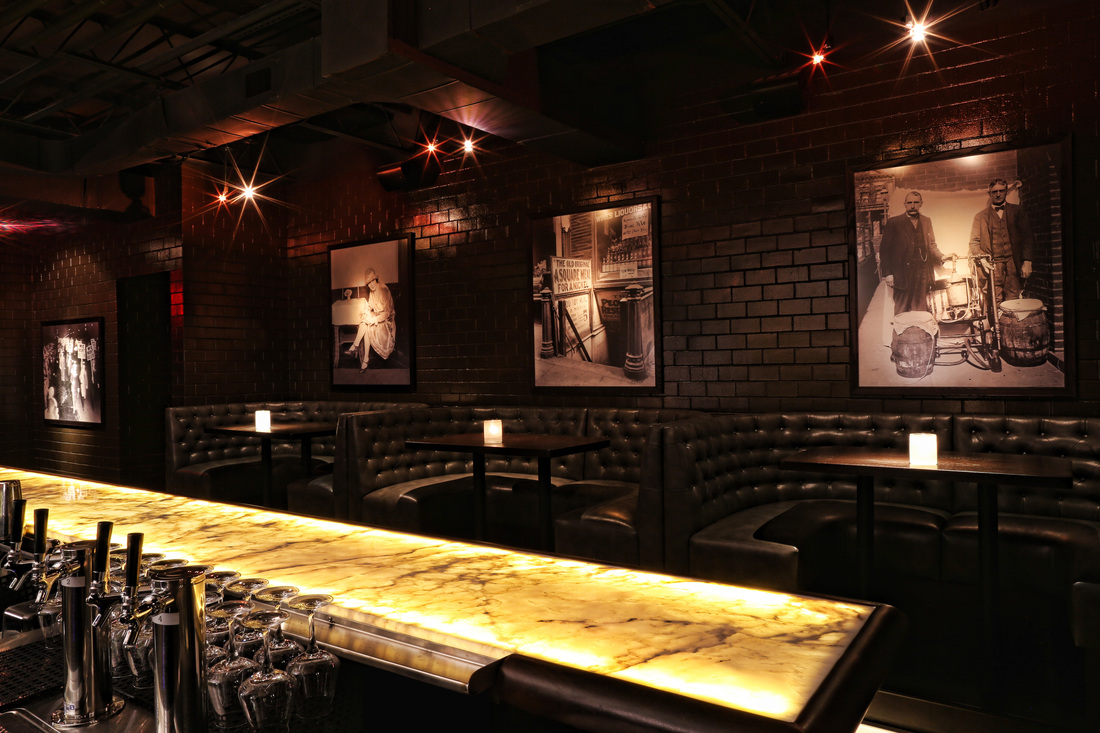
Celebrity chef Kevin Rathbun opened The Bureau in late 2015, about two years after launching KR SteakBar at 349 Peachtree Hills Avenue. The space features a baby grand piano, full bar with round booths, and seating for more than 50—all tucked behind the kitchen with its own entrance and no signage. For nearly a decade, it’s operated as Atlanta’s open-secret speakeasy: no membership required, just knowledge that it exists.
Rathbun has watched the membership club trend closely. He’s considered joining it. He hasn’t.
“I’ve seen the Warhorses do well. I’ve seen Justin Anthony—he seems to have done well with Lions Head,” Rathbun told me. “But my speakeasy is more catch as catch can. I think if you come, you spend money with me, you love it, you come back. That’s how I feel about it.”
His hesitation isn’t financial—he acknowledges the model generates “hefty, hefty dollars per year.” It’s philosophical. “I’ve always been a proponent of good hospitality. If I can put you in the back room, that’s cool—I’d love to have you.”
The path forward varies dramatically by venue—and so does the price of admission.
Based on information shared by current and former members (these details were not confirmed by the clubs themselves, which typically do not disclose membership costs), the traditional country clubs command the steepest entry fees. Initiation fees at establishments like Capital City Club, Cherokee Town and Country Club, Piedmont Driving Club, and Ansley Golf Club range from approximately $50,000 on the low end to $200,000 at the high end, with annual dues typically running into the tens of thousands per year. Many offer reduced rates for younger members, and some maintain multi-year waitlists regardless of ability to pay.
The newer establishments and dining clubs operate differently, with some charging modest annual fees in the hundreds to low thousands—though securing a referral often remains the real barrier to entry.
What all these clubs share is recognition that in an age of infinite digital access, scarcity holds value. In Buckhead, where the handshake still carries currency and the right introduction opens doors that don’t officially exist, the private club endures as more than anachronism. It’s infrastructure. And whether or not it hangs over you like a reproach, it’s not going anywhere.
Contact individual establishments directly for current membership information.

Some artists find their metier through creative exploration; others know what they want to do right from the start. Such was the case for Buckhead resident Isobel Mills Prescott, whose path towards textile art was dotted with curiosity and discipline. After completing a degree in fabric design at the Lamar Dodd School of Art at the University of Georgia, she discovered a deep connection to fabrics that echoed earlier experimentation with ceramic arts; both had a malleability she was drawn to.
Mills Prescott, like most artists, is inspired by the world around her. “I’ll see something that inspires me, and I’ll bring my interpretation to it, translating it into fabric, bringing it to life through texture and color,” she says. Being able to use her hands and manipulate the materials is a big draw for her, and she uses many different techniques to accomplish a piece. For example, her threaded landscapes are built up of color-blocked patches, which she then blends through with more stitching. In her “Picasso’s Sculpture Garden,” depth is achieved through appliqué techniques like pleats and ruffles. She’s even used French knots to mimic a chameleon’s leathery skin. “They’re essentially 3D paintings,” she says.
Creating a piece takes time, attention, and discipline. On average, her pieces take about 100 plus hours, which includes an extensive planning process. While the pieces appear organic and whimsical, the foundation required to pull them off is not. “I use Photoshop and play around with string placement or colored dots,” she says, noting that it’s really not feasible for her to mess up once fabric has been laid down. “Once I get in a mode, however, I can flow into color placement. But the beginning is very thought out.”
Mills Prescott mostly sells her fiber art on her website and Instagram, where she highlights pieces as they progress—and she’s often able to sell a piece before it’s completed. For those not in the art market, there is a way to get a piece of her creativity: through her eponymous product line.
She founded her fabric and wallpaper line, Isobel, in 2018 as an extension of her design philosophy and as a way to bring more color and pattern into people’s homes. There are over 90 cotton and linen fabrics, as well as painterly wallpaper inspired by a trip to Morocco, which can be seen in person at Travis & Company at Atlanta Decorative Arts Center.
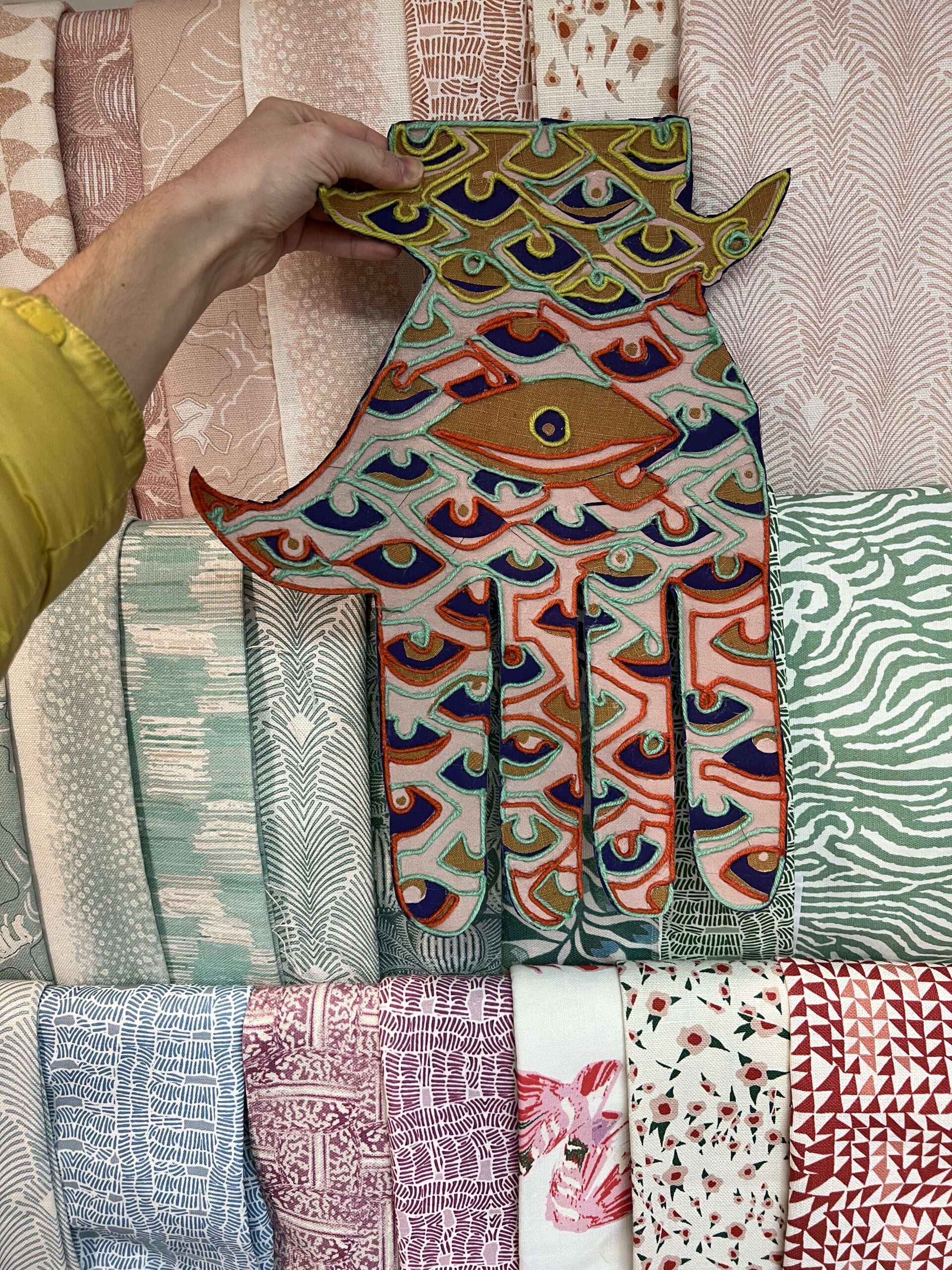




Her earlier fabrics tend to be a bit more subdued, but her most recent ones are fully realized as she’s become more comfortable. “As time has gone on, I’ve gotten more bold in my color choices for the lines,” she says. “I started more conservatively because I thought people were afraid of color, and I didn’t want it to feel unapproachable.” Now, she says she has more confidence and can use her design voice to create saturated and striking prints, such as her Leo fabric, which is available in deep colors like Lagoon, Matcha, Wisteria, and Honey.
She’s also been having more fun with small goods, experimenting with more portable and playful products. In the past, she’s produced cover-ups and pajamas, and she currently offers packing cubes, mahjong tile bags, and shoe bags adorned with her sunny prints and fun contrasting zippers. “They are a fun way for me to showcase my patterns in even more bold colors,” she says. These can be purchased directly from her or at the occasional Buckhead pop-up.
Art advisory is one of those creative niches that seems nebulous, but actually serves as a vital bridge between the art world, the design world, and clients. And for the past 11 years, Julie Wynne Jones has quietly supported all three through her art consultancy, Julie Wynne Jones Art + Design Consulting.
Jones has always loved fashion and design, but identified her personal limitations early on. “I was not a great artist and knew that was never going to be a path for me, but I loved everything around it,” the Gainesville native says. After graduating from the University of Georgia, she moved to New York, where she pursued an associate’s degree in fashion marketing and design from Parsons School of Design. While there, she cut her fashion teeth working at brands like Steve Madden and Tibi, honing her eye for color, scale, and pattern.
While working corporate jobs, she nurtured a budding interest in art and galleries. “I loved following smaller, independent artists on Instagram, especially when the platform first launched,” she says. “It was a great way to learn and connect with artists all over the country.” That hobby planted the seed for touchpoints of her future consultancy—having a pulse on emerging artists and creating a nationwide network of artists and galleries.
She then moved to Atlanta and began working for the High Museum of Art’s Wine Auction, where art became an everyday part of her life and solidified her interest in a career in the industry. A stint in-house for Atlanta-born artist Sally King Benedict further sharpened her business skills, where Jones performed day-to-day marketing and sales for the popular artist. “I learned the business side, but also what artists go through creatively in the studio,” she says.
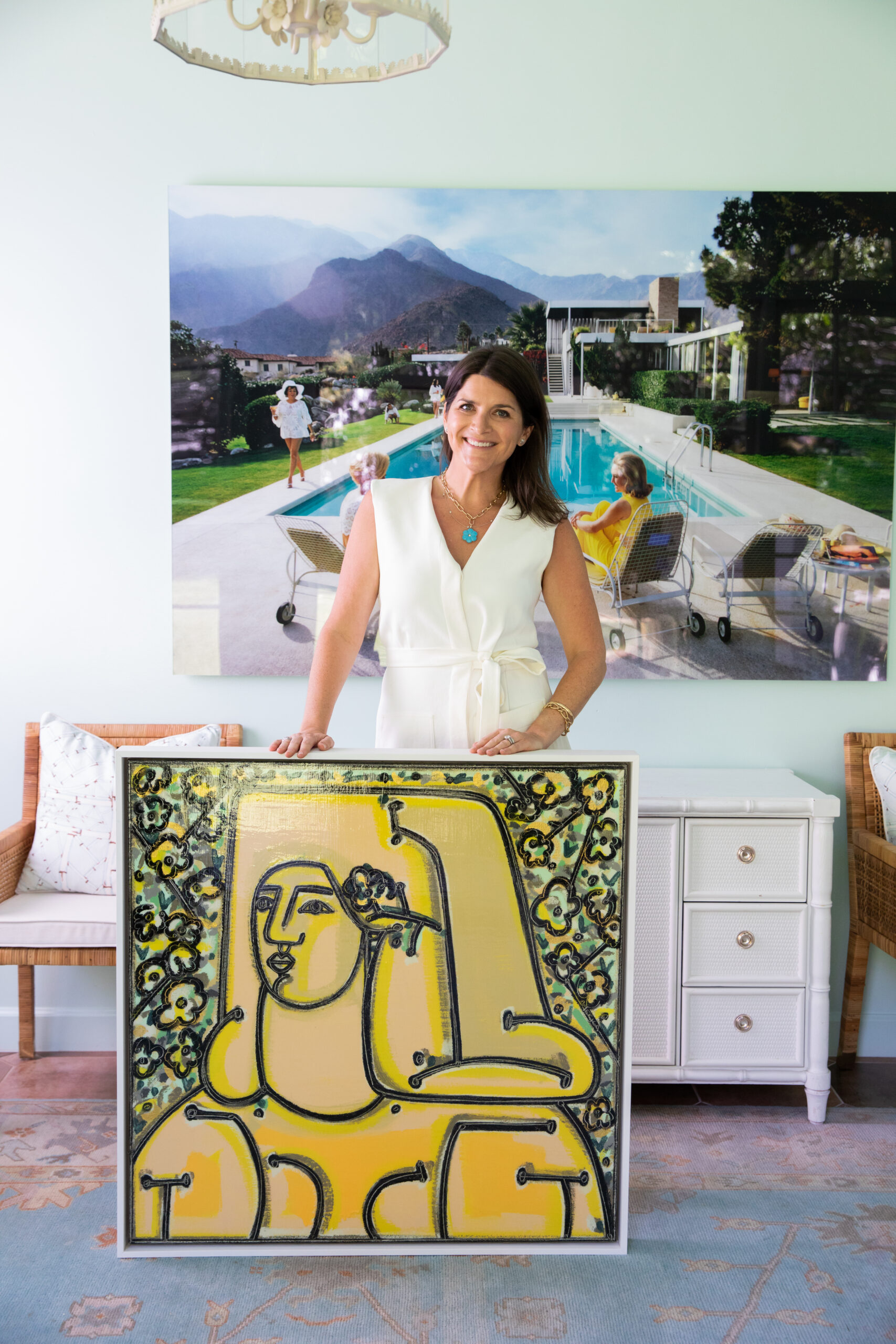
After a friend gave her the idea, Jones eventually went out on her own after giving birth to her first child, establishing Julie Wynne Jones Art + Design Consulting in 2015. Gallerist Spalding Nix and art advisor Shelli Beermann encouraged her to take the leap, acknowledging that she would be able to fill a gap with her unique skillset and connections.
Art consultants like Jones can work in a variety of capacities: independently with a homeowner, in conjunction with an interior designer, or as a commercial art buyer/commissioner. Jones serves all three functions.
For most residential clients, Jones starts by assessing a space and a client’s preferences, walking them through their likes and dislikes, and translating and articulating their style. She measures, photographs, and identifies opportunities for art in the home. Then, clients receive an index of artists from all over the country that could appeal to them and satisfy their needs, a detail that is important to Jones, who doesn’t want all of her residential clients to look cookie-cutter and have the same local and regional artists featured.
She says that part of the fun for her is that every client and every project is different. “I have clients who don’t know where to start, or those who want to fill a specific spot in their house,” she says. Many come to her after visiting galleries, frustrated they can’t quite pinpoint what they are looking for. She also has designers who outsource art completely to her. “Art is so personal, so designers will often recommend me to interface with their clients to do the heavy lifting,” she says. In most residential cases, Jones’ fee structure is similar to that of an interior designer, paid by the artist or gallery, although occasionally she charges consulting fees based on the artist or gallery’s fee structures.
Jones primarily works with painters, photographers, and sculptors, although she has undertaken commercial jobs that require more unique commissions. One such project sticks out: a collaboration with Branded Environments at Perkins & Will on the new Google Atlanta office. It was a four-year project, spanning 14 floors. The project was completed in 2024.
“The great thing is that Meredith Kinney and her team had designed the entire space, down to every light fixture, fabric, and paint color. They zoned floors, giving them themes such as ‘love’ and ‘celebrate,’” she remembers. The overall effect was a “Love Letter to Atlanta,” highlighting the city’s culture through local artists, ranging from the established, like Dr. Fahamu Pécou and Shanequa Gay, to the emerging, like Kaiye Naomi, a then SCAD student whom she commissioned for a mural in the cafe. “We got to give a lot of opportunities to so many artists,” she says.
At the end of the day, whether commercial or residential, art should function as a way to make people happy, says Jones. Her most recent work includes installations for Shepherd Center, where she has curated and commissioned art for the two new buildings, as well as the main campus’s renovation. “People there are going through the hardest thing they’ve ever been through, so if we can put something on the walls in their rooms or the waiting areas that sparks joy or makes their day a little bit better, then we’ve done our job,” she says.
After four festive years in Buckhead Village, the beloved Atlanta Christkindl Market has announced its relocation to Lawrenceville for the 2025 holiday season, marking the end of a cherished chapter for the neighborhood’s holiday traditions.
Since opening in 2021, the Atlanta Christkindl Market transformed a small corner of the Buckhead Village into a winter wonderland each Christmas season. Located along East Paces Ferry Road, the market brought authentic German Christmas traditions to the heart of Buckhead, becoming an integral part of the neighborhood’s holiday celebration.
For four consecutive years, Buckhead residents and visitors alike enjoyed the market’s distinctive blend of German culture and holiday cheer, with traditional wooden vendor huts creating an authentic European Christmas market atmosphere right in their backyard.
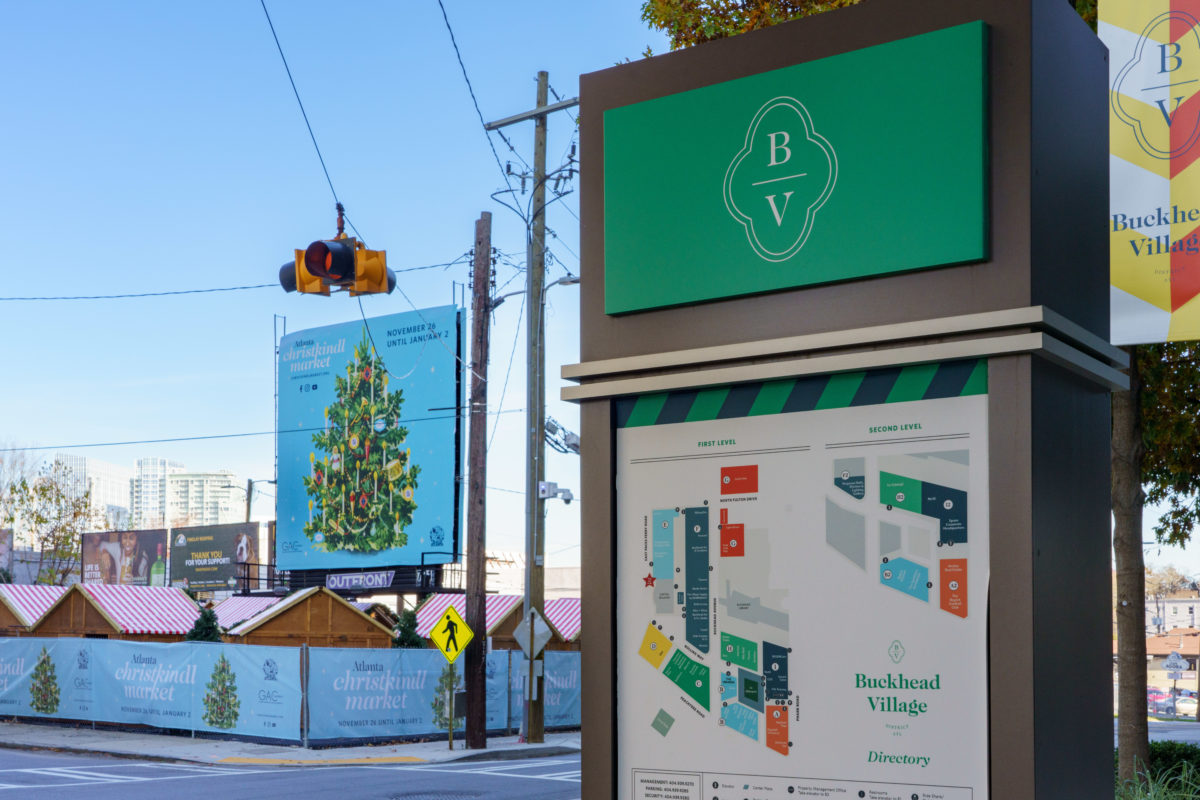



The decision to relocate the market to Downtown Lawrenceville’s Lawrenceville Lawn stems from the market’s tremendous growth over its four-year run in Buckhead. What began as an intimate holiday gathering in 2021 has evolved into one of Atlanta’s premier Christmas destinations, attracting increasing numbers of vendors and visitors each year. As photos from last year’s market show, the site was literally bursting at the seams, unable to handle the crowds that converged to celebrate. ( Download and use a couple of these nighttime drone shots. https://www.christkindlmarket.org/photo-gallery )
The new location at Lawrenceville Lawn (210 Luckie Street, Lawrenceville, GA 30046) offers significantly more space to accommodate the market’s expansion. For 2025, organizers plan to feature over 70 vendors—a number that would have overwhelmed the more compact Buckhead Village site.
The departure of the Christkindl Market represents a notable loss for Buckhead Village’s holiday landscape. Over its four-year tenure, the market had become synonymous with the start of the holiday season in Buckhead, drawing both local families and visitors from across metro Atlanta.
The German American Cultural Foundation of Atlanta, which organizes the annual event, faced the difficult decision of either limiting the market’s growth or finding a larger venue. Ultimately, the foundation chose to prioritize the market’s expansion and the enhanced visitor experience that a larger space could provide.
Beginning with the 2025 holiday season, Buckhead residents planning to continue their Christkindl Market tradition will need to travel approximately 30-40 minutes to Lawrenceville, depending on traffic. The market has arranged for parking at the Gwinnett Justice and Administration Center (75 Langley Drive, Lawrenceville, GA 30046), addressing one of the key challenges that had become increasingly problematic at the Buckhead location.
The 2025 market will operate through Christmas Eve, maintaining its Wednesday through Sunday schedule. Entry remains free, ensuring the market stays accessible to all who wish to experience its unique holiday offerings.
While the address has changed, the market’s core attractions remain the same:
The expanded space in Lawrenceville allows for additional vendor booths, more comfortable walkways, enhanced entertainment areas, and better facilities for families with children—improvements that had become increasingly necessary as the market outgrew its Buckhead home.
As the 2024 holiday season concluded, so too did Buckhead Village’s four-year run as home to the Atlanta Christkindl Market. While the market’s growth necessitated the move, many Buckhead residents will undoubtedly miss having this slice of German Christmas tradition within walking distance.
The relocation to Lawrenceville for 2025 ensures the market can continue to grow and thrive, even if it means Buckhead must say “Auf Wiedersehen” to one of its most beloved holiday attractions. For those willing to make the journey to Gwinnett County, the Atlanta Christkindl Market promises to deliver the same authentic German Christmas experience that made it a Buckhead favorite—just at a new address.
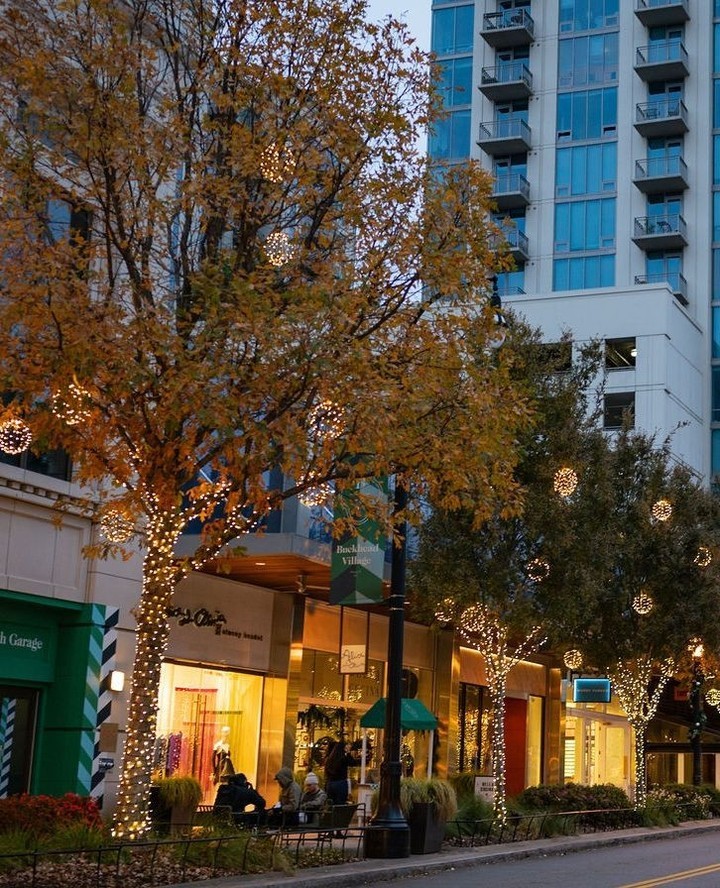
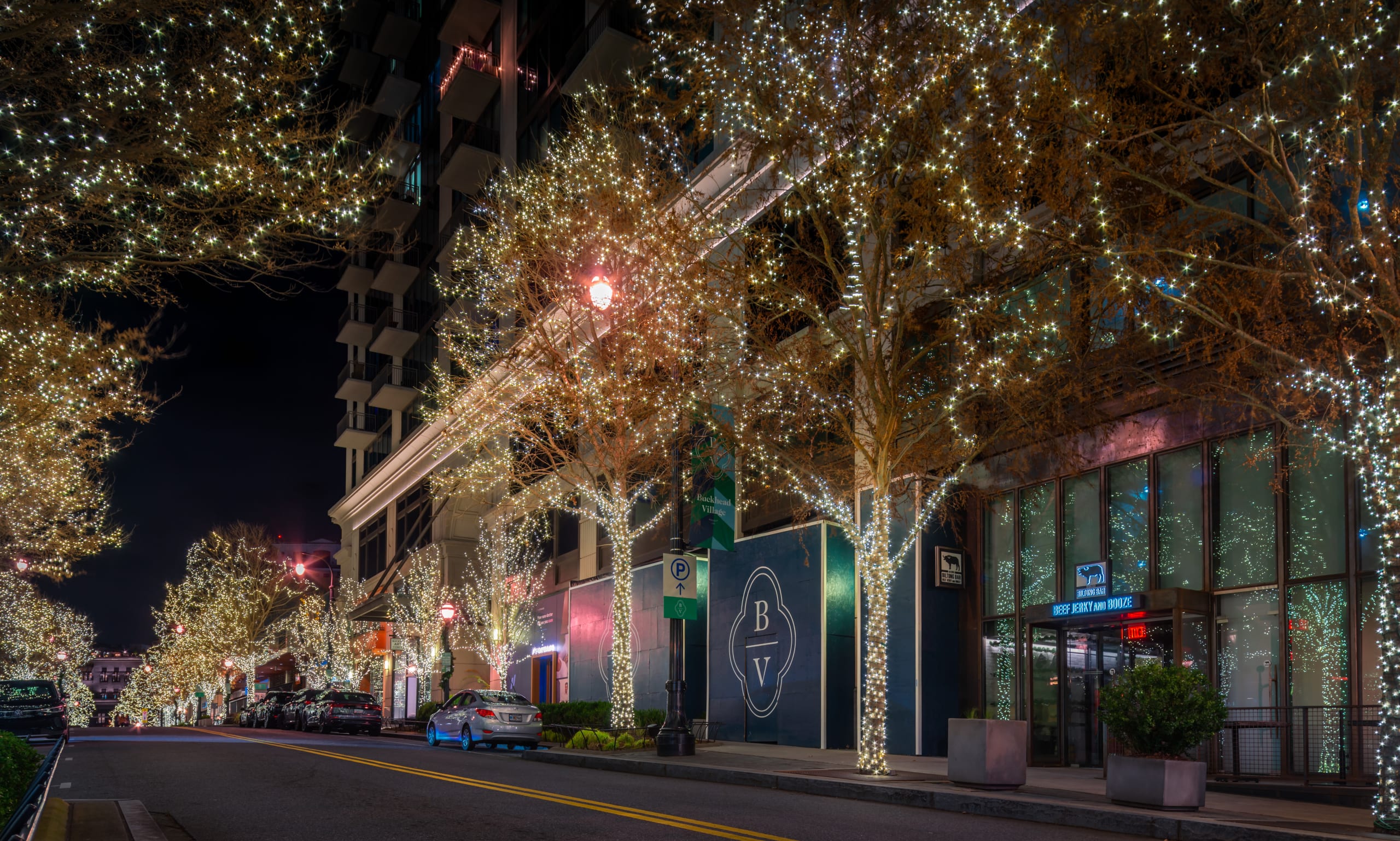
During the holidays, it can be easy to take the twinkling lights and seasonal displays around Buckhead for granted. But quietly behind the scenes, one company is working to make the neighborhood more festive.
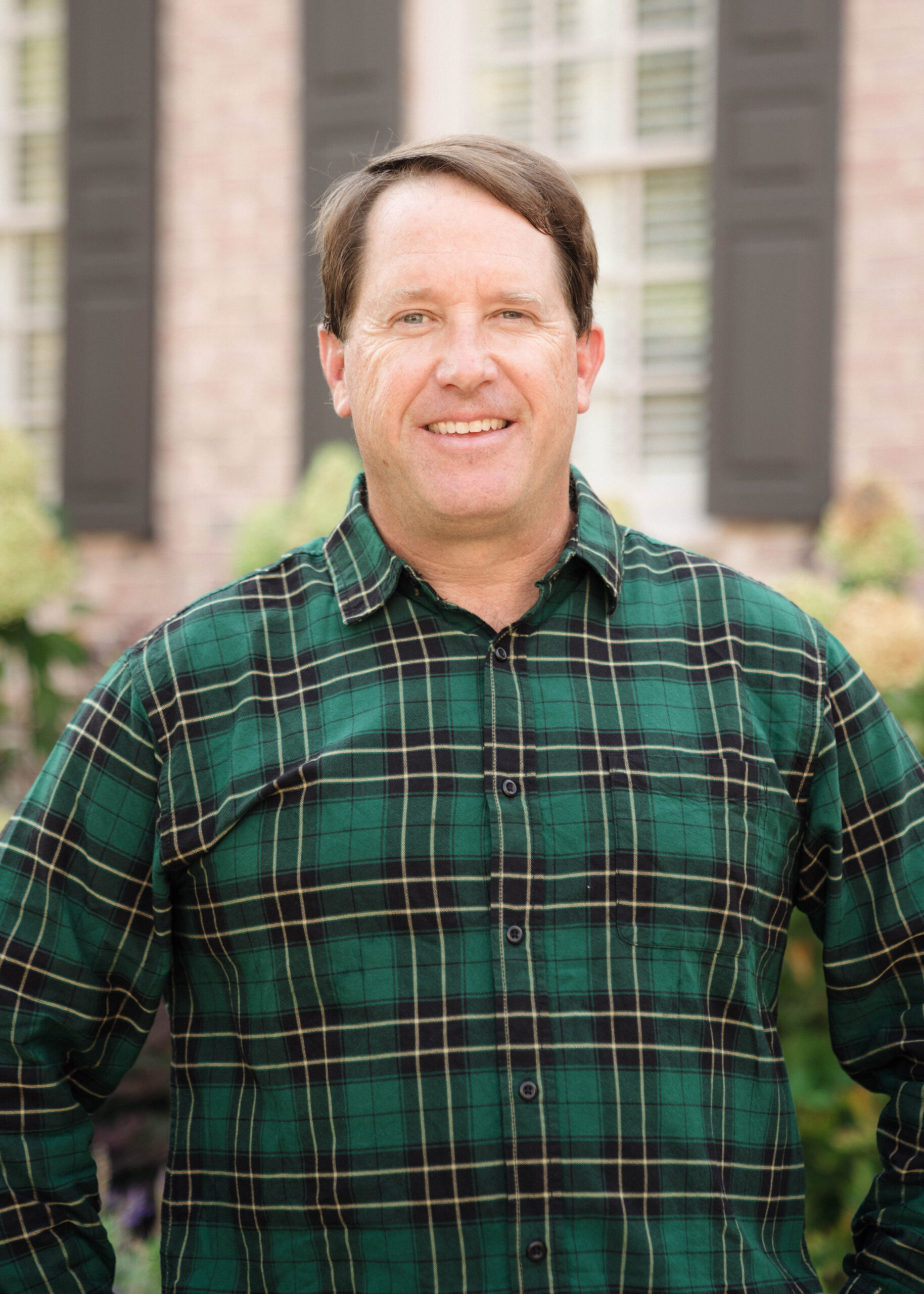
Atlanta native Matt Bowman never consciously decided to get into the holiday business. After playing baseball at Colgate University, he took a year off from school. That winter, he sold Christmas trees. “I didn’t really take it seriously, I just knew I could hustle up some dough every winter doing it,” he says. He described his life as a seasonal one at that point, bouncing between selling Christmas trees, finding work in ski towns, and working as an instructor and staff trainer at a friend’s camp. “I kind of got the entrepreneurial bug,” he says, after testing out industries and jobs.
After founding a sports marketing company with a fellow The Lovett School alum, Bowman focused on building a tree company. He had no formal business school training. “I did it all the old-fashioned way, reading marketing and accounting books,” he says. In 2006, Tradition Company opened its first tree lot in Little Five Points. The next year, he opened a second location in Chastain Square, where he still operates today. This year, he’s got four locations: Little Five Points, Chastain Square, Chamblee, the largest lot with the tallest trees, and a new one at 102 West Paces Ferry Road.
Bowman says that the focus has always been on service, no matter what his customers request. “From the beginning, we delivered, did installations, and removed and recycled trees for folks,” he says. “So many people love real trees, but don’t like setting them up and taking them down. We make it really easy.”
While there are other tree businesses in town, Bowman really focuses on his trees being as fresh as possible. “We lease from small farms that allow us to cut our trees on our schedule,” he says. “Some big box stores have to cut their trees in October just because they have so many.” Tradition trees are shipped to Atlanta from three farms in Western North Carolina within 36 hours of being cut.
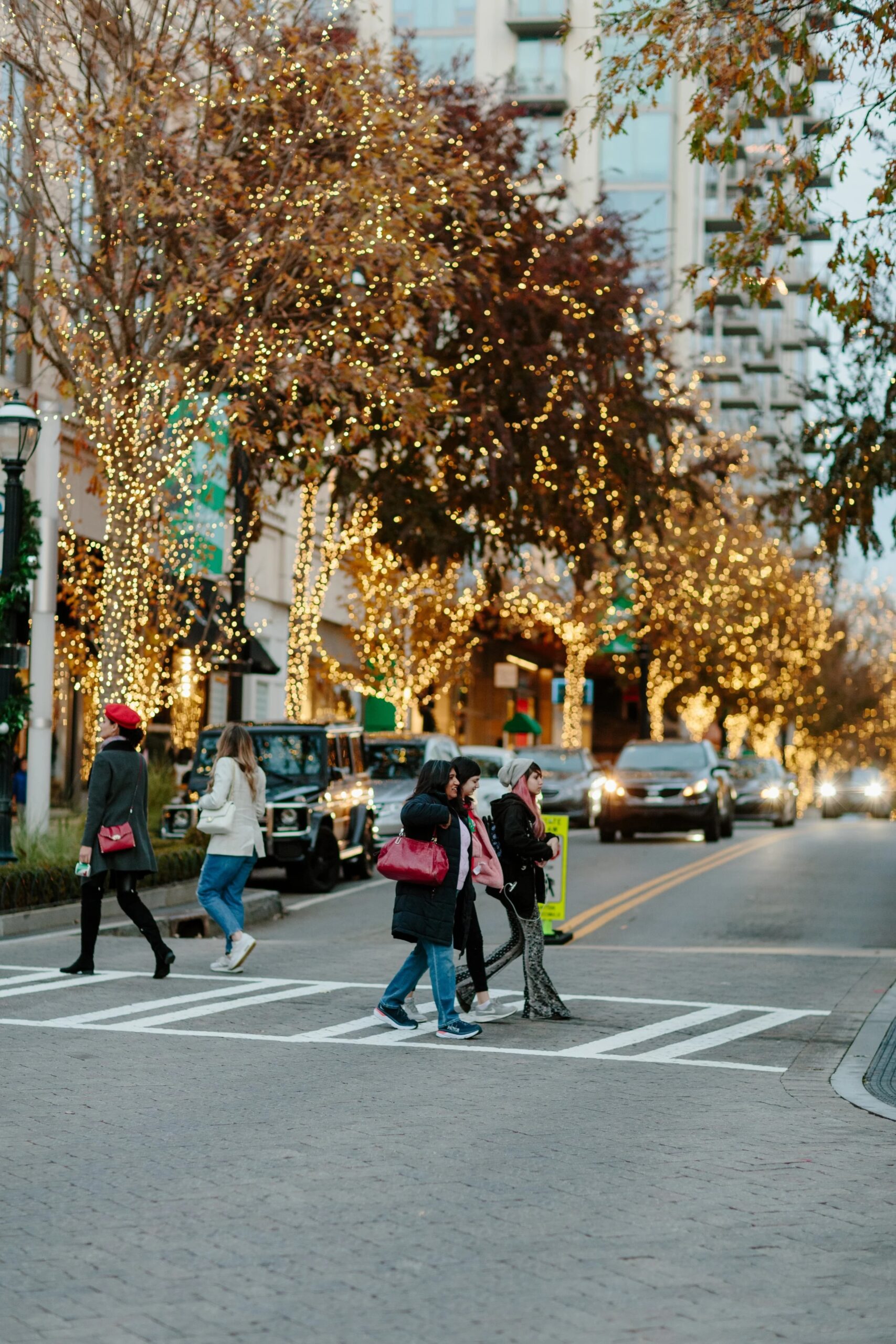
Bowman is humble, despite running a large operation that sprints through the fourth quarter of the year: there are pumpkins and fall porch displays in October as precursors to the holiday decor bonanza. Tradition Company employs 35 people, some of whom have been with the company for years. “Buying a Christmas tree is such an emotional experience, and it becomes a point of connection,” he says. “We have people who come in and love seeing our staff, and ask after them. We also have people who have never set foot on a lot, and we’ve been bringing them trees for 20 years, and they love our staff, too,” he laughs.
The possibilities are endless. “We have one guy on Peachtree Battle where we do about 700 linear feet of gutter line, big wreaths, and garland over the door,” he says. There have been crazy firewood orders for eight face cords at a time, 11th-hour phone calls for dead competitor trees with 200 guests on the way, 16-foot tree requests from interior designers, and, of course, requests for decor from Atlanta’s bold-faced names.
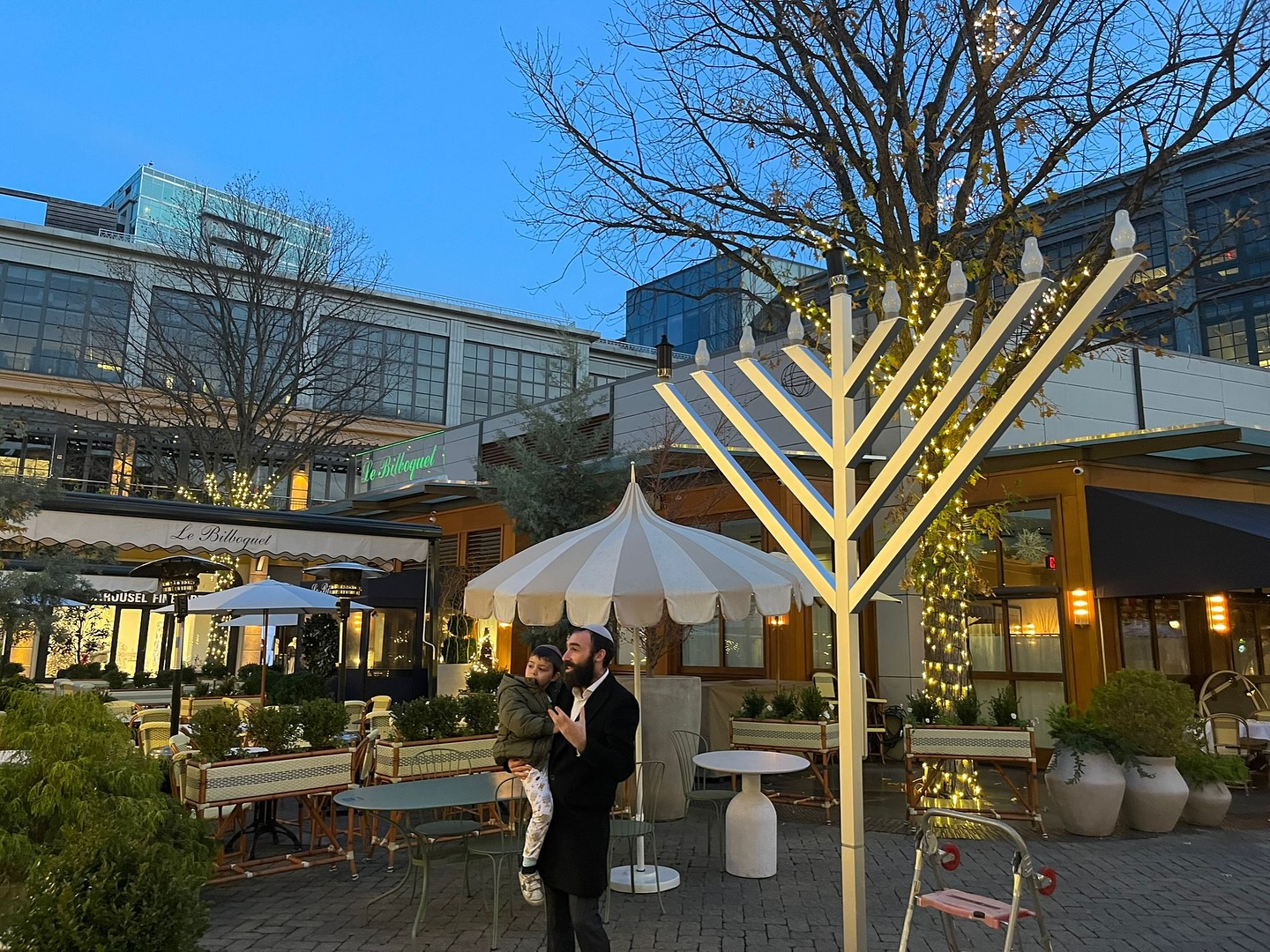
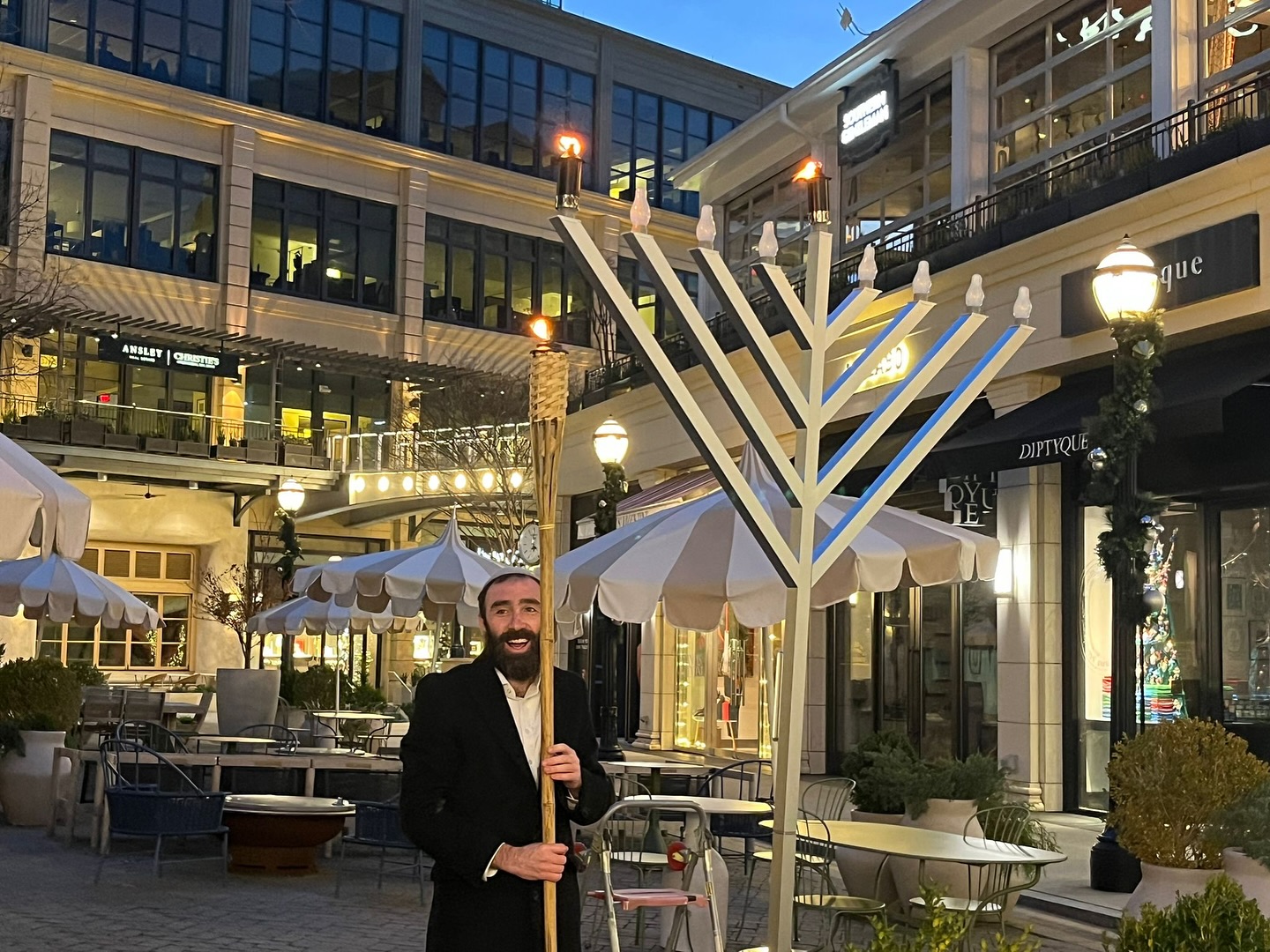
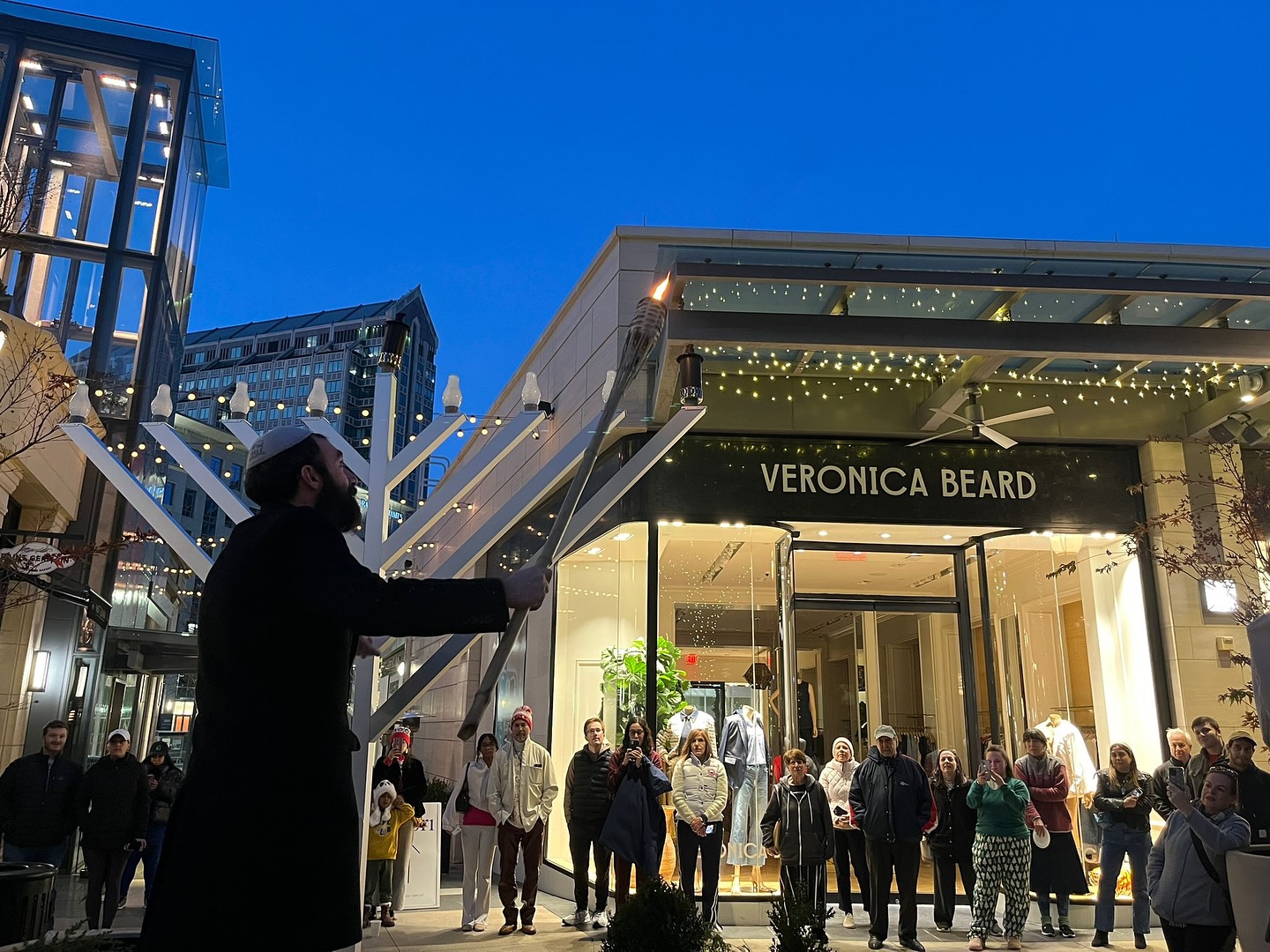
Bowman has gotten plum commercial accounts along the way, including Buckhead Village District and Ponce City Market. The partnership with Buckhead Village District led to one with Livable Buckhead that sees Bowman setting up decor all over the neighborhood, including the towering live tree and giant menorah every year in Loudermilk Park.
You can check out this year’s 23-foot tree in person on December 6th at the tree lighting ceremony. Before the ceremony, head to Buckhead Village District, where you can volunteer to decorate Tradition Company wreaths that police officers and first responders will pick up to bring back to their stations.
Barbara Reid and Polly Simpson had a conversation in 2003, as Reid was coming off the Habitat for Humanity Board at the time. Simpson had suggested getting together friends to build a house, and Reid pondered an all-female build, something she had heard about from other chapters.

“We went to Habitat [for Humanity], and they said to talk to them after we had raised half the money,” laughs Reid. The duo needed about $70,000 (about $125,000 today). Reid says they accomplished it the old-fashioned way. “We got busy sending letters to everybody we knew,” she remembers.
The persistence paid off; a house was put on the schedule for them, and the Atlanta Women’s Build was born. Simpson, who passed away in 2020, and Reid co-chaired the first three builds before passing the hammer to other women, including Simpson’s daughters. “They’ve been wonderful carrying on the legacy of their mom,” says Reid.
To participate in the build, women were asked to donate or solicit donations and put in time and effort to physically do the work. Over the years, they managed to get corporate donations added to their fundraising efforts. “We had all different groups that came out to build over the years,” remembers Reid. “A group from Spelman College, one from Agnes Scott College…we were all learning to build a house together. I can remember someone showing me how to hold a hammer,” she laughs.
Homes built through Habitat for Humanity are not free; rather, buyers must be heavily vetted by the organization and must go through an interview process. They are chosen based on a level of need, a willingness to be a good partner, and the ability to pay the interest-free 30-year mortgage, which is managed by Habitat. “They have to have income, and be practically debt-free,” says Reid.
Homeowners must also contribute hundreds of hours of “sweat equity” to the building of their home, as well as volunteering to build other homes. Financial literacy classes are also required, ensuring families are prepared for the responsibilities of homeownership. Atlanta Women’s Build just finished its 22nd build in October for a Grady EMT who is also pursuing a degree in biomedical engineering.
“This homeowner’s drive was so inspiring,” says Amy Davidson, who was the 2025 Build’s co-chair and has served on the steering committee for 12 years. “She’s also helping others achieve their homeownership dreams. She was very invested in the entire experience and process, and not just for herself.”


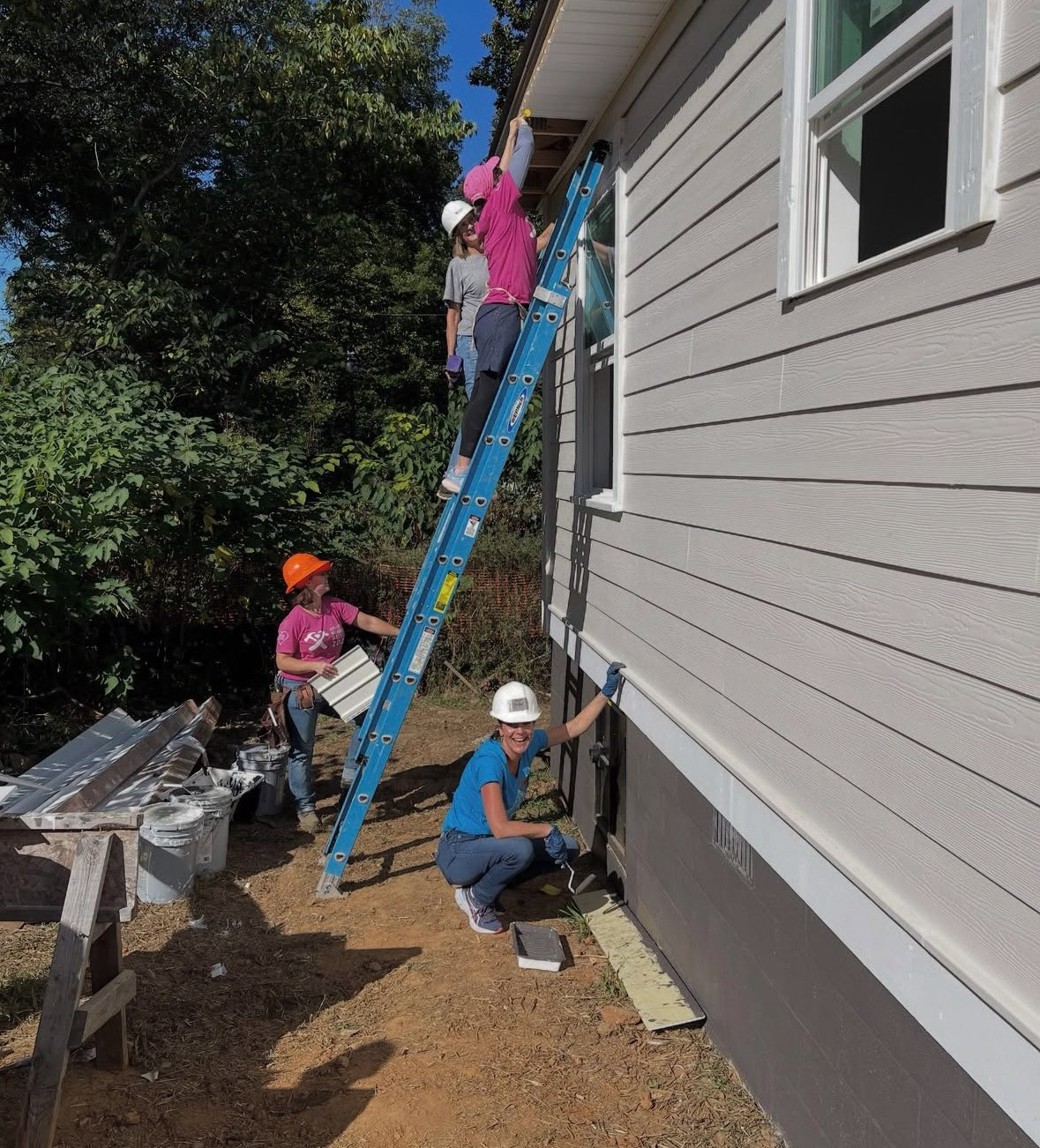
The build took about 8 weekends, with about 35 to 40 women showing up each weekend. The women come from all over, from committee members’ connections to co-workers to friends of friends. “It’s been all organic growth, everyone brings in friends of friends,” says Davidson. “Once we get a corporate sponsor, they tend to come back.”
The simple conversation between two friends has turned into a movement, and a lasting legacy for all involved. Hundreds of women have been empowered and helped change the lives of 22 home buyers through the Atlanta Women’s Build so far. It’s been inspiring, says Davidson. “The buyer is so driven and committed, and it has such a tangible impact. You’re directly helping families improve their future and building community. I’m proud we get to work side by side with these incredible individuals.”
The 4 P.M. thought of “What’s for dinner?” is a conundrum Antoinette Rosenberg, mother of three, knows all too well. After graduating from Emory University’s Goizueta Business School and moving to Minneapolis to work for General Mills, she became a mother of three and began dreading making dinner nightly.
“I think it’s such a joy to share a beautiful meal,” she says. “There’s something that feels a little poetic about going to pick up steaks with your partner and cooking. However, as soon as you have kids, it becomes a chore.” She laments the mental labor required to get food on the table: deciding what to make, having to go get it, hoping the store even has it, and then going home to cook—plus, the dishes. “It feels so heavy, like such a burden,” she says. Conventional advice says to plan better, such as meal prepping on Sunday or keeping meticulous meal planning spreadsheets, but those weren’t tactics that would work for Rosenberg and her family.

Her retail store, Gather’d, which opened in October at Buckhead Court on Roswell Road, aims to remove the obstacles that prevent people from getting healthy and delicious meals on the table. Each week, Rosenberg and her chef, Alex Garcia, conceptualize a menu based on shortcuts and how people are eating that season, plus what items are available in store. Garcia then prepares the shortcuts to make dinner a seamless experience, using seasonal produce from local farmers via Fresh Harvest.
The idea is for customers to pick up a menu and choose one of six “light cooking” or “heat and assemble” meals. Then, they gather the ingredients needed to make it from the retail store, such as shortcut items like precooked sliced bistro steak, housemade pesto, and ready-made Italian vinaigrette for salad. The items at Gather’d can be mixed and matched in over 75 different meal variations. There are also grab-and-go options like family-sized casseroles and chicken salad, and pantry staples like Italian imported pasta and artisanal jams. Shoppers can also pick up indulgent items such as chocolate chip cookies baked fresh by Garcia, as well as iced tea and coffee from the coffee bar.






The meals are simple but elegant and elevated, using the finest and freshest ingredients, such as Alon’s focaccia for a salmon B.L.T. “It all has to be easy,” Rosenberg says. “The most we’re going to ask someone to do is boil water for pasta.”
Every item sold is the very best in its category, or it serves a purpose to make things easier on the consumer. Rosenberg offers the example of a cake mix. “I don’t bake often, but when I do, I want it to feel special,” she says. (She stocks Hayden Flour Mills Confetti Cake Mix, a collab between the brand and food darling Molly Yeh.) A selection of locally loved places, like Flour + Time Bakery, Dips, Bocado, and Capella Cheese, are on Gather’d shelves. The same philosophy applies to wine, where Rosenberg worked with Side Saddle’s Jett Kolarik to curate the selection, including natural wines. Her favorites include D2 by DeLille Cellars from Washington’s Columbia Valley and Chateau de Parenchere Bordeaux L’Equilibriste, a sulfite-free French wine. All are offered in a welcoming space designed by Buckhead-based Lauren Elaine Interiors.
Buckhead Court was strategic for Rosenberg. After living in Seattle, where she operated a grocery tech start-up, she and her family found a house in Chastain Park in 2023. Superica quickly became a weekly fixture in their rotation. “I’m from Texas and I love Mexican food, and we made Fridays at Superica our family tradition,” she says. When she and her broker began looking for space, she was insistent on being close to where she had found her own community. “This is my center,” she says. “It was as simple as that. I’m here at [Buckhead Court] all the time, and I assume everyone else in the neighborhood is, too.”






The feedback for Gather’d has been extremely positive so far. Rosenberg did a soft opening at the beginning of October that was such a success, she had to reconfigure a few operational issues. “Everything we make is in small batches, so we wanted to make sure that we were prepared for a slightly higher demand than we had originally planned for,” she says. The market officially opened on October 25th.
She’s proud that she is helping lift the burden of what’s for dinner and is making food a point of connection for the community. “I wanted a place people could go and could feel taken care of,” she says. “Plus, people are excited not to have to cook.”
After a four-month national search, the Buckhead Coalition and Community Improvement District have selected Katharine Kelley as their next leader—bringing home a Buckhead native whose development projects have transformed Atlanta’s urban landscape.
Kelley, president of Green Street Properties and the developer behind iconic projects like Ponce City Market, will assume the dual CEO role in January 2026. Her appointment addresses longstanding concerns about local representation, marking a return to having a Buckhead resident lead the community’s most influential organizations.
“As a Buckhead native and resident, my DNA is rooted in this community,” Kelley said. “This brings together so many of the threads in my life,” Kelley told the Atlanta Business Chronicle. “What’s exciting to me is the chance to bring all that together now for this broad footprint of the entire Buckhead community… It’s sort of a dream come true.”
Kelley’s passion for transformative development has deep roots. Her father, Blaine Kelley, developed major Atlanta projects including the Concourse Corporate Center’s iconic “King” and “Queen” towers and Windward Development in Alpharetta, before shifting focus to urban redevelopment like Midtown Promenade Two.
Her own inspiration came early. As a teenager visiting Boston, she discovered what she called “people places”—projects like Quincy Market that reinvigorated downtowns through mixed-use development, she told the Atlanta Business Chronicle in 2012. That vision has guided her 30-year career developing more than $2 billion in properties.
Kelley’s projects read like a greatest-hits list of Atlanta’s urban renaissance. At Jamestown, she helped develop the $350 million Ponce City Market, transforming the historic Sears building into 1.1 million square feet of offices, retail, and apartments. The project earned LEED Gold certification and the Urban Land Institute’s Global Award of Excellence.
At Post Properties, she pioneered New Urbanism in Atlanta with Post Riverside. When the company considered conventional garden apartments for a Chattahoochee River site, Kelley convinced them to try something revolutionary—using renowned architect Andrés Duany’s firm to create 537 apartments and offices connected by tree-lined sidewalks that echoed pre-automobile America.
Her other projects include South Downtown’s revitalization, Glenwood Park, and mixed-use developments that consistently emphasize walkability and community connection.
Unlike many developers, Kelley brings academic credentials specifically relevant to her new role. She wrote her master’s thesis on self-taxing business districts while earning her real estate development degree from Columbia University. She also holds an MBA from Harvard and a bachelor’s degree from UNC.
This background provides both theoretical understanding and practical experience in the community improvement district mechanisms that drive Buckhead’s progress.
Kelley’s commitment to civic engagement extends beyond development. She served as president of the Rotary Club of Atlanta, sat on the City of Atlanta Zoning Review Board, and currently chairs the board of The Westminster Schools. In 2023, she received the Atlanta ULI ChangeMakers Award for her influence in shaping the city’s development trajectory.
“The only way we were able to achieve these big, lofty goals on the development side was working closely with neighborhoods, businesses, city and regional partners,” Kelley told the Atlanta Business Chronicle. “Every one of those projects involved that kind of collaboration.”
The search committee, led by Russell Reynolds Associates, evaluated candidates nationwide before selecting Kelley. Board members praised her unique combination of technical expertise and community connections.
“Having worked closely with her over the years, I’ve seen firsthand her deep commitment to civic engagement and her impressive track record in urban development,” said Jonathan Rodbell, Coalition chair.
Matt Rendle, Buckhead CID chairman, called Kelley a “perfect fit,” praising her expertise in urban planning and relationship-building as key skills for leading the organizations.
Kelley inherits significant challenges, from traffic congestion and public safety concerns to the need for continued infrastructure investment. Recent years have brought high-profile crime incidents, debates over Buckhead cityhood, and office market struggles.
However, Kelley views these as part of a broader Atlanta story. “Refreshing infrastructure, staying focused on public safety, homelessness and affordable housing are broad things that I think the entire city is focused on,” she told the Atlanta Journal-Constitution. “They’re no different in Buckhead.”
Her experience with complex projects like Ponce City Market—which required navigating historic preservation requirements, environmental standards, neighborhood concerns, and securing $50 million in historic tax credits—suggests she’s prepared for the intricate problem-solving that characterizes successful CID leadership.
“Atlantans now have examples of what a great public realm looks and feels like,” Kelley told the Atlanta Journal-Constitution. “As they’ve had a taste of that, they want even more of it.”
This perspective aligns with major initiatives like HUB404, the proposed nine-acre highway-capping park over Georgia 400 that could define Buckhead’s next generation of development.
“Buckhead is poised to play a great role in Atlanta’s future,” Kelley said. “I’m excited to work alongside our Coalition members, the Buckhead CID board, civic partners, and residents to drive growth that benefits both our community and the broader metro Atlanta region.”
Kelley succeeds Jim Durrett, who led the CID for 17 years and both organizations for five years. “I am delighted that Katharine has accepted the call to lead both Buckhead organizations,” Durrett said. “Her appointment signals a promising and exciting trajectory.”
The incoming leader inherits organizations with significant resources—the CID has raised over $90 million in self-imposed taxes for infrastructure improvements, while the Coalition represents 125 senior executives from Atlanta’s most influential businesses.
Kelley approaches the role with respect for her predecessors’ legacy. “I’m aware of and grateful for all the history that precedes me—whether it’s Sam Massell and now the tremendous legacy Jim is leaving behind,” she said. “They’re big shoes to fill, and I’m grateful for the chance to build on all of that strength.”
For Kelley, who lives in Buckhead with her husband Chad Riedel and their three children, the appointment represents both professional achievement and personal commitment to her hometown.
As Buckhead continues evolving, Kelley’s unique combination of development expertise, civic leadership, and deep community ties positions her to guide the community’s next chapter.
Katharine Kelley will officially assume her role as President and CEO of the Buckhead Coalition and Buckhead CID in January 2026.
Real estate development firm Kolter Urban has announced more details and a timeline for its latest Atlanta project, Elyse Buckhead, a 20-story luxury condominium to be located at 102 West Paces Ferry Road. The project will add 194 new residences to the high-demand Buckhead Village neighborhood, situated near the St. Regis Hotel.
The announcement marks the official launch of sales for the development. A sales gallery for prospective buyers is now open at 107 West Paces Ferry Road. Kolter Urban plans to break ground in the second quarter of 2026, and the project is anticipated to be completed by the end of 2028/ beginning of 2029.

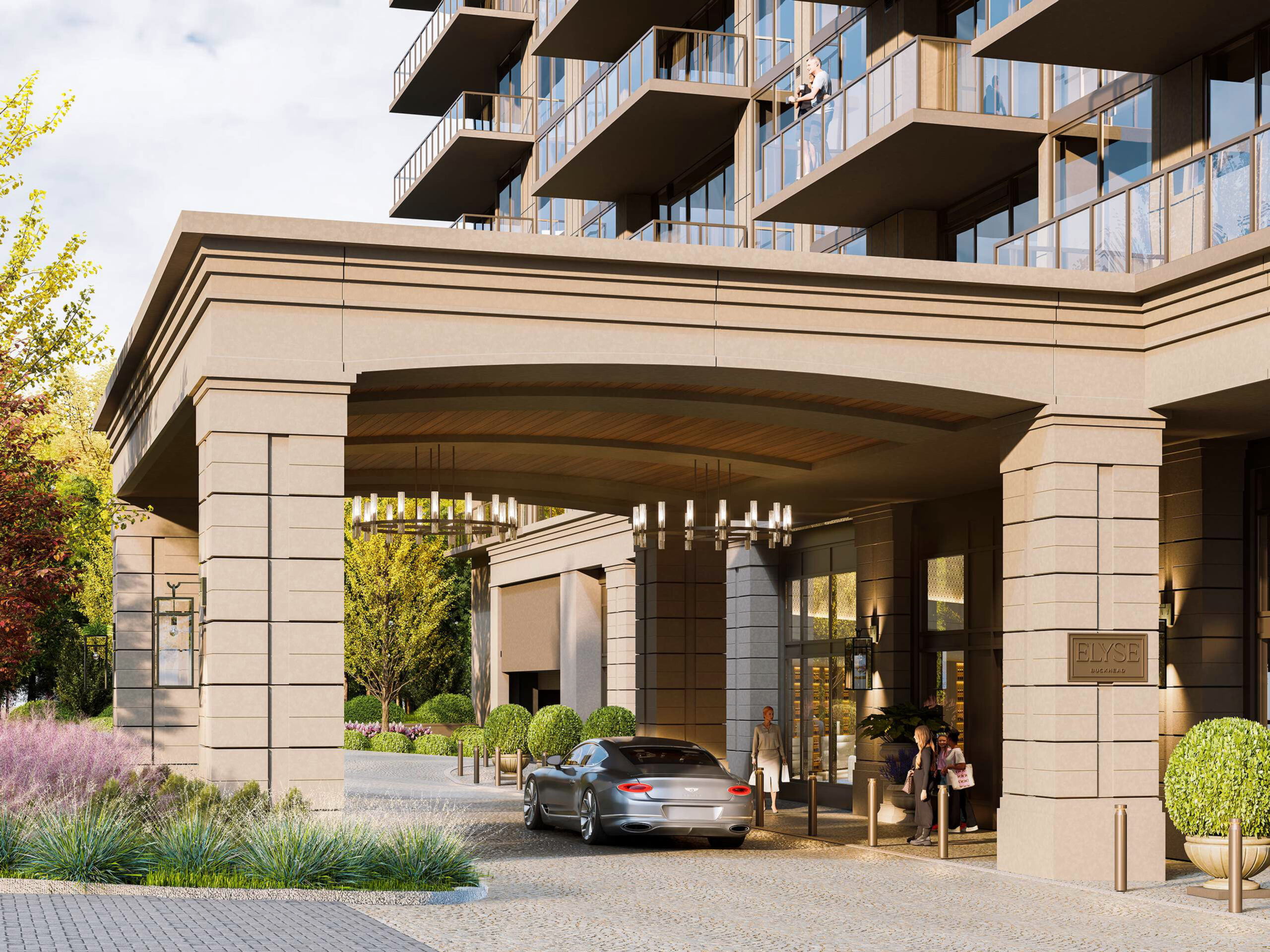

“Elyse Buckhead marks Kolter Urban’s third project in this dynamic neighborhood,” said Aaron Taulbee, Regional President of Kolter Urban, in a statement. The firm has previously found great success with The Dillon Buckhead and Graydon Buckhead condominiums. “We’re deeply invested in Atlanta’s growth, and Elyse reflects our continued commitment to delivering exceptional residential properties in premier locations across the Southeast.”
Designed by the architecture firm Rule Joy Trammel + Rubio, the building will offer a mix of one- to three-bedroom floor plans. According to the developer, the residences will range in size from 1,200 to just over 4,000 square feet. Interior features will include 10-foot ceilings, floor-to-ceiling windows, and private terraces. Kitchens are specified to have European cabinetry, quartz countertops, and stainless-steel appliances. Pricing for the residences begins in the mid-$900,000s.
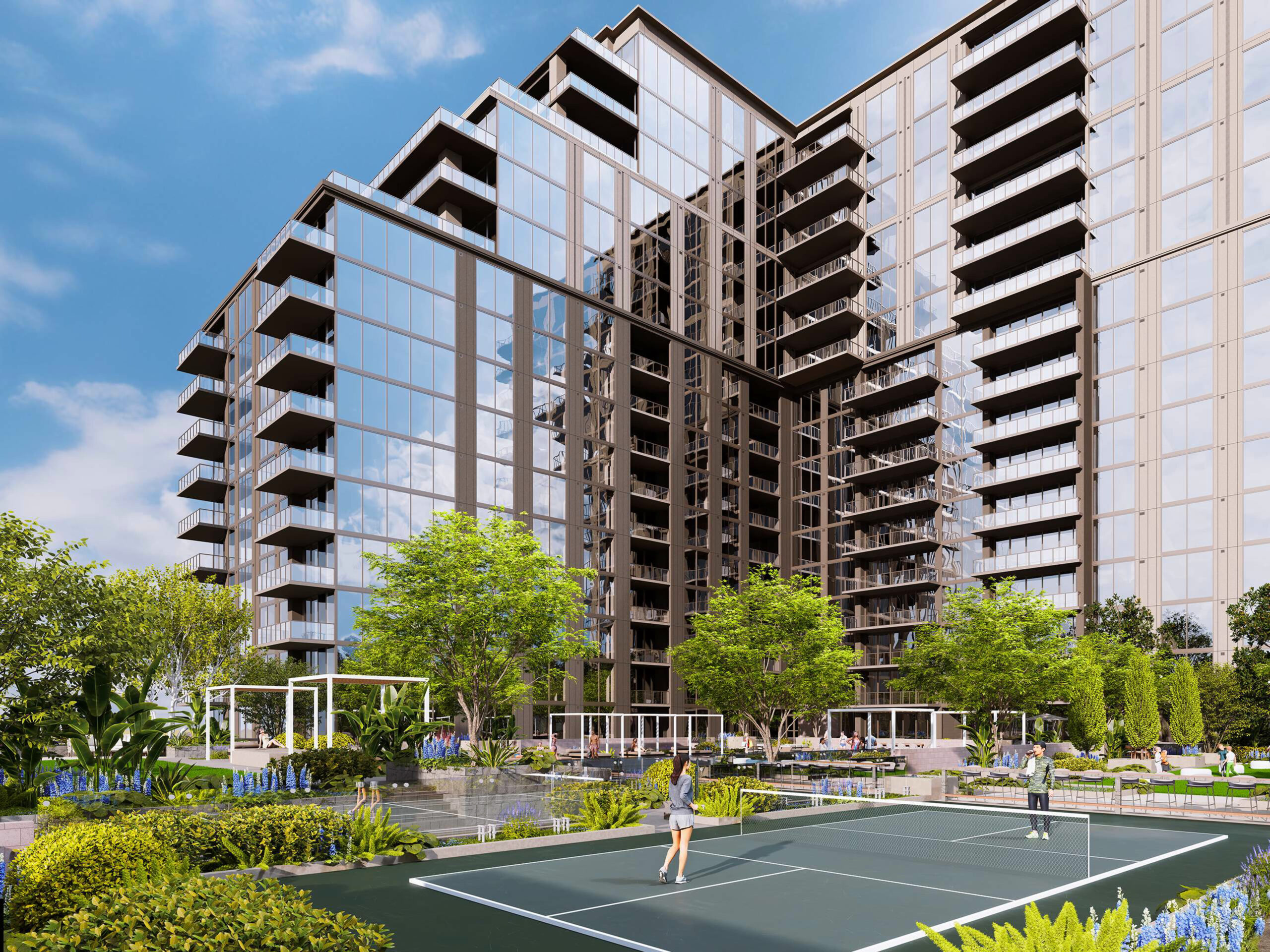
The project plans include 63,000 square feet of resident amenities. An elevated outdoor terrace will feature a heated pool, a pickleball court, a sports lounge with a golf simulator, and an outdoor kitchen area. The building will also house a fitness center, a private theater, a club room, and a residents-only spa facility with treatment rooms, cold plunge pools, a steam shower, and a sauna. Building services will include 24/7 staffing, controlled-access entry points, and secured garage parking.

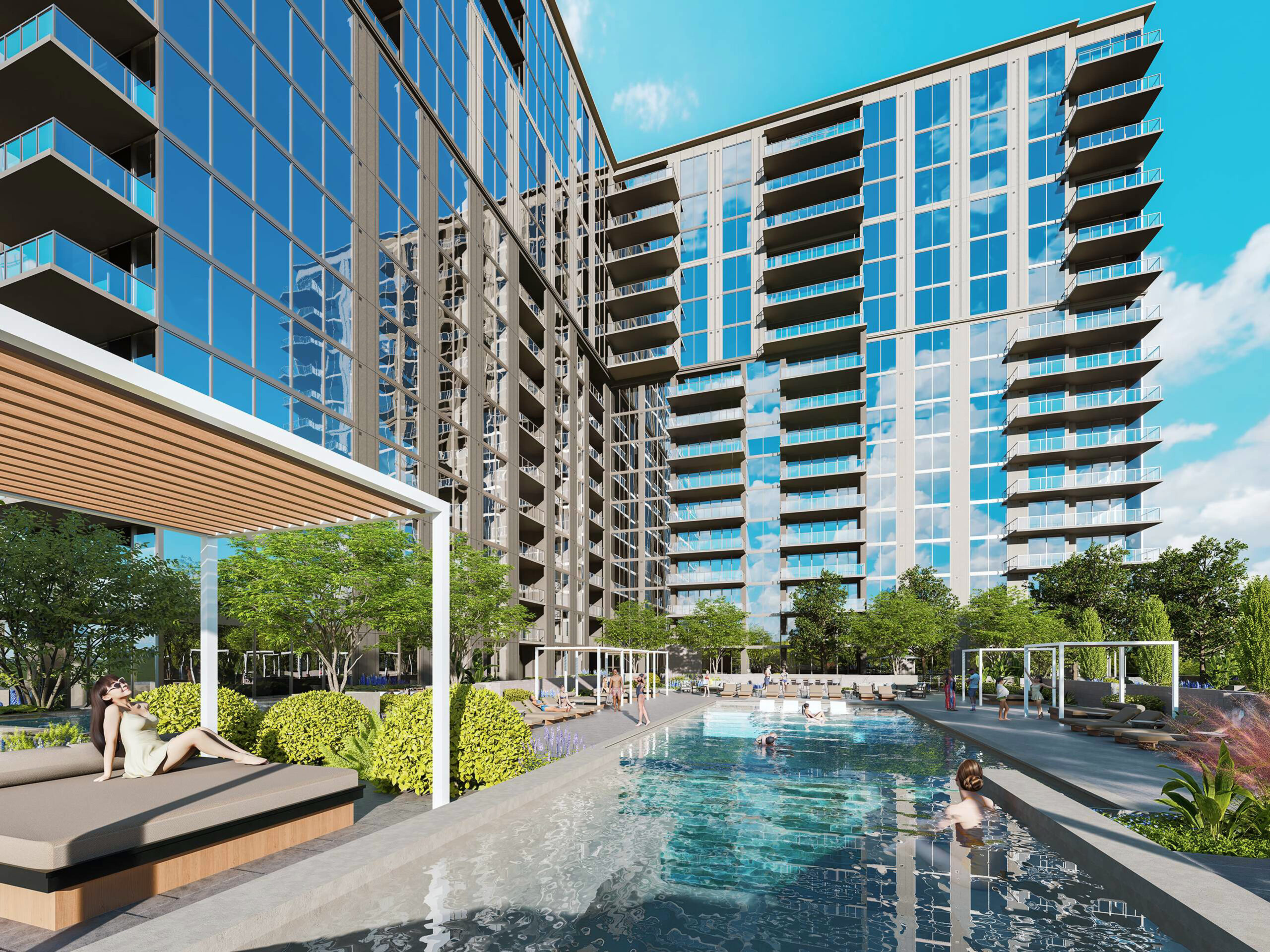
“[Kolter Urban has] proven to be the premier condominium developer in Atlanta, consistently delivering quality luxurious condominiums that buyers are excited to call home,” said Anne Schwall, Senior Vice President of Developer Services at the brokerage firm which is coordinating the presale.
Mercedes-Benz of Buckhead, the luxury automotive landmark at 2799 Piedmont Road that has served Atlanta’s elite for nearly a quarter-century, has been sold by its pioneering owners to publicly traded Group 1 Automotive in a transaction that closed August 4, 2025. While Group 1 has not disclosed the purchase price in SEC filings, the dealership generates $210 million in annual revenue and Fulton County property records show a $50 million real estate component to the deal.
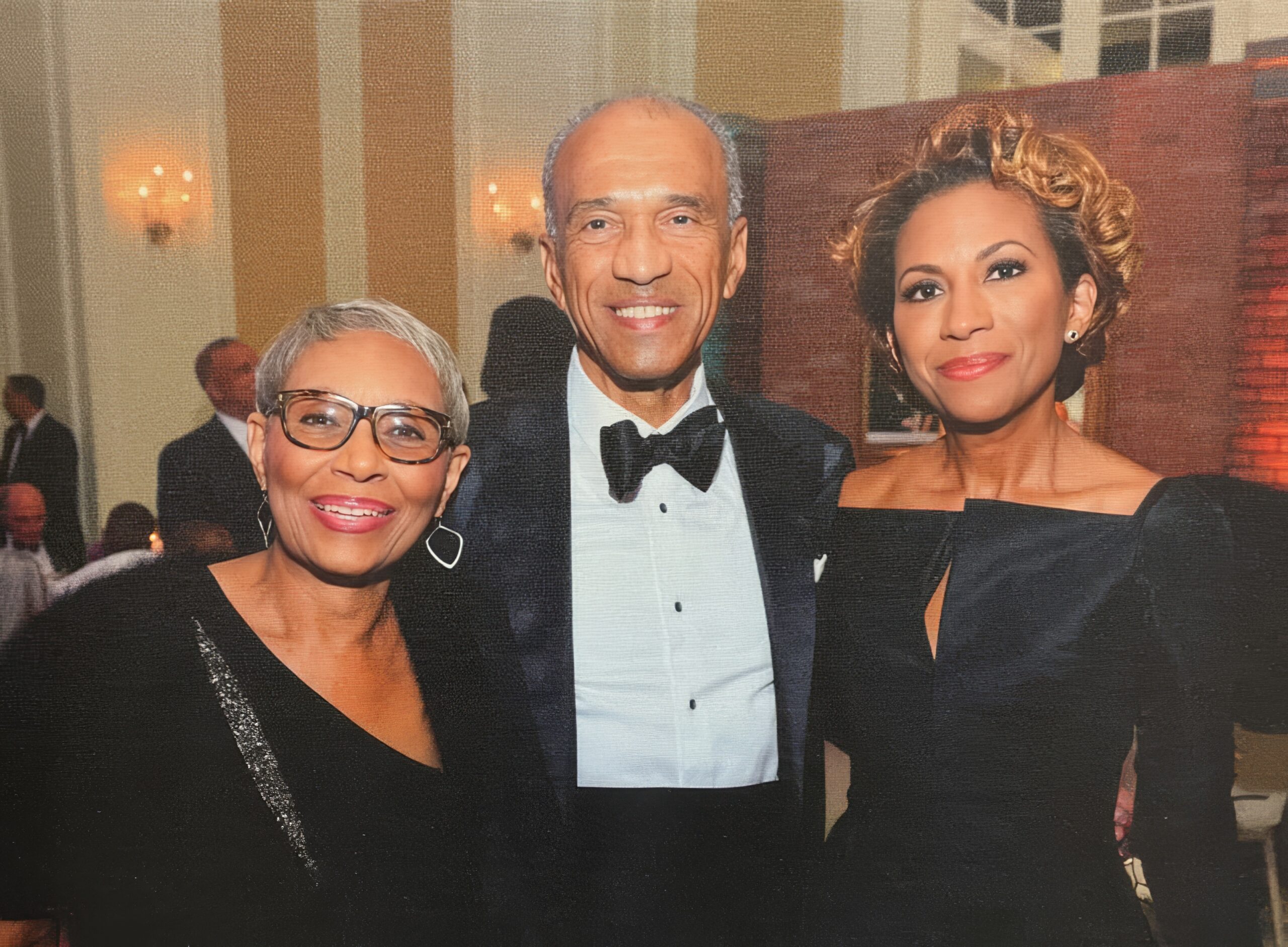
The sale marks the end of Gregory and Juanita Baranco’s stewardship of what became one of the Southeast’s most successful Mercedes-Benz operations, a dealership they co-founded with former Atlanta Mayor Andrew Young in 2001 and later moved from its original location to make way for the St. Regis Hotel development.
The dealership’s journey to its current 80,000-square-foot covered facility on Piedmont Road tells a uniquely Buckhead story. Originally awarded the Mercedes-Benz franchise for Buckhead in June 2003, the Barancos first established their showroom on a prime site that would later be coveted by luxury hotel developers.
Easlan Capital purchased the Miami Heights Market Center—the former Home Depot location—for $15 million specifically to relocate Mercedes-Benz of Buckhead and make room for what would become the St. Regis Atlanta. The developers behind that project included Atlanta real estate investors John Meshad and George Berkow, who transformed the original dealership site into the 151-room luxury hotel and 45 condominium units that opened in 2009 and remains the centerpiece of the Buckhead Village.
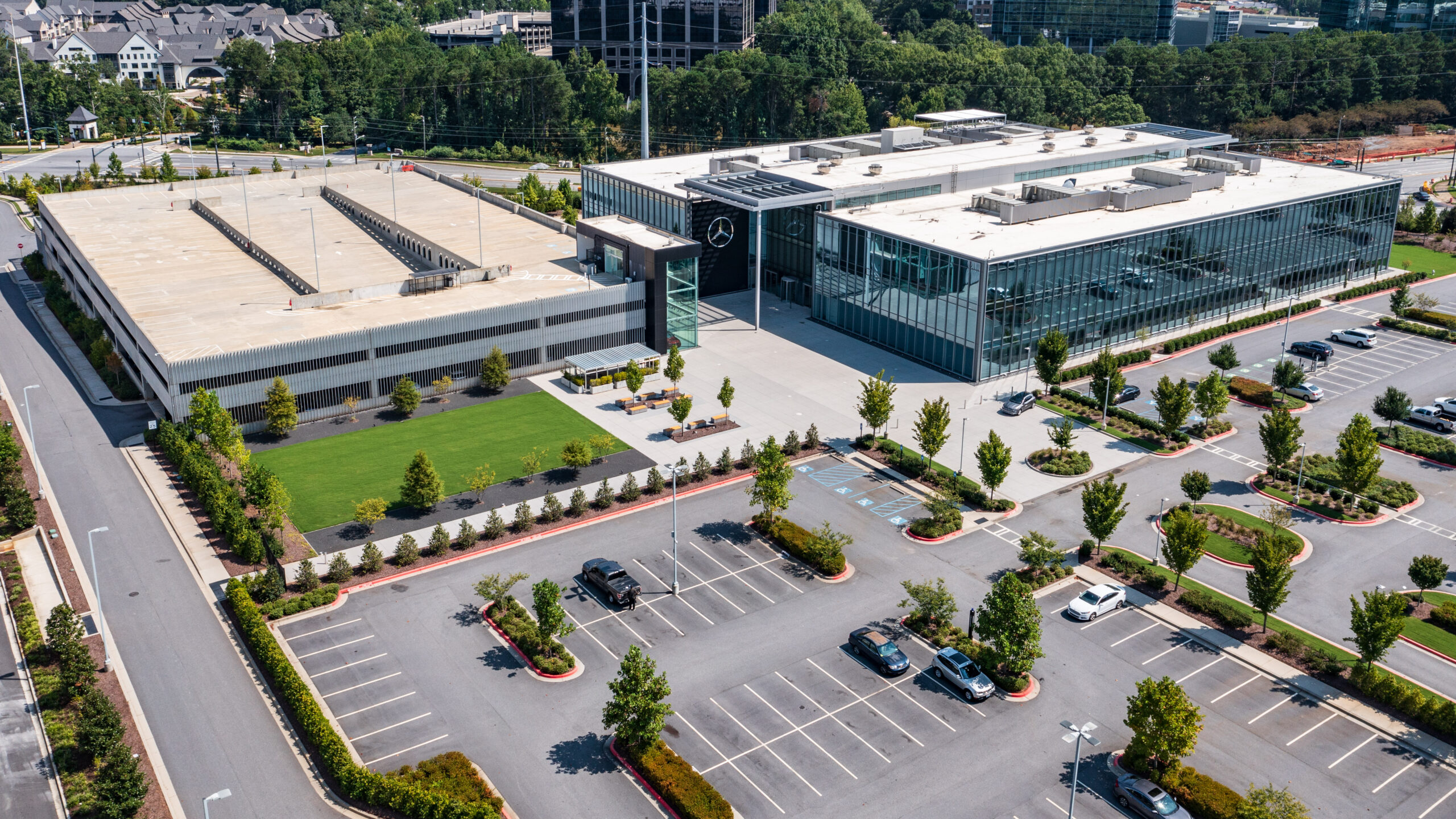
The dealership’s significance extends beyond its impressive sales figures. Its location places it just minutes from Mercedes-Benz USA’s North American headquarters at One Mercedes-Benz Drive in Sandy Springs, a gleaming facility known as “1MB” that opened in 2018 and currently houses approximately 800 employees. In May 2025 Governor Brian Kemp announced that Mercedes-Benz would expand its Sandy Springs presence, establishing it as the company’s full North American headquarters by consolidating corporate functions and adding up to 500 more jobs.
The Barancos’ automotive journey began far from Buckhead’s luxury corridors. On April 4, 1978 they purchased their first dealership in East Point with $25,000 of their own capital, establishing one of the first black-owned car dealerships in metropolitan Atlanta.
“We managed to get our people paid but it was becoming clear that I was going to need to find different employment to help make things work,” Juanita Baranco later told The HistoryMakers about surviving the recession of the early 1980s, when she returned to legal practice as an Assistant Attorney General to keep the business afloat.
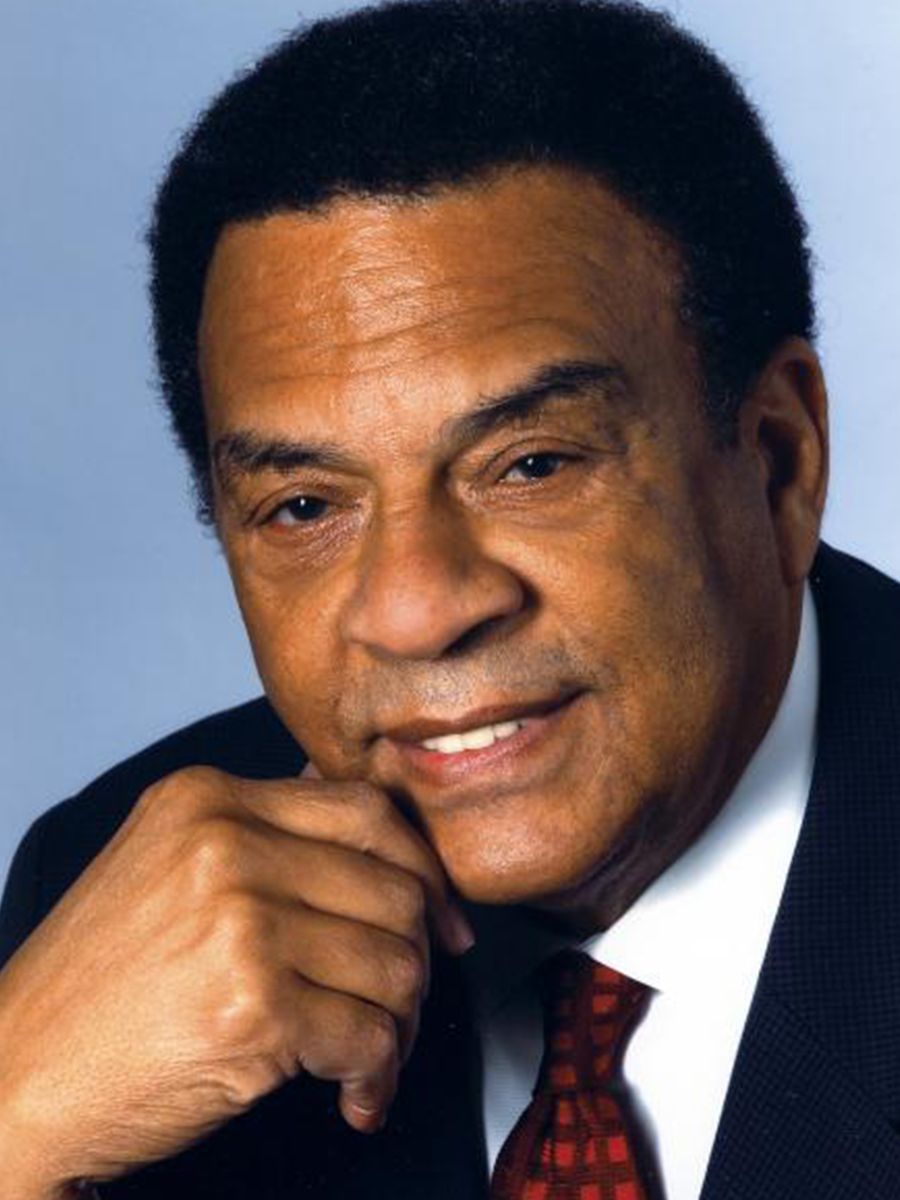
Their partnership with Andrew Young in 2001 to open Mercedes-Benz of Buckhead represented a watershed moment. Young, the civil rights icon who served as Atlanta’s mayor from 1982 to 1990 and U.S. Ambassador to the United Nations under President Carter, brought both prestige and symbolic significance to the venture.
By 2024, both Barancos were named Atlanta Business Chronicle’s Most Admired CEOs, recognized for innovation, financial performance, and community contributions. The dealership they built became known for what Gregory Baranco called “5-star customer service” and turning customers into ambassadors, according to The HistoryMakers biography.
While the Buckhead chapter closes, the Baranco automotive legacy continues. The family retained their Mercedes-Benz of Covington dealership in Louisiana and secured a new Audi dealership in Cumming, Georgia, which will be operated by their daughter, Grené Baranco.
Grené, who started as a receptionist at her family’s Pontiac dealership and created one of the industry’s first internet sales departments in 1997, plans to revolutionize the dealership experience at the new Audi Forsyth County location opening in Spring 2026.
The sale represents more than a business transaction—it marks the transition of a Buckhead institution that has been woven into the fabric of Atlanta’s luxury retail landscape for nearly 25 years. From its displacement by the St. Regis development to its rise as one of the Southeast’s premier Mercedes-Benz operations, the dealership’s story mirrors Buckhead’s own evolution as Atlanta’s luxury destination.
With Mercedes-Benz USA’s expanded headquarters just up the road in Sandy Springs and Group 1’s resources behind it, Mercedes-Benz of Buckhead appears positioned to continue serving Atlanta’s luxury car buyers for decades to come. Yet for many in the community, the dealership will always be associated with the Baranco family’s pioneering achievement—proving that with vision, perseverance, and strategic partnerships, barriers can become gateways to extraordinary success in the heart of Buckhead.
The Swan House, with its soaring columns and manicured gardens, stands as an iconic symbol of Buckhead’s elegance and Southern grandeur. For decades, it has captivated visitors as the quintessential monument to one of Buckhead’s founding families and their vast fortune. But to focus solely on its architectural splendor is to miss the far more compelling and complex story of the family who built it—and one remarkable woman who worked within its walls.
The Inman family narrative, particularly when viewed through the lives of wife Emily, and their maid, Lizzie McDuffie, reveals a deeper, more nuanced history of Buckhead. This is a story that goes beyond opulence, exploring the intricate social fabric, the seeds of philanthropy, and the unexpected connections to national movements for equality that were woven into the very foundations of this community.
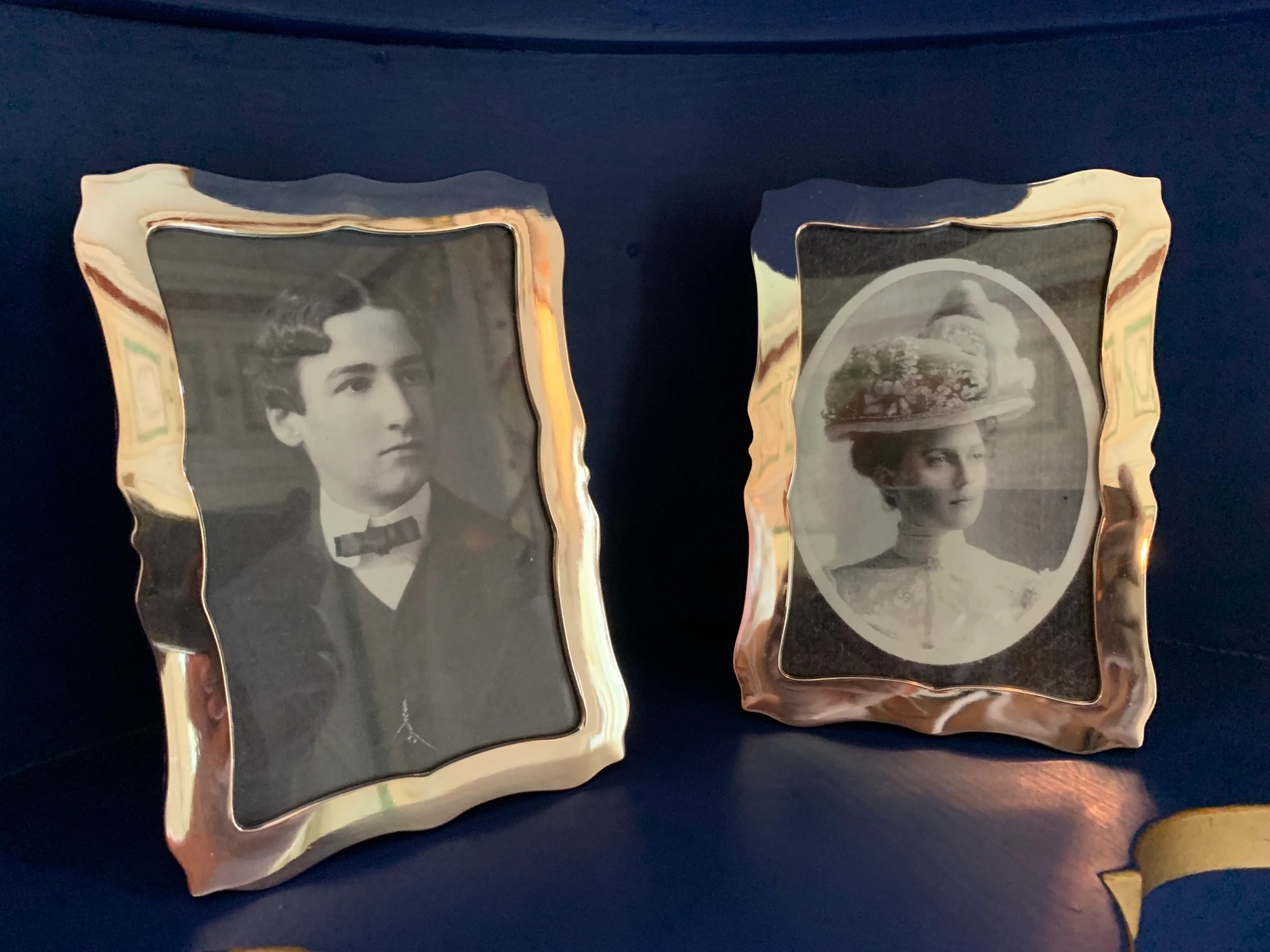
The story begins with Edward Inman, the heir to a vast cotton brokerage fortune. In the early 20th century, he was a pivotal figure in Atlanta’s commercial landscape, with business interests spanning real estate, transportation, and banking. He was a partner in the Kimball House Company, a founder of the Atlanta Woolen Mills, and a director of the First National Bank of Atlanta. His civic contributions were equally significant, serving on the Atlanta City Council and the Fulton County Board of Commissioners. Inman was known for his “disdain of government extravagance and his concern for the poor,” a reputation that cemented his role as a key player in the city’s development. The Inman family’s philanthropy was a cornerstone of their identity, contributing to institutions that are still cornerstones of Atlanta today, including Georgia Tech, Agnes Scott College, and Grady Memorial Hospital.
But if Edward was the engine of the family’s economic and civic influence, his wife, Emily, was the driving force behind its social and cultural legacy. A woman of extraordinary independence and vision, Emily Inman came from a family of strong-willed women. Her mother was a founder and president of the Equal Suffrage Party of Georgia, a movement in which Emily actively participated. Emily was a shrewd and capable investor, tending to her own estate with a remarkable flair. She famously once stated that her financial independence allowed her to “live the kind of life she wanted to live,” a profound declaration for the time when women had not yet won the right to vote.
This independence was never more evident than in the creation of the Swan House. While Edward’s name is often associated with the mansion, it was Emily who was the true “decision maker.” She collaborated closely with renowned architect Philip Trammell Shutze and interior designer Ruby Ross Wood, guiding every detail to create a home that was both a testament to Southern classical architecture and a sanctuary for her family. Following Edward’s untimely death in 1931, Emily became the sole steward of the family’s wealth and the Swan House itself. She lived in the mansion until her death in 1965, at which point she orchestrated its sale to the Atlanta Historical Society for a half-million dollars—an act of preservation that ensured her home, and a piece of Buckhead’s history, would be accessible to the public forever.
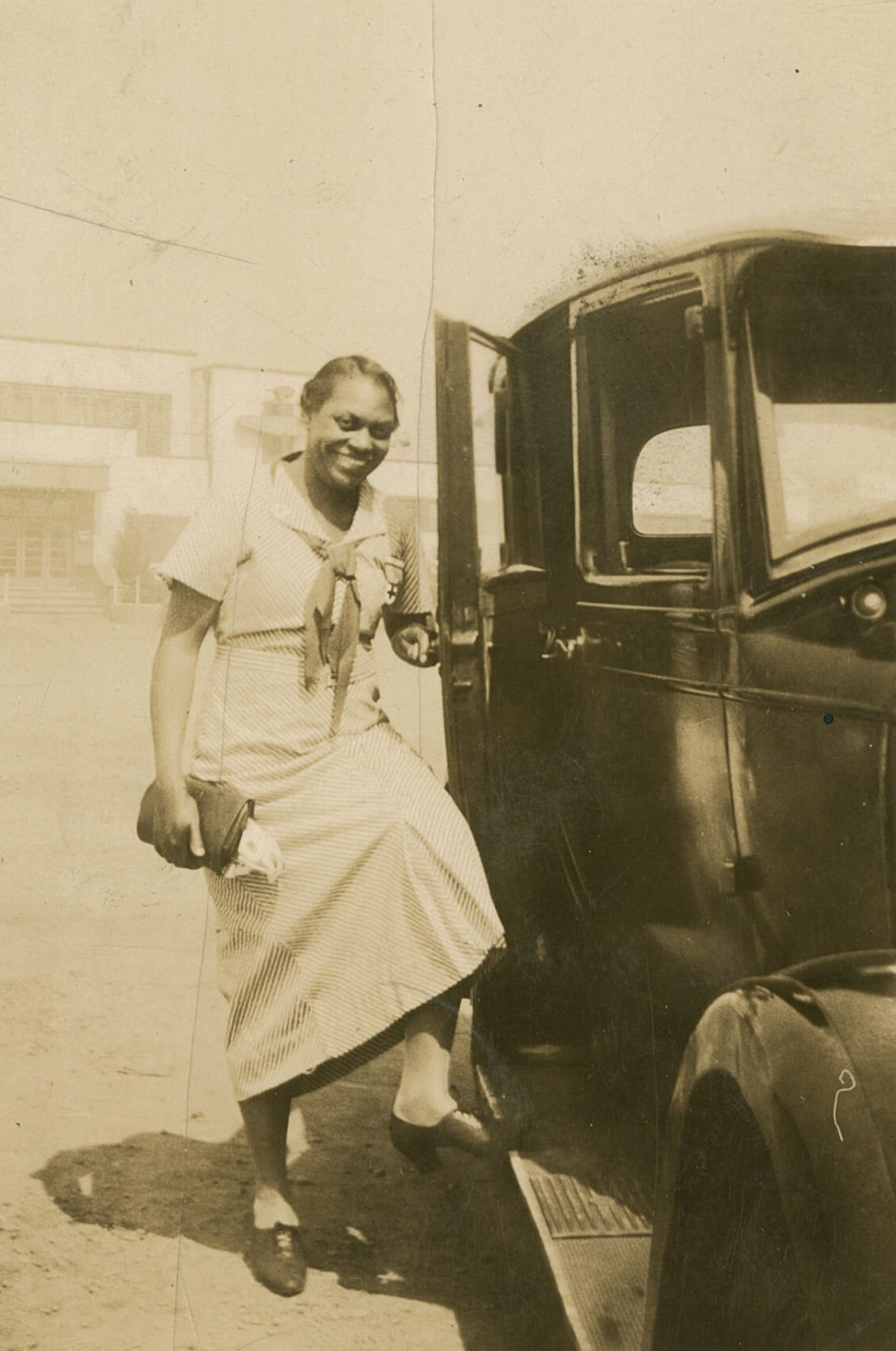
Beneath the grandeur of the Swan House, a different, equally compelling narrative was unfolding on the third floor and in the back servants’ quarters. This was the world of the domestic staff, a world meticulously organized by the unspoken rules of the Southern social hierarchy. The Swan House employed a staff of four to seven servants, including cooks, maids, a butler, a chauffeur, and a governess. Their lives, while integrated into the daily rhythms of the Inman family, were spatially and socially distinct. They lived in quarters on the third floor or above the six-car garage, accessed by a back staircase, and their days were governed by a strict schedule that allowed for little time off.
This was the world Elizabeth “Lizzie” McDuffie knew intimately. Born in Covington, Georgia to formerly enslaved parents, Lizzie began her service with the Inman family as a nursemaid and maid around 1901. For 32 years, she was a part of their household, experiencing firsthand the racial and social dynamics of early 20th-century Atlanta. She lived through a time when the Atlanta Washerwomen’s Strike of 1881 had shown the power of organized Black labor, and the devastating Atlanta Race Riot of 1906 had underscored the city’s deep racial tensions. These experiences, combined with the daily realities of domestic work in a wealthy white household, would profoundly shape her worldview.
While specific anecdotes about her time with the Inmans are scarce, the physical layout of the Swan House tells its own story. The back staircases, the annunciator call-board in the maid’s room, and the separate living quarters all serve as silent testaments to the rigid social order. It was a world of subservience, but as historian Catherine Stewart notes, domestic workers found ways to assert their agency, whether through refusing tasks or eschewing honorifics like “ma’am.” It was within this environment that Lizzie McDuffie would cultivate the quiet strength and determination that would fuel her future.
In 1933, as the Great Depression deepened, Lizzie McDuffie left the Inman family’s service and embarked on an extraordinary new chapter. Through her husband’s position as the president’s personal valet, she was offered a position as a maid on the third floor of the White House under President Franklin D. Roosevelt and First Lady Eleanor Roosevelt.
It was here that Lizzie McDuffie’s true calling as a political activist blossomed. She quickly became an invaluable and trusted figure to the Roosevelts, especially to Eleanor, who saw in her a direct line to the concerns of ordinary African Americans. Lizzie used this unique access to become a powerful voice for racial equality. She was a tireless advocate for her community, regularly bringing the issues of racial injustice, employment discrimination, and segregation directly to the First Lady. So relentless was she in her advocacy that she took to calling herself FDR’s “SASOCPA”—his “self-appointed secretary on colored people’s affairs.” The president, in turn, affectionately called her “Doll.”
Lizzie’s influence was not limited to behind-the-scenes conversations. She became a vocal champion for the rights of her fellow domestic workers, leading a successful campaign to form the United Government Employees, a union for lower-paid workers in the White House. With Eleanor Roosevelt’s apparent blessing, she organized her colleagues and fought for fair wages and better working conditions. In 1936 and 1940, she even took to the campaign trail, traveling with the Roosevelts and speaking to African American audiences, urging them to vote for FDR. Lizzie was at Warm Springs Georgia with the president when he died on April 12, 1945 and rode the funeral train to Washington.
Her activism was rooted in her own lived experience. In 1934, she testified before a government panel on behalf of laundry workers, decrying the low wages and unfair treatment that mirrored the struggles she had witnessed and endured. She spoke with a clear and powerful voice, stating that she was “a true friend of the Negro race without paternalism” and that she was “not an automaton.”
The stories of Edward, Emily, and Lizzie offer a far more compelling historical portrait of Buckhead than the simple narrative of a wealthy family and their magnificent home. The Inman family’s influence went beyond the grand estates and society pages, leaving a legacy of civic engagement and philanthropy that continues to define Atlanta. At the same time, the life of Lizzie McDuffie provides a powerful, often-overlooked counter-narrative, revealing the complex human stories and social hierarchies that coexisted alongside the grandeur.
The Swan House is more than just a monument to architectural history; it serves as a historical record of the lives lived within its walls. It stands as a testament to the pioneering spirit of Emily Inman, who defied societal expectations to become a financial leader and cultural preservationist. Furthermore, it offers a crucial starting point for comprehending the extraordinary trajectory of Lizzie McDuffie, whose experiences in Buckhead shaped her into a national advocate for social change. Her story illustrates that a person of any means or background is capable of great impact in the world.
Jim Durrett, the civic leader who has shaped Buckhead’s development for nearly two decades, announced his retirement from both the Buckhead Coalition and Buckhead Community Improvement District, effective early 2026. The announcement marks an inflection point for two organizations that have been instrumental in transforming Buckhead into Atlanta’s premier commercial and residential district.
Durrett, 68, has served as Executive Director of the Buckhead CID since 2009 and took on the additional role of President & CEO of the Buckhead Coalition in 2020, following the retirement of the organization’s legendary founder, former Atlanta Mayor Sam Massell. His departure triggers a national search for a successor who will inherit leadership of both entities—a dual role that underscores the increasingly intertwined nature of Buckhead’s advocacy and infrastructure development.
The Buckhead native has deep roots in the community he has served with distinction. Under Durrett’s leadership, Buckhead has witnessed unprecedented infrastructure investment and development. He secured more than $52 million in local, state, and federal funds for critical infrastructure projects, while spearheading the initial concept for HUB404, the ambitious nine-acre highway-capping park over Georgia 400 that , if delivered, promises to become an iconic greenspace for the community.
“Jim has shaped Buckhead in ways that will be seen for generations,” said Thad Ellis, immediate past chair of the Buckhead CID and co-chair of the search committee. “He’s been a steady, visionary force—always thinking ahead, bringing people together, putting the community first. We are deeply grateful for his decades of civic work and wish him all the best as he embarks on a well-earned retirement,” Ellis told the Buckhead Coalition in their official announcement.
Durrett’s tenure has been marked by his ability to navigate complex political landscapes while maintaining the Coalition’s historical commitment to keeping Buckhead as an integral part of Atlanta. During debates over Buckhead cityhood—a movement that gained renewed momentum during the pandemic—Durrett stood firm in opposition, working to address residents’ concerns about crime and city services through enhanced public safety initiatives rather than secession.
“I don’t think it’s ever coming back because of the work we did to demonstrate that it was a bad idea born of real concerns,” Durrett told the Atlanta Business Chronicle. “Splitting Buckhead from the city wasn’t going to address those concerns.”
Reflecting on his career, Durrett expressed satisfaction with his accomplishments. “It’s been a real privilege to be in the middle of a lot of important things over the past 30 years of my life,” he told the Atlanta Journal-Constitution.

To understand Durrett’s impact, one must first appreciate the foundation laid by Sam Massell, who established the Buckhead Coalition in 1988 with a clear mission: nurturing the quality of life in Buckhead while improving the community as an integral part of Atlanta. Massell, who served as Atlanta’s mayor from 1970-1974, assembled 75 CEOs and civic leaders to create what would become one of the most influential community organizations in the Southeast.
For 32 years, Massell served as the Coalition’s president, earning the unofficial title of “Mayor of Buckhead.” His philosophy was unwavering: Buckhead’s prosperity was inextricably linked to Atlanta’s success. Under his leadership, the Coalition successfully lobbied for the construction of Georgia 400, helped create the Buckhead CID in 1999, and established the blueprint for public-private partnerships that would define Buckhead’s development model.
The Coalition’s early achievements were substantial: securing major transportation infrastructure, establishing police residence incentives, helping fund the Atlanta Police Foundation, and implementing comprehensive security plans. Massell’s approach of convening business leaders, government officials, and civic organizations created a template for effective urban advocacy that continues today.
When Massell retired in 2020 at age 95, he left behind an organization with deep political connections, significant financial resources, and a proven track record of delivering results. His death in 2022 marked the true end of the Coalition’s founding era.
While Durrett’s accomplishments in infrastructure development and organizational management are substantial, his quieter, more collaborative leadership style never gained the sort of public admiration or political weight that Massell amassed during his three-decade tenure as the Coalition’s founding president. Massell was a larger-than-life figure who became synonymous with Buckhead itself, while Durrett operated more as a skilled facilitator working behind the scenes to deliver results.
This distinction raises an intriguing question for the search committee: should they seek a successor who follows Durrett’s model of steady, operational excellence, or attempt to find another charismatic figure in the Massell mold who can capture public imagination and wield significant political influence? The answer may depend on whether Buckhead needs a visible champion to navigate future challenges or a skilled administrator to manage its continued growth and development.
The choice between these leadership archetypes could define not just the next leader’s approach, but the very nature of how the Coalition engages with Atlanta’s political establishment and represents Buckhead’s interests in the years ahead.
The boards of both organizations have retained Russell Reynolds Associates to conduct a national search for Durrett’s successor. The search committee, co-chaired by Eric Tanenblatt and Thad Ellis, faces the challenge of finding a leader who can fill considerable shoes while adapting to Buckhead’s evolving needs.
“Our next leader will have big shoes to fill, so it’s essential to balance deep stakeholder and community development experience with the passion and vision to lead both organizations and champion economic development in Buckhead,” said Tanenblatt, immediate past chair of the Buckhead Coalition and global chair of public policy and regulation at law firm Dentons. “We are eager to build on Jim’s legacy while continuing to shape a vibrant future for Buckhead in the heart of metro Atlanta,” he stated in the Coalition’s official announcement.
The position specification reveals the complexity of the role: the new leader must serve as both a seasoned diplomat capable of navigating Atlanta’s intricate political landscape and a visionary strategist who can position Buckhead for future growth. They will need to maintain relationships with city and state officials, manage a diverse membership of 125 senior executives, and oversee a CID that has raised over $90 million in self-imposed taxes for infrastructure improvements.
As Durrett prepares for retirement, he looks forward to a more personal chapter in his life. “I feel like I’ve accomplished plenty, and I’d like to be able to spend time now being a husband, a father and a grandfather,” he told the Atlanta Business Chronicle.
The avid cyclist and outdoor enthusiast plans to spend his retirement between two special places: a cottage in Serenbe and a yurt in Teton Valley, Idaho. “Both places provide incredible access to the outdoors, and that’s really important to both my wife and me,” Durrett said.
Durrett expressed both pride and confidence in the transition ahead. “It has been the honor of a lifetime to serve Buckhead and the greater Atlanta community over the past four decades. I’m incredibly proud of what we’ve accomplished together – from transformative infrastructure projects to strengthening Buckhead’s voice in the region. As I prepare for this next chapter, I’m confident that the foundation we’ve built together will support a bold and visionary future for both organizations and Buckhead.”
The incoming leader will inherit both tremendous opportunities and significant challenges. Buckhead’s continued growth as a commercial and residential hub presents ongoing development prospects, while persistent concerns about crime, traffic, and city services require sustained attention and innovative solutions.
The leader must also navigate the delicate balance between Buckhead’s distinct identity and its integration within Atlanta. While the cityhood movement has largely subsided, underlying tensions about municipal services and representation persist. The new leader will need to demonstrate whether Buckhead’s needs can be effectively addressed within Atlanta’s framework while maintaining the community’s unique character and influence.
Infrastructure development remains paramount. The HUB404 project, while still in early stages, represents the kind of transformational initiative that could define Buckhead’s next chapter. The new leader will need to shepherd this and other major projects through complex approval processes while securing continued funding from multiple sources.
While the search is just beginning, several leadership archetypes could emerge as strong candidates. The ideal successor might come from the ranks of experienced CID executives from other major metropolitan areas, bringing proven expertise in managing complex public-private partnerships and large-scale infrastructure projects.
Alternatively, the boards might seek a leader with deep Atlanta connections—perhaps a former city or state official who understands the regional political dynamics and can immediately leverage existing relationships. The Coalition’s history of a successful transition suggests they value continuity, but the changing nature of urban development may require fresh perspectives.
Corporate leaders with extensive community development experience could also be strong candidates, particularly those who have successfully balanced business interests with civic engagement. The Coalition’s membership base of senior executives might produce internal candidates who understand both the organization’s culture and Buckhead’s unique needs.
What seems certain is that the new leader will need to be both a skilled operator and a compelling vision-setter. They must be comfortable working with diverse stakeholders, from neighborhood associations to multinational corporations, while maintaining the Coalition’s effectiveness as both an advocacy organization and a driver of tangible improvements.
As Buckhead enters this transition period, the stakes couldn’t be higher. The community has evolved into both the premier residential area in the Southeast and also a dense, mixed-use urban center that serves as Atlanta’s second downtown. The next leader will help determine whether Buckhead can maintain its competitive edge while addressing the challenges of success: traffic congestion, quality of city services provided to our residents, and the need for continued infrastructure investment.
The search committee expects to begin interviewing candidates this fall, with a decision likely by early 2026. This timeline allows for a structured transition period that should ensure continuity in the Coalition’s operations and strategic initiatives.
Jim Durrett’s retirement marks more than a leadership change—it represents an inflection point for Buckhead’s future. The next leader will inherit a strong foundation but must be prepared to adapt to rapid changes in urban development, technology, and community expectations. Their success will determine whether Buckhead continues to thrive as both a distinct community and an integral part of Atlanta’s growth story.
As the search unfolds, one thing remains clear: the next leader of the Buckhead Coalition and CID will play a crucial role in shaping not just Buckhead’s future, but Atlanta’s continued evolution as a major metropolitan center. The community’s ability to attract and retain the right leader may well determine its trajectory for the next generation.
The Buckhead Coalition and Buckhead CID are accepting applications for the President & CEO position through Russell Reynolds Associates at BuckheadLeadership@RussellReynolds.com. More information about the search process is available at thebuckheadcoalition.com.
