A winter morning in 1987 was not supposed to be the morning that changed everything. It was a Sunday, and Billy Payne and his wife Martha were driving home from church through the leafy, familiar streets of Buckhead’s northern edge, the kind of quiet Sunday that a man ought to be allowed to simply enjoy.
He couldn’t.
Payne is the kind of man who could not sit still. He had already survived a triple bypass at 34 — a family inheritance, his father’s heart, his father’s drive — and the experience had not slowed him down so much as clarified something. Now, at 39, he was a commercial real estate attorney at a small firm in the city. And he was already wondering: what’s the next thing?
As chairman of the committee to raise money for a new sanctuary at his local church, Payne was no stranger to leading a challenging fundraising campaign. It was at the dedication of this newly renovated sanctuary that the idea first sparked.
“On the Sunday that we dedicated that new sanctuary, I looked down to thank everybody for the donations. And I looked down over the congregation and all these very same people who I asked to donate, they had these unbelievable smiles on their faces,” said Payne.
“You could tell they were so proud that they had been a part of this collective effort to build this beautiful sanctuary. And I guess it hit me pretty hard, and when I got home for lunch right after church, I said to Martha, ‘You can’t believe what happened today. These people felt so wonderful about the fact that they had participated and contributed.’ And I thought to myself, I don’t know what it is, but I will think of something else,” he continued.
The next morning, at his law practice, he took out a legal pad. He started writing. A Democratic convention. A World’s Fair. Anything that might “coalesce the community,” as he’d later put it. And then — between one idea and the next, in the unguarded space between lines on a yellow page — it arrived.
The Olympics.
“On Monday at four o’clock, my lifetime habit of getting up for work, I got up, went to the office, and started thinking about the day before, and just out of the blue, it hit me. We’re gonna bring the Olympics to Atlanta,” added Payne.
He had never been to the Olympics. He had never traveled abroad on business. He had no connection to the IOC, no political office, no institutional platform, and no obvious reason to believe that a mid-size Southern city whose primary international associations were still the Civil War and civil rights could compete with Athens, Greece — the birthplace of the Games themselves — for the right to host the centennial celebration of the modern Olympics.
He called his friend Peter Candler anyway. Candler’s family had played a founding role in the Coca-Cola Company. If Billy Payne was going to have a crazy idea, Candler was the right person to tell first — someone with enough standing to validate it, and enough friendship to let him down easy.
The next morning at 6 a.m., Candler knocked on Payne’s office window with a check.
That is how it begins: not with a press conference or a government proclamation, not with a corporate boardroom decision or a politician’s calculation. It begins on a Sunday drive, on a legal pad in a small law office, with one man’s conviction and one friend’s check.
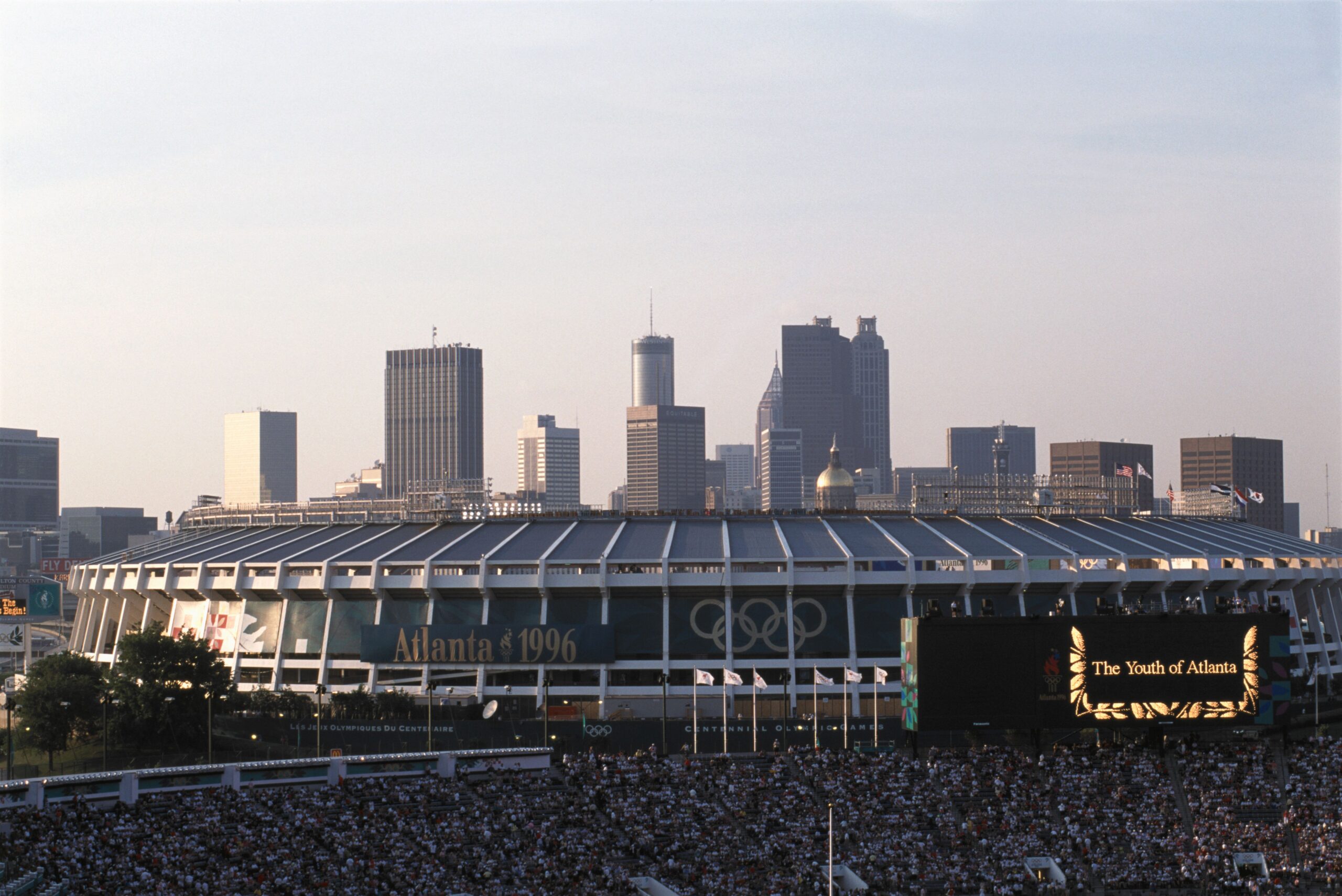
On July 19, 1996, Muhammad Ali stood at the top of the Olympic stadium in Atlanta and lifted a trembling torch to light the cauldron of the Centennial Games. 3.5 billion people were watching.
Thirty years after that, the world is coming back to Atlanta. The FIFA World Cup arrives this summer, with matches at Mercedes-Benz Stadium, a fan festival at Centennial Olympic Park — the park built in preparation for the Olympics — and two of Buckhead’s finest hotels named as official FIFA team base camp sites. The cycle is turning. And the place where it started is still here, older and more expensive and more consequential than it was in 1987, shaped by decisions made in that nine-year sprint toward the Olympics in ways that most of the people who live here have never been told.
This is the story of what Billy Payne’s Sunday morning idea did to his city, his era, and a man who was, when it all began, simply a Buckhead attorney on a drive home from church.
Where it All Started
Payne, a local real estate attorney at the time, was already well-connected and a community advocate even before 1996, but by no means an expert on the Olympics. “I knew nothing about the Olympics. I didn’t know when the next one was available. I didn’t know how to go about getting it. I knew zero,” Payne said.
What led to his success in this seemingly impossible task?
His friends.
And in turn, the friends of his friends.
“I told my wife,” Payne commented. “And we did what everybody does or should do when you have a difficult task, you go through to your friends. And my friends responded reluctantly at first, but wonderfully, wonderfully in the end.”
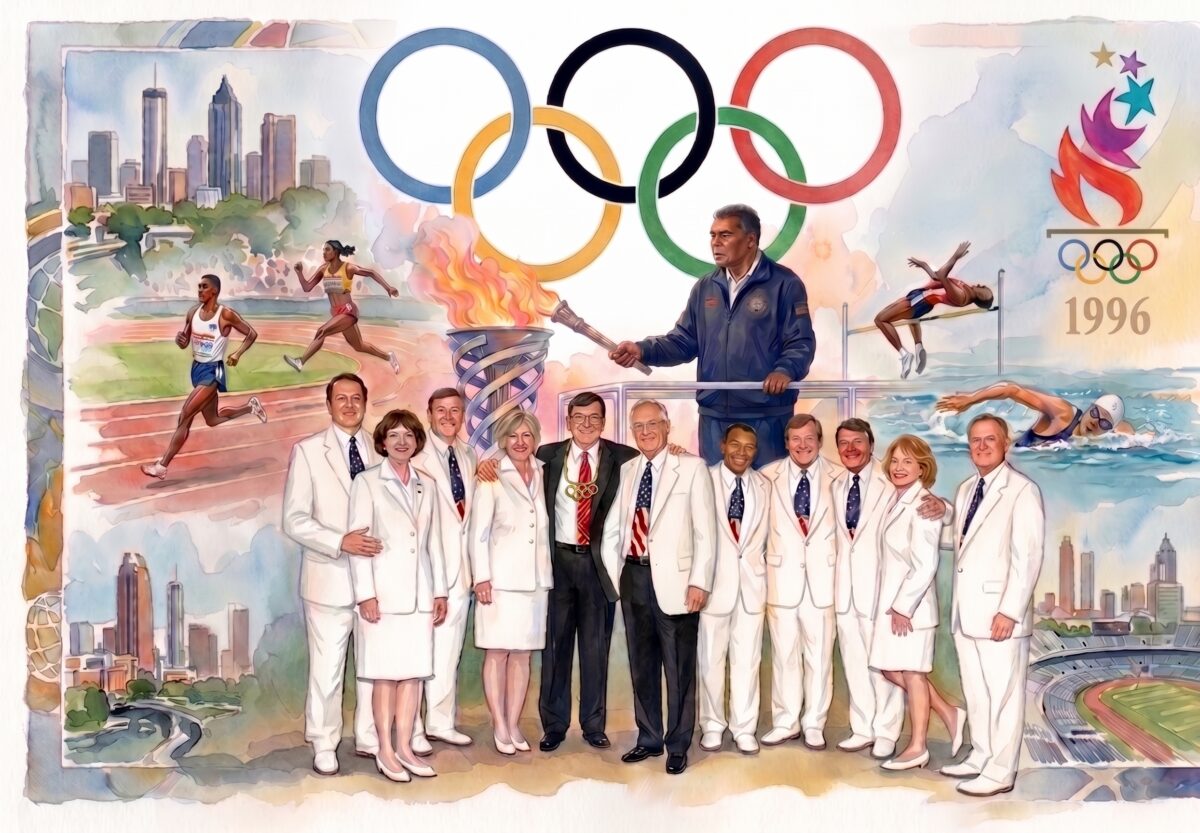
Peter Candler, a fishing buddy, came on board as one of Payne’s earliest volunteers, followed by eight others, affectionately dubbed “the Atlanta Nine” — every one of them a member of the Buckhead community. The brigade included Ginger Watkins, Linda Stephenson, Cindy Fowler, Tim Christian, Bobby Rearden Jr., and Horace Sibley, a senior partner at King & Spalding. Sibley brought two lawyers from his firm: Charlie Shaffer and Charlie Battle.
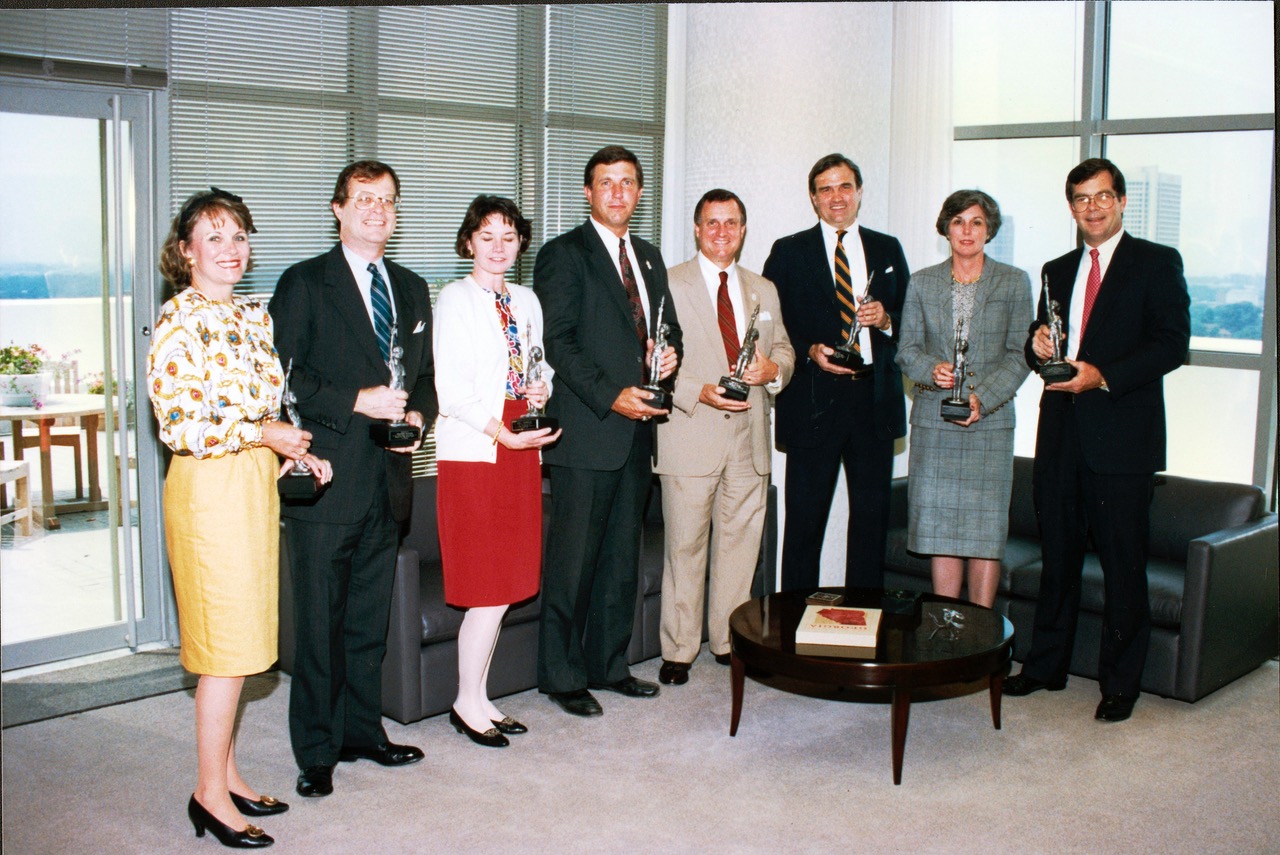
“If you had a crazy idea tomorrow, the first people you would go to to get validation or to seek help would be your friends. And I did the same thing. As you can imagine, inevitably, they thought I was crazy. They were viewing not the craziness of the idea, but the relative certainty, how in the world we’re gonna pull this off,” Payne reminisced.
Meeting Mayor Young
The next step to legitimize this Olympic bid effort: garner support from Atlanta’s city leaders. Most notably, the mayor at the time, Andrew Young.
It was Sibley who helped Payne secure an initial interview with Andrew Young. “He (Payne) wanted to talk to the city officials, but he did not have any connection with Andy Young, who was the mayor at the time, and so he called the mayor’s office, but they were trying to keep Billy away because they knew Andy was kind of a dreamer, and they thought this was a crazy idea. Billy wasn’t getting anywhere, so he talked to a gentleman named Horace Sibley. He had connections with the mayor, and he got Billy an appointment,” said Battle.
“To this day, Andy, although he didn’t act that way at the moment, he claims that he had already decided he was going to help me, because he had heard about the idea, but I sure didn’t know that, and I was nervous going to see this famous man and the Mayor of Atlanta. I was scared to death. Nevertheless, his passion and his leadership contributed immeasurably to the success of the idea,” said Payne.
Young, a visionary leader, civil rights activist, United Nations ambassador, and clergyman, became essential in helping Payne spearhead the effort to secure Atlanta’s Olympic bid. “His work on our effort was probably a mixture of his incredible civic leadership and talents, and his other talents as a preacher and follower of God, and he was always giving me advice, which was much appreciated. It was like, it was like you’re talking to your father and your preacher and your best friend all at the same time,” added Payne. “He provided that kind of leadership and guidance for me. You know, I was a strange young man with a crazy idea, and he solidified the idea and brought authenticity and integrity to it.”
Securing the support of Mayor Young was the stroke of luck that the Atlanta Nine needed to secure the bid.
Southern Hospitality and Securing the Bid
When reflecting on the process to secure the Olympic bid, Charlie Battle often references a quote by sports marketer Mark McCormack: “All things being equal, people will do business with a friend; all things being unequal, people will still do business with a friend.” This became, at least unofficially, a mantra that Payne, Battle, Young, and all members of the Atlanta Nine held to while vying for the bid.
“Billy Payne instinctively knew that this was not like a chamber of commerce pitch about facilities and hotels,” said Battle. “This was about relationships, and this was about making friends, and this was about winning the trust and confidence of a majority of the 88 members of the IOC.”
Despite the insurmountable odds, the somewhat scrappy group chose to embrace the Olympic spirit and share that with their city.
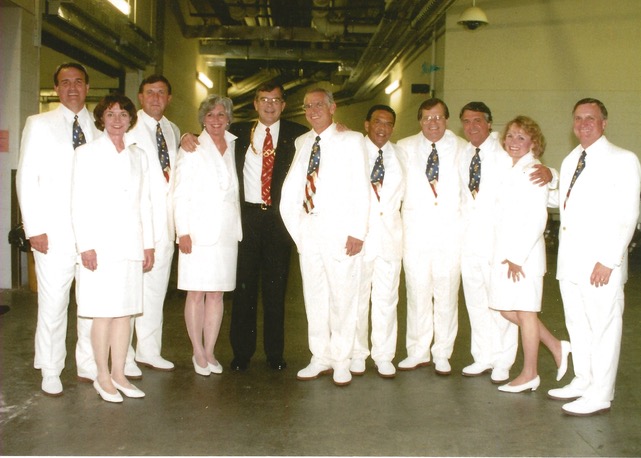
“Well, when we won the US designation, at that time, we didn’t know much of anything about the Olympic movement. We had to get the vote of the IOC members. At that time, there were 88 IOC members from about 70 countries. The only ones we knew were the two members in the United States whom we had just met. So our job was to then go try to convince all these other members,” said Battle.
Thus commenced nearly three years of extensive travel across the globe to places like Seoul, Malta, Bulgaria, and more. In each new country, at each event, the volunteers’ goal was clear: listen, learn, and make friends.
Atlanta ultimately beat out Athens, Greece; Belgrade (then Yugoslavia); Manchester, England; Melbourne, Australia; and Toronto, Canada in a bid process that culminated on September 18th, 1990, when IOC president Juan Antonio Samaranch announced that Atlanta clinched the Olympic bid.
Improving Atlanta
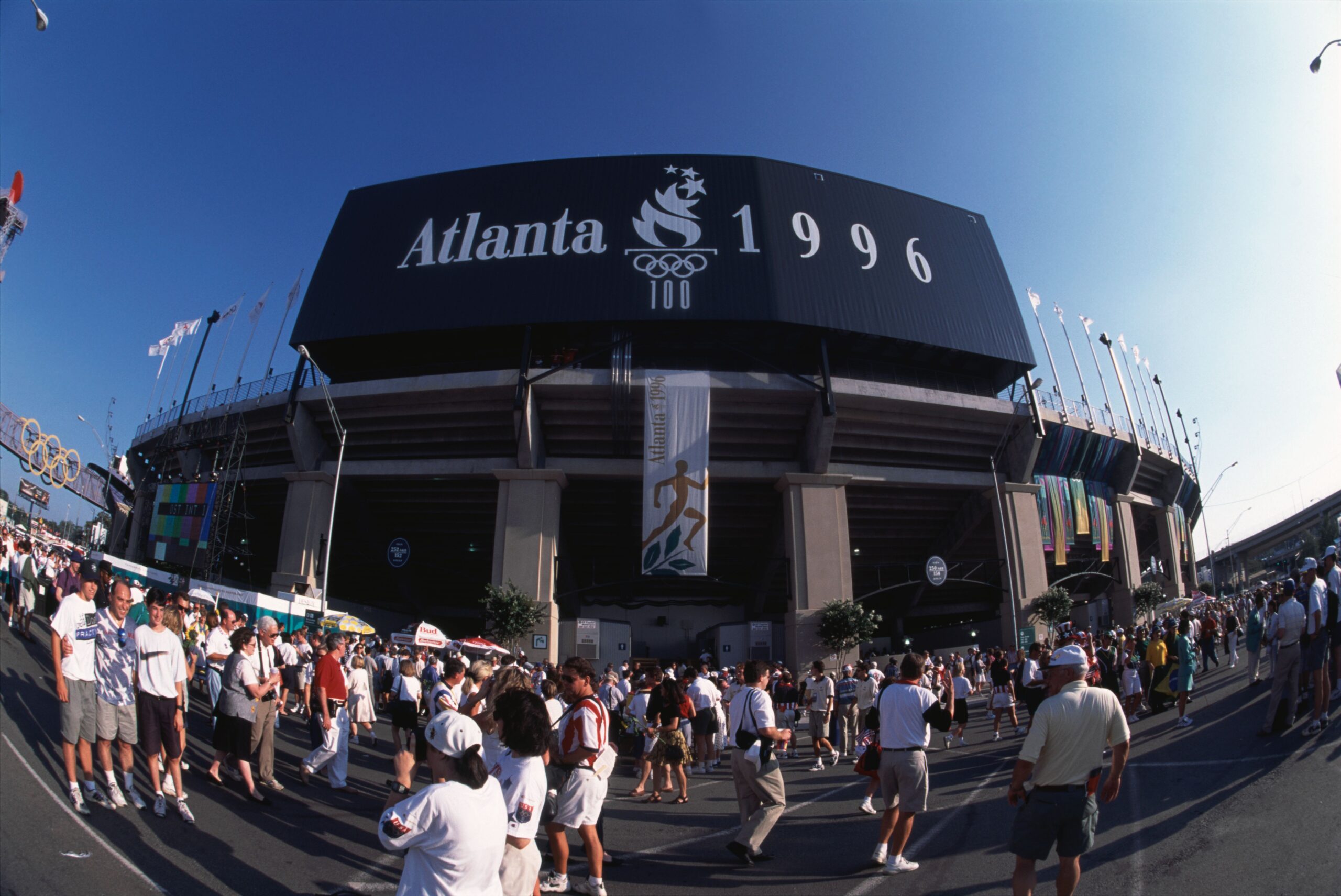
From July 19th to August 4th, the Olympic Games garnered over 2 million visitors and 10,318 athletes from 197 nations, and while the 1996 Olympics launched Atlanta to the international stage, the games brought with them an array of development to Buckhead and Atlanta at large.
Centennial Olympic Park in downtown Atlanta became a tangible legacy left by the games, along with a bevy of newly landscaped plazas and promenades, reconstructed downtown bridges, repaved roads, and street signs and street lights installed, and 10,000 newly planted trees. Additionally, thanks to private investing, nearly 7,500 hotel rooms were built between 1990 and 1996.
For all of the good they brought to the city, the Atlanta Olympics came with controversy. Most notably, the 1996 Olympic Games were indelibly marred by the bombing in Centennial Park on July 27th, 1996. The bombing tragically killed two people, one in the blast and a cameraman who suffered a fatal heart attack rushing to the scene, and injured 111 others.
In a polarizing decision, a representative of the city government leased the space in Centennial Park to temporary vendors, giving downtown Atlanta an overly commercialized, county-fair-like atmosphere, eventually complete with amusement park rides and concerts ahead of the opening ceremony.
Also, in preparation for the games, the Corporation for Olympic Development in Atlanta identified 16 of what they called “Olympic Ring neighborhoods,” the most notable being Summerhill, Techwood, and Clark Howell Homes, all of which backed up to Olympic venues. Techwood Homes, a public housing project in the heart of downtown, was eventually displaced by mixed-income apartments and housing for athletes.
In the end, the 1996 Olympics cost almost $1.7 billion, but the Olympic Games did not receive government financial support. Instead, funding came from corporate sponsorships from larger companies like Coca-Cola, which made a substantial donation, to television game show production, and even salad dressing manufacturers. Television rights also contributed to offsetting costs.
A Lasting Legacy
In reflection, Payne wanted to make one thing clear: “We are blessed to live in a wonderful, very diverse community. We were so proud of Atlanta’s reputation as the shining star of the new South, and the fact that we ended up with a wonderfully cooperative community that came together, racially, socially, and economically, in support of what was a really great idea.”
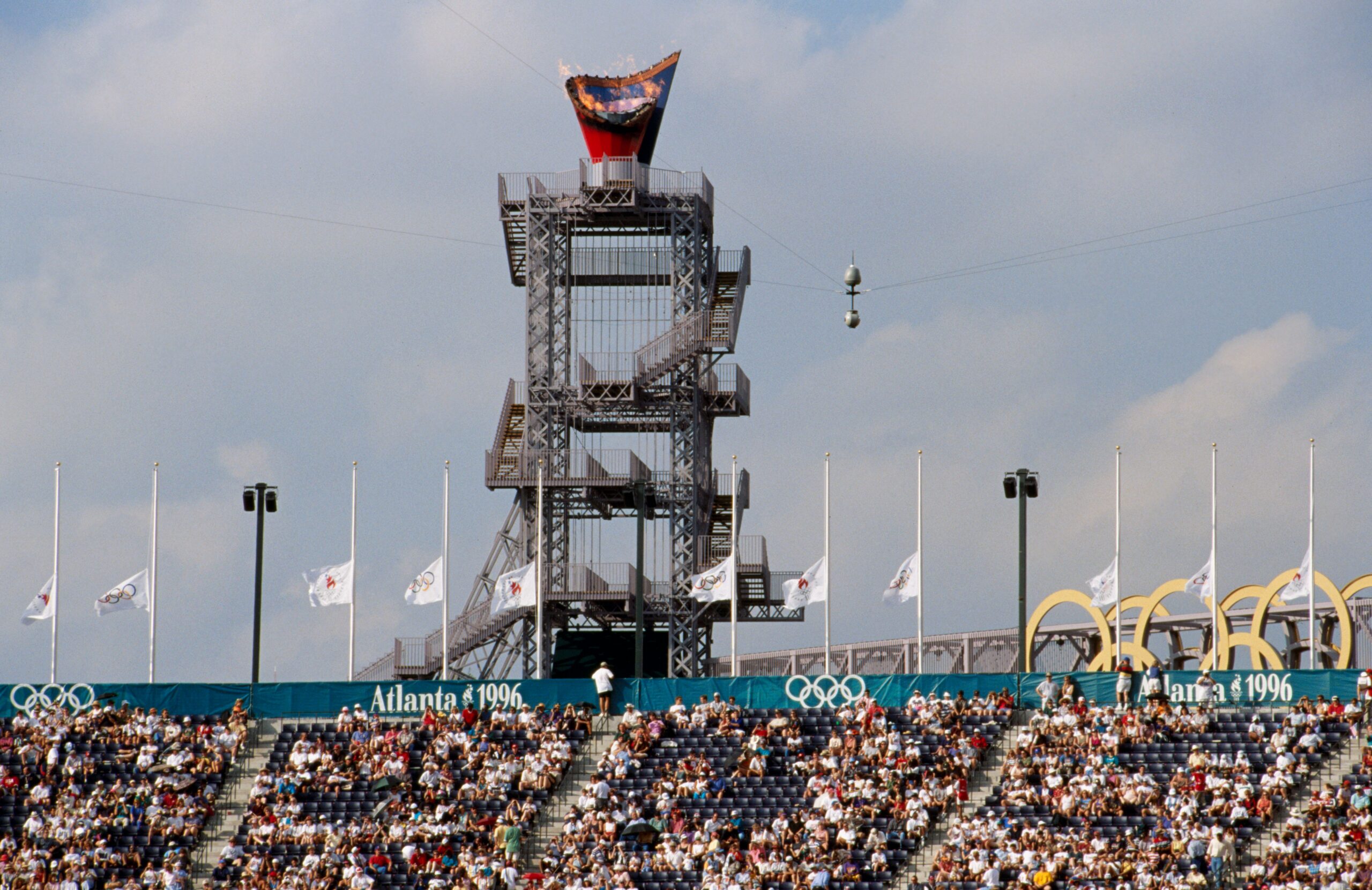
Thirty years later, the underlying claim hasn’t moved much since the Atlanta Nine pitched it to a skeptical IOC: that this city can host the world. In July of 1996, 3.5 billion people watched Muhammad Ali light the cauldron. This summer, FIFA estimates 6 billion will tune in to the World Cup, with matches at Mercedes-Benz Stadium, built where the Georgia Dome once stood. The audience is bigger. The infrastructure is newer. But the claim is the same.
Billy Payne always insisted the Olympics were built on friendships before they were built on anything else — a fishing buddy with a checkbook, a senior partner who could get him in a door, a mayor who treated him like a son. Payne and the eight other members of the Buckhead community who became the Atlanta Nine personified the Buckhead mantra — developed at the founding of Buckhead.com and The Buckhead Paper: “The spirit of Buckhead points in one direction… The quest always points forward. The reach is always extending further. This is Buckhead. We are builders. We are connected to one another with a common bond. A common dream. A common quest. Pointing life in one direction. Forward.” The 1996 Centennial of the Olympic Games was born from Buckhead — out of determination, out of friendship, and out of the spirit of a community that has always pushed forward.