
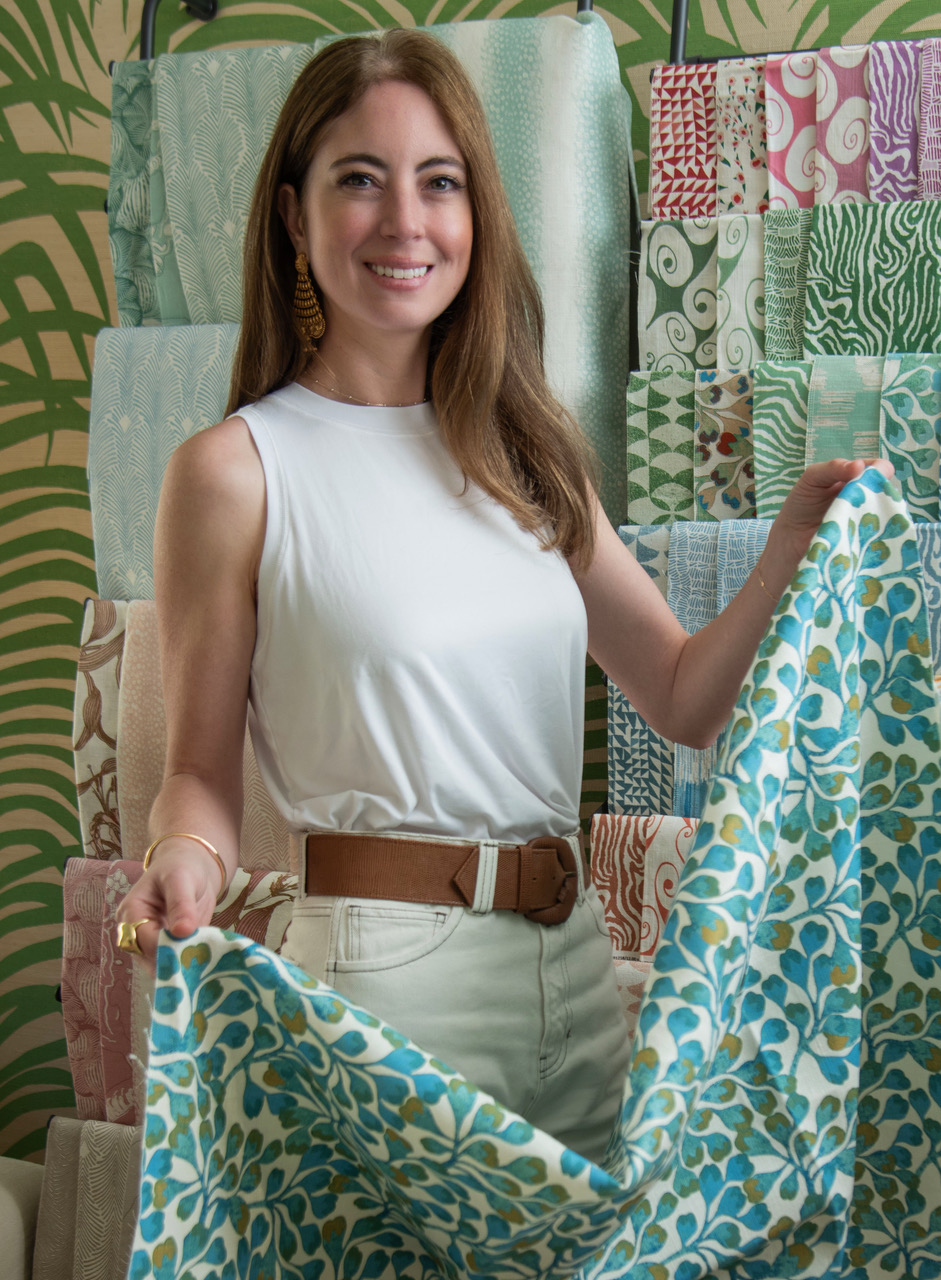
Some artists find their metier through creative exploration; others know what they want to do right from the start. Such was the case for Buckhead resident Isobel Mills Prescott, whose path towards textile art was dotted with curiosity and discipline. After completing a degree in fabric design at the Lamar Dodd School of Art at the University of Georgia, she discovered a deep connection to fabrics that echoed earlier experimentation with ceramic arts; both had a malleability she was drawn to.
Mills Prescott, like most artists, is inspired by the world around her. “I’ll see something that inspires me, and I’ll bring my interpretation to it, translating it into fabric, bringing it to life through texture and color,” she says. Being able to use her hands and manipulate the materials is a big draw for her, and she uses many different techniques to accomplish a piece. For example, her threaded landscapes are built up of color-blocked patches, which she then blends through with more stitching. In her “Picasso’s Sculpture Garden,” depth is achieved through appliqué techniques like pleats and ruffles. She’s even used French knots to mimic a chameleon’s leathery skin. “They’re essentially 3D paintings,” she says.
Creating a piece takes time, attention, and discipline. On average, her pieces take about 100 plus hours, which includes an extensive planning process. While the pieces appear organic and whimsical, the foundation required to pull them off is not. “I use Photoshop and play around with string placement or colored dots,” she says, noting that it’s really not feasible for her to mess up once fabric has been laid down. “Once I get in a mode, however, I can flow into color placement. But the beginning is very thought out.”
Mills Prescott mostly sells her fiber art on her website and Instagram, where she highlights pieces as they progress—and she’s often able to sell a piece before it’s completed. For those not in the art market, there is a way to get a piece of her creativity: through her eponymous product line.
She founded her fabric and wallpaper line, Isobel, in 2018 as an extension of her design philosophy and as a way to bring more color and pattern into people’s homes. There are over 90 cotton and linen fabrics, as well as painterly wallpaper inspired by a trip to Morocco, which can be seen in person at Travis & Company at Atlanta Decorative Arts Center.
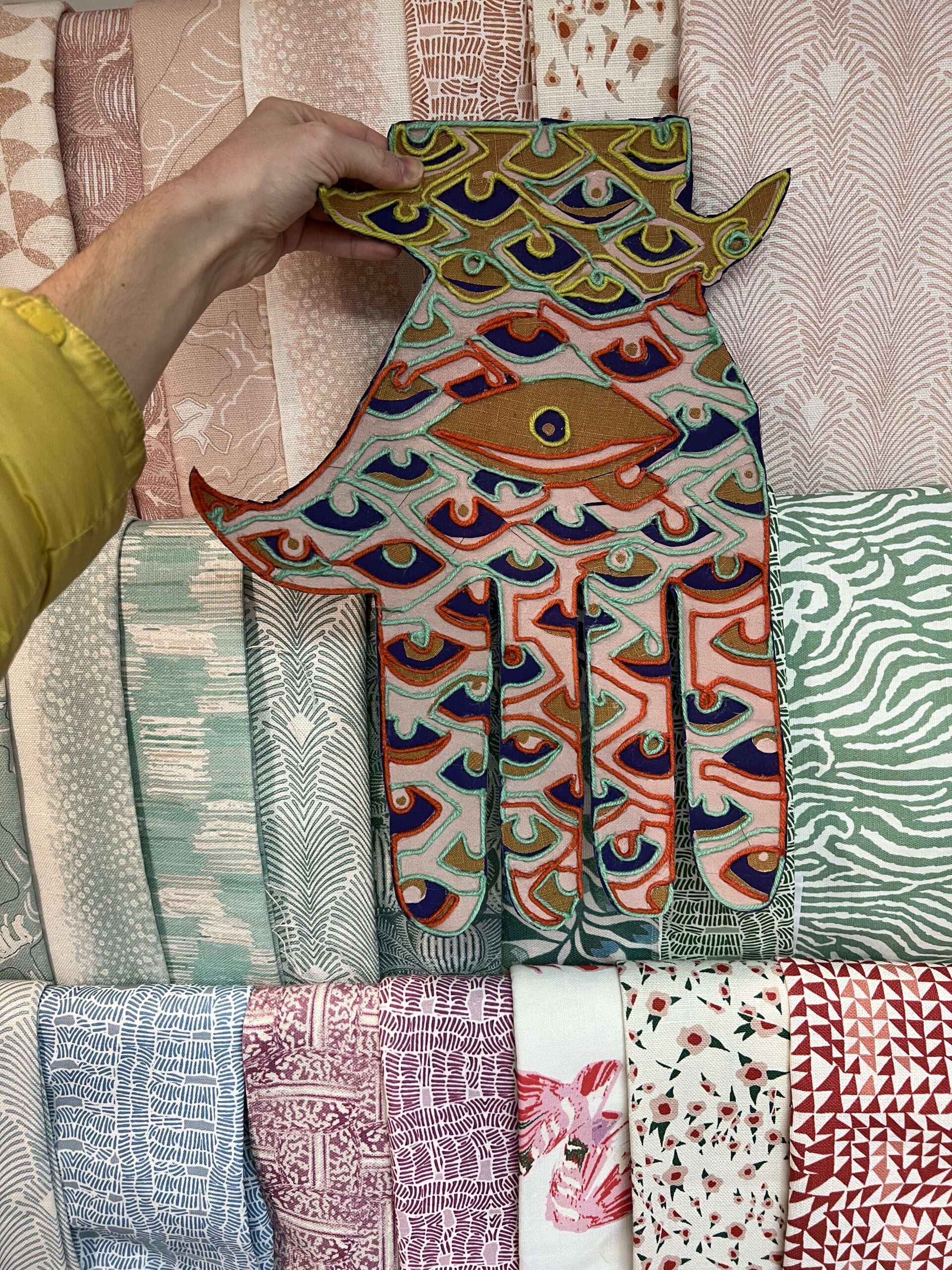
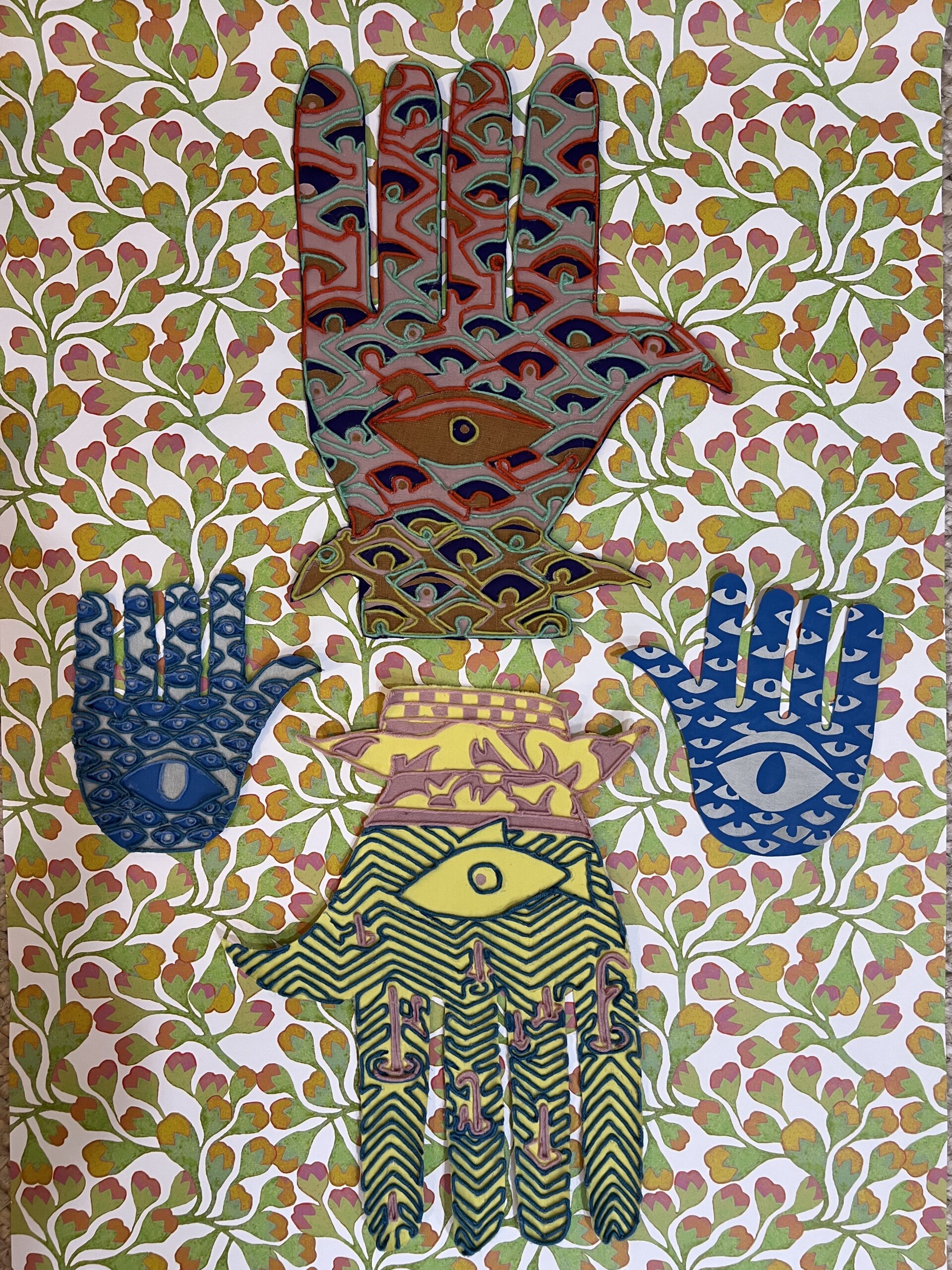


Her earlier fabrics tend to be a bit more subdued, but her most recent ones are fully realized as she’s become more comfortable. “As time has gone on, I’ve gotten more bold in my color choices for the lines,” she says. “I started more conservatively because I thought people were afraid of color, and I didn’t want it to feel unapproachable.” Now, she says she has more confidence and can use her design voice to create saturated and striking prints, such as her Leo fabric, which is available in deep colors like Lagoon, Matcha, Wisteria, and Honey.
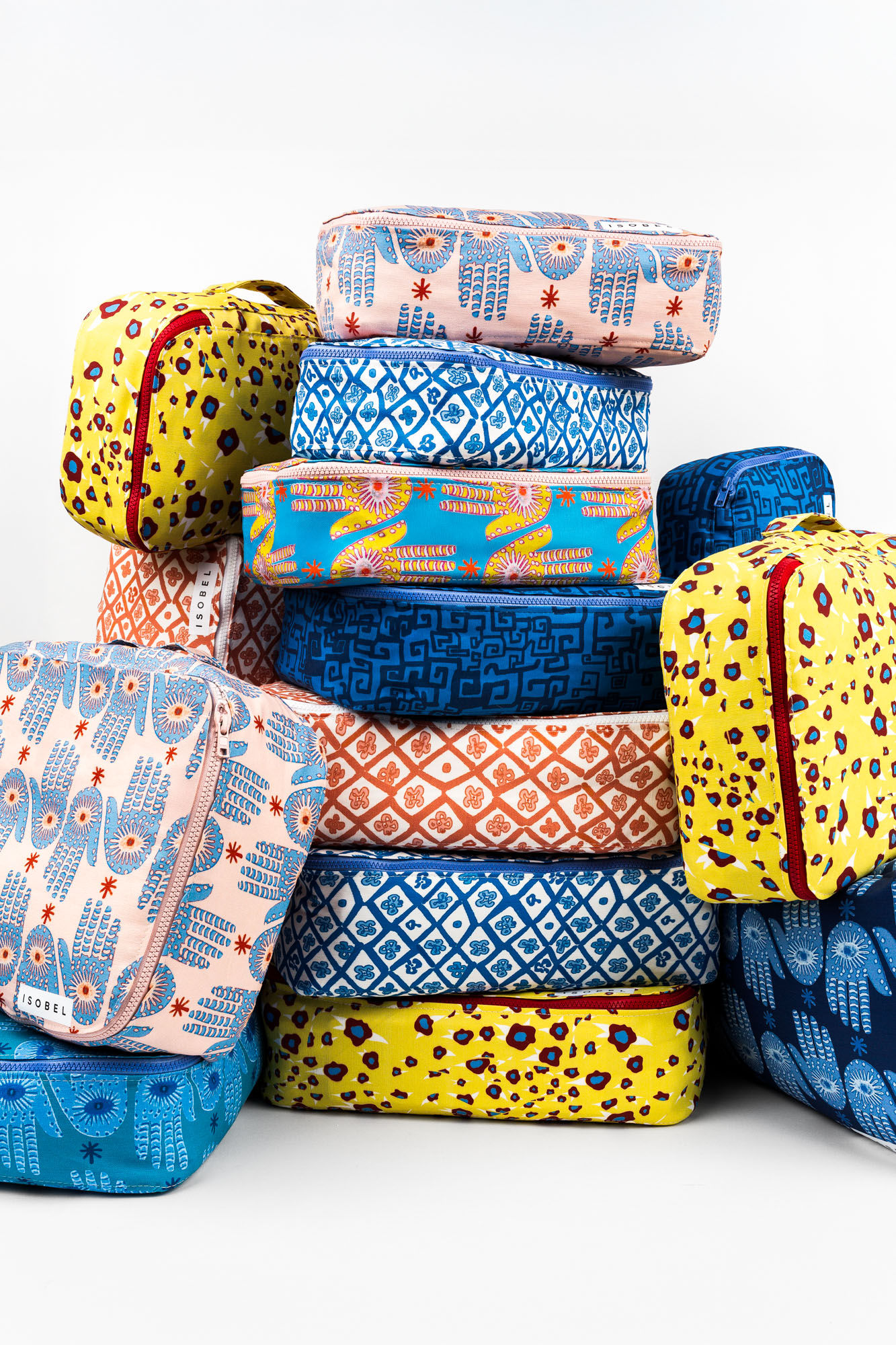
She’s also been having more fun with small goods, experimenting with more portable and playful products. In the past, she’s produced cover-ups and pajamas, and she currently offers packing cubes, mahjong tile bags, and shoe bags adorned with her sunny prints and fun contrasting zippers. “They are a fun way for me to showcase my patterns in even more bold colors,” she says. These can be purchased directly from her or at the occasional Buckhead pop-up.
Art advisory is one of those creative niches that seems nebulous, but actually serves as a vital bridge between the art world, the design world, and clients. And for the past 11 years, Julie Wynne Jones has quietly supported all three through her art consultancy, Julie Wynne Jones Art + Design Consulting.
Jones has always loved fashion and design, but identified her personal limitations early on. “I was not a great artist and knew that was never going to be a path for me, but I loved everything around it,” the Gainesville native says. After graduating from the University of Georgia, she moved to New York, where she pursued an associate’s degree in fashion marketing and design from Parsons School of Design. While there, she cut her fashion teeth working at brands like Steve Madden and Tibi, honing her eye for color, scale, and pattern.
While working corporate jobs, she nurtured a budding interest in art and galleries. “I loved following smaller, independent artists on Instagram, especially when the platform first launched,” she says. “It was a great way to learn and connect with artists all over the country.” That hobby planted the seed for touchpoints of her future consultancy—having a pulse on emerging artists and creating a nationwide network of artists and galleries.
She then moved to Atlanta and began working for the High Museum of Art’s Wine Auction, where art became an everyday part of her life and solidified her interest in a career in the industry. A stint in-house for Atlanta-born artist Sally King Benedict further sharpened her business skills, where Jones performed day-to-day marketing and sales for the popular artist. “I learned the business side, but also what artists go through creatively in the studio,” she says.
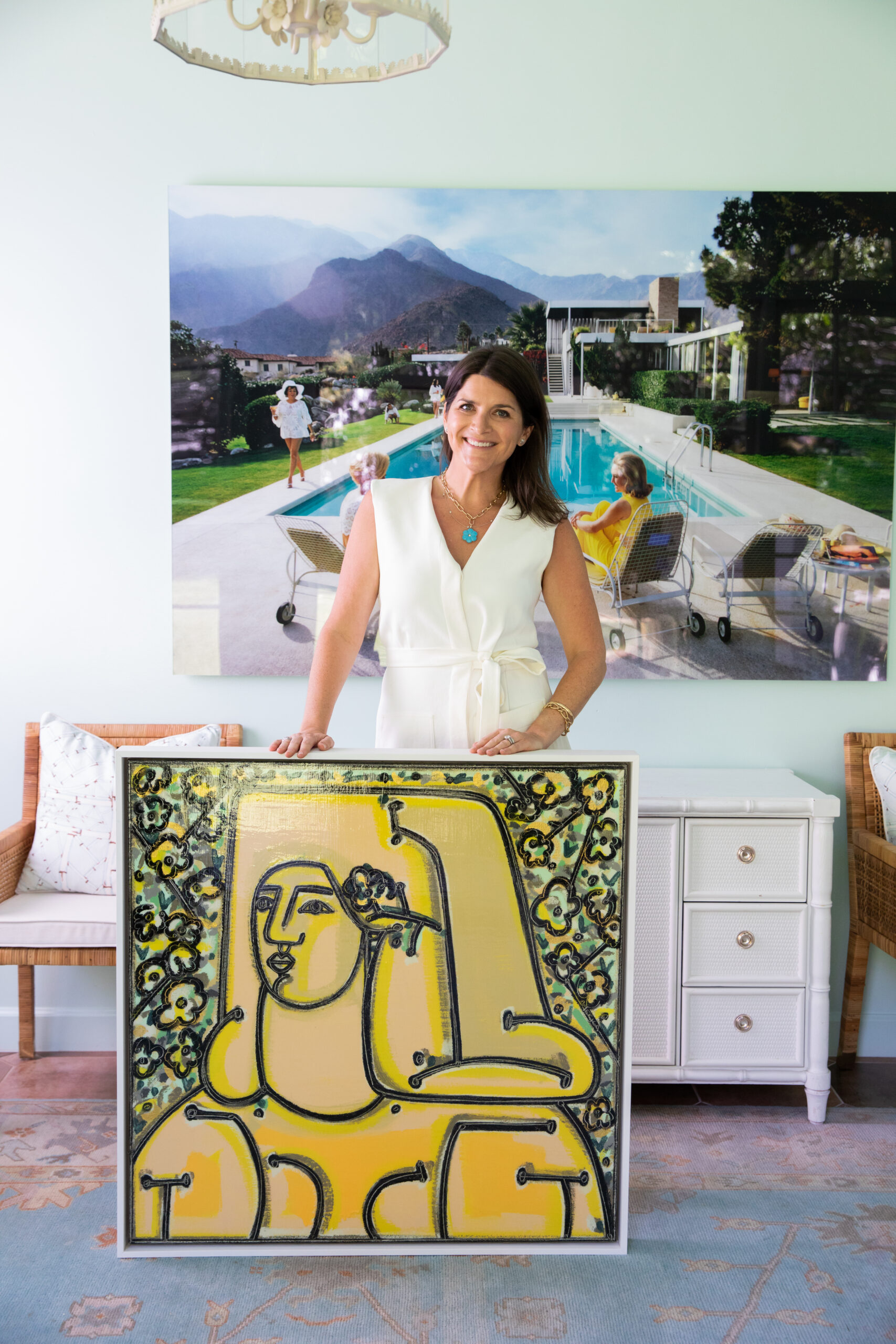
After a friend gave her the idea, Jones eventually went out on her own after giving birth to her first child, establishing Julie Wynne Jones Art + Design Consulting in 2015. Gallerist Spalding Nix and art advisor Shelli Beermann encouraged her to take the leap, acknowledging that she would be able to fill a gap with her unique skillset and connections.
Art consultants like Jones can work in a variety of capacities: independently with a homeowner, in conjunction with an interior designer, or as a commercial art buyer/commissioner. Jones serves all three functions.
For most residential clients, Jones starts by assessing a space and a client’s preferences, walking them through their likes and dislikes, and translating and articulating their style. She measures, photographs, and identifies opportunities for art in the home. Then, clients receive an index of artists from all over the country that could appeal to them and satisfy their needs, a detail that is important to Jones, who doesn’t want all of her residential clients to look cookie-cutter and have the same local and regional artists featured.
She says that part of the fun for her is that every client and every project is different. “I have clients who don’t know where to start, or those who want to fill a specific spot in their house,” she says. Many come to her after visiting galleries, frustrated they can’t quite pinpoint what they are looking for. She also has designers who outsource art completely to her. “Art is so personal, so designers will often recommend me to interface with their clients to do the heavy lifting,” she says. In most residential cases, Jones’ fee structure is similar to that of an interior designer, paid by the artist or gallery, although occasionally she charges consulting fees based on the artist or gallery’s fee structures.
Jones primarily works with painters, photographers, and sculptors, although she has undertaken commercial jobs that require more unique commissions. One such project sticks out: a collaboration with Branded Environments at Perkins & Will on the new Google Atlanta office. It was a four-year project, spanning 14 floors. The project was completed in 2024.
“The great thing is that Meredith Kinney and her team had designed the entire space, down to every light fixture, fabric, and paint color. They zoned floors, giving them themes such as ‘love’ and ‘celebrate,’” she remembers. The overall effect was a “Love Letter to Atlanta,” highlighting the city’s culture through local artists, ranging from the established, like Dr. Fahamu Pécou and Shanequa Gay, to the emerging, like Kaiye Naomi, a then SCAD student whom she commissioned for a mural in the cafe. “We got to give a lot of opportunities to so many artists,” she says.
At the end of the day, whether commercial or residential, art should function as a way to make people happy, says Jones. Her most recent work includes installations for Shepherd Center, where she has curated and commissioned art for the two new buildings, as well as the main campus’s renovation. “People there are going through the hardest thing they’ve ever been through, so if we can put something on the walls in their rooms or the waiting areas that sparks joy or makes their day a little bit better, then we’ve done our job,” she says.